Navigating the bail process after an arrest can be daunting, especially for individuals unfamiliar with the criminal justice system. Whether you are helping a loved one or need immediate answers yourself, understanding what occurs at each step can make the experience less overwhelming. For those seeking local information about securing release, Pennsylvania bail bonds services are available to provide quick assistance and guidance during this crucial time. The bail process involves several key moments, beginning with the initial arrest and booking, moving through court hearings, and culminating in either pretrial release or continued detention. This comprehensive guide walks you through the sequence of events, breaks down the types of bail, and discusses what factors judges consider when setting bail conditions. Having a clear grasp of these steps is essential not just for compliance but also for advocating for fair treatment and making decisions that can impact both the immediate situation and long-term future. Familiarity with current reforms and the roles played by bail bond agents can further empower those involved in this process.
Arrest and Booking
The bail process begins the moment law enforcement detains an individual under suspicion of a crime. Following the arrest, the accused person is transported to a police station or jail for booking. This procedure involves recording the suspect’s personal information, entering the alleged crime, fingerprinting, and taking a photograph. Booking is essential to establish legal custody and to begin creating an official arrest record used throughout the court process. Initial Hearing and Bail Determination Soon after booking, typically within 48 hours, the accused faces an initial hearing (sometimes called an arraignment). During this session, a judge formally presents the charges and determines whether the defendant should be kept in custody, released without bail, or released upon payment of bail. Bail is intended to ensure that the defendant returns for all required court appearances as their case progresses.
Types of Bail
The bail amount depends on circumstances, local regulations, and the financial means of the defendant:
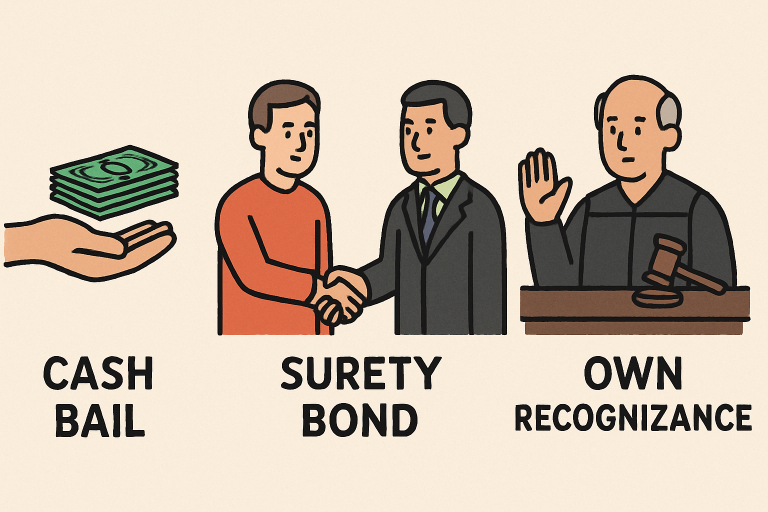
- Cash Bail: This is a direct payment of the entire bail amount in cash. If the defendant meets all court obligations, the money is usually reimbursed after the trial concludes (minus any administrative fees).
- Surety Bond: A bail bondsman intervenes on the defendant’s behalf, promising the full bail amount to the court in exchange for a non-refundable fee. This alternative is useful for those who cannot afford to pay the whole bail sum upfront. The use of bondsmen is prevalent in many states, making this option accessible to a wider array of people.
- Release on Own Recognizance (ROR): In some cases, the court may release the defendant without requiring financial collateral if the defendant is deemed reliable and has strong local connections. ROR is more likely for minor offenses and individuals who pose little flight risk.
 Factors Influencing Bail Decisions
Judges consider multiple factors before deciding whether to grant bail and, if so, how high to set it. The most important considerations include:
- Severity of the Offense: Serious felonies often carry higher bail or no bail, while less serious misdemeanors may result in lower bail or release without bail.
- Flight Risk: If the defendant lacks stable residency, has a history of skipping court, or may attempt to flee, bail amounts increase or may be refused entirely.
- Community Ties: Defendants with strong family, employment, or community ties are usually deemed less likely to abscond and may therefore receive more favorable bail terms.
- Public Safety: Judges also weigh the potential threat the defendant may pose to victims or the public if released. Cases involving violence or repeat offenses result in stricter bail policies.
Bail Reform Movements
The fairness and effectiveness of cash bail have been debated for decades. Recent reforms in states like Illinois, which eliminated cash bail as part of the Pretrial Fairness Act in 2023, represent efforts to address longstanding inequalities, especially regarding the disparate impact on low-income individuals and communities of color. These reforms aim to reduce the number of people held in jail simply because they cannot afford bail, promoting a more just and equitable system overall.
Role of Bail Bondsmen
Bail bondsmen or bail agents play an integral part in the United States bail system. They step in when the defendant or their family cannot pay the full cash bail. The bondsman guarantees the court that the defendant will appear as required. In return, they collect a fee, often 10 percent of the bail, which is not refunded regardless of the case outcome. While this option helps avoid pretrial jail time, it can be financially burdensome, especially for those with limited resources.
Consequences of Failing to Appear
Defendants who miss their court dates face serious repercussions:
- Forfeiture of Bail: The full bail sum is retained by the court, regardless of who paid it.
- Bench Warrant: The judge issues a warrant for the defendant’s arrest, which could lead to additional time in custody and legal complications.
- Additional Charges: Failing to appear often results in new, separate criminal charges that can significantly increase penalties.
- Stricter Future Bail: Courts are also likely to set higher bail amounts or refuse bail altogether in subsequent cases if a defendant has previously skipped court.
Conclusion
Understanding what to expect from the bail process helps individuals and families prepare for the realities of the criminal justice system and advocate successfully for fair treatment. Familiarity with booking, hearings, bail options, and reform trends can ease stress during a challenging time. Staying informed ensures that smart, timely, and confident decisions can be made for one’s future and for the well-being of loved ones.