
For many patients, the mere mention of a root canal evokes a sense of trepidation rooted in outdated dental myths. However, the landscape of endodontics has undergone a seismic shift over the last decade. Today, advanced root canal treatment is a sophisticated, highly predictable, and virtually painless process. By integrating cutting-edge diagnostics and precision tools, modern dentistry has transformed a once-feared procedure into a streamlined experience that prioritises both clinical success and patient comfort.
Precision Diagnostics with 3D Imaging
The evolution of the patient experience begins long before the treatment starts. Traditionally, dentists relied on 2D X-rays, which often hidden complex anatomical structures or secondary canals. The introduction of Cone Beam Computed Tomography (CBCT) has revolutionised this stage. CBCT provides a three-dimensional view of the tooth, roots, and surrounding bone tissue. This level of detail allows clinicians to map the internal architecture of the tooth with surgical precision, reducing the risk of oversight and ensuring the infection is addressed at its source. For the patient, this means fewer surprises during the procedure and a significantly higher success rate.
Enhanced Visualisation via Operating Microscopes
One of the most impactful technological advancements in endodontics is the use of the Dental Operating Microscope (DOM). In the past, dentists worked primarily by feel and limited line-of-sight. Modern clinics now utilise high-magnification microscopes equipped with powerful LED lighting. This technology allows the practitioner to see deep into the root canal system, identifying minute fractures or extra canals that are invisible to the naked eye. Because the dentist can see exactly what they are doing, the treatment is more conservative; less of the natural tooth structure needs to be removed, which preserves the overall integrity and strength of the tooth for the long term.
Robotic Instrumentation and Improved Safety
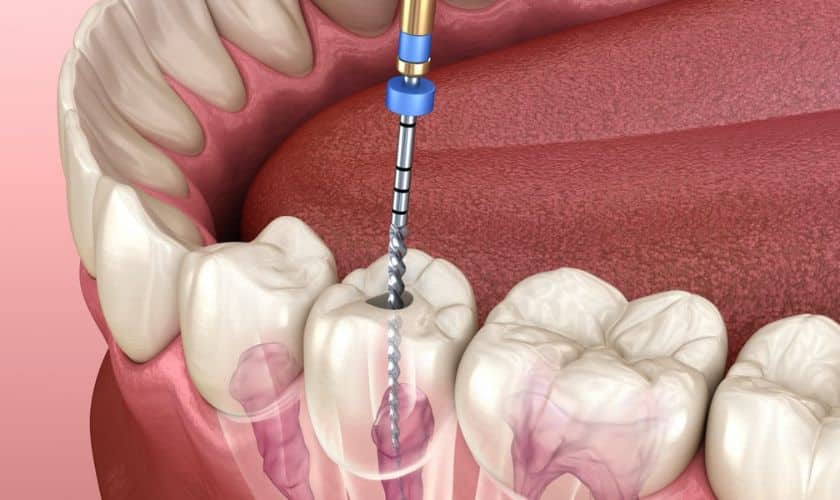
Modern endodontics has moved away from manual stainless-steel files to flexible, engine-driven nickel-titanium (NiTi) instruments. These “smart” tools are designed to follow the natural curves of the root canal without the risk of breaking or perforating the tooth wall. Furthermore, apex locators—electronic devices that measure the exact length of the root—allow for pinpoint accuracy. This is a critical component of how dentists ensure safe root canal treatment procedures today. By combining digital measurements with flexible instrumentation, the risk of post-operative complications is minimised, and the time spent in the dental chair is greatly reduced.
Laser-Assisted Disinfection
The primary goal of a root canal is the total elimination of bacteria from within the tooth. While traditional chemical rinses are effective, they often cannot reach the microscopic lateral canals where bacteria hide. Enter the dental laser. Laser-assisted endodontics uses light energy and acoustic waves to “blast” away biofilm and bacteria throughout the entire root system. This method is incredibly thorough and often results in less inflammation following the procedure. For the patient, this translates to a faster recovery period and a more comfortable healing process, as the laser is minimally invasive compared to older mechanical cleaning methods.
Single-Visit Efficiency and Comfort
In the past, root canal therapy often required multiple appointments, leaving the patient with a temporary filling and a lingering sense of “unfinished business.” Thanks to the speed and efficiency of modern rotary tools and digital imaging, most treatments can now be completed in a single visit. This is a major benefit for busy Australians who value their time. Additionally, advancements in local anaesthetics and sedation techniques ensure that the patient remains entirely comfortable. Modern anaesthesia is more localised and faster-acting, eliminating the “numb face” sensation that used to last for hours after the appointment.
The Future of Tooth Retention
We are currently entering an era where the focus is shifting from simply “filling” a tooth to actually restoring its biological vitality. The industry is seeing a move toward more holistic and biological approaches, including the use of regenerative technology which aims to repair damaged tissues rather than just replacing them with synthetic materials. This evolving science suggests a future where root canals might not just save a tooth’s structure, but potentially restore its internal living pulp. By embracing these sustainable and regenerative practices, modern dentistry ensures that patients can keep their natural smiles for a lifetime, backed by science that prioritises long-term health and minimal intervention. As these technologies continue to mature, the gap between “artificial repair” and “biological restoration” continues to close, offering a brighter outlook for dental health across Australia.