
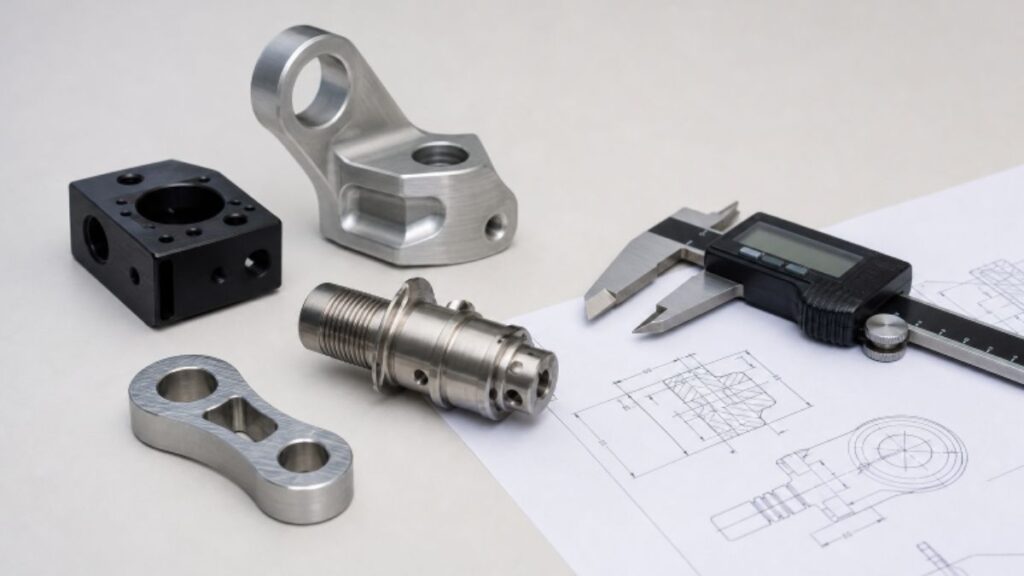
For product teams in Essex, Massachusetts, moving from an early prototype to a dependable production part requires more than increasing the order quantity. Local developers of industrial equipment, laboratory devices, marine components, electronics enclosures, and consumer products often need a practical bridge between design testing and a repeatable manufacturing process. That bridge may involve CNC-machined functional parts, printed models, or urethane and silicone casting Essex, MA, for short runs that need a more realistic appearance and handling feel. The right approach depends on what the team still needs to learn, including fit, durability, finish, assembly time, material behavior, and process consistency.
Why a Successful Prototype May Still Fail in Production
A prototype proves that an idea can work. Production proves that the same product can be made repeatedly within agreed requirements. Those are related goals, but they are not the same task. One-off builds can hide problems because skilled technicians may make manual adjustments, hand-finish surfaces, alter a part during assembly, or select the best result from several attempts. Those actions can be appropriate during development, but they are difficult to repeat at volume without adding cost, delay, or variation. Teams should keep important decisions in process documentation with revision control rather than relying on memory, informal messages, or assumptions made during a prototype build. A controlled record of revisions, approved materials, inspection results, and process changes creates a clearer handoff from engineering to manufacturing. Common scale-up issues include parts that vary across builds, tolerances tighter than the application requires, long setup times, material substitutions, high rework levels, and assemblies that only fit after adjustment. Finding these concerns before a large release is usually easier than correcting them after parts have been ordered.
The Four Main Stages of Hardware Production
- Concept stage: Confirm the problem being solved, basic function, overall size, and user needs.
- Prototype stage: Test form, fit, movement, usability, appearance, and early performance.
- Pilot stage: Build a limited batch using production-focused materials, tools, assembly steps, and inspection methods.
- Production stage: Run a documented process that can deliver consistent parts at an acceptable cost and lead time.
Each stage should answer a different question. A concept asks whether the product should exist. A prototype asks whether the design works. A pilot asks whether the process works. Production asks whether the process can continue to reliably meet requirements.
When CNC Machining Is the Better Prototype Choice
CNC machining is often useful when a project needs strong, accurate parts for functional testing. It can support components made from aluminum, steel, stainless steel, titanium, and many engineering plastics. This makes it particularly valuable for close-fitting assemblies, fixtures, brackets, metal housings, and parts exposed to load, heat, or wear. For example, an Essex-area team developing a metal enclosure may need to install and remove its cover repeatedly while testing seals, connectors, fasteners, and internal components. A machined enclosure can provide a more meaningful fit and durability test than a purely visual model. CNC machining does not require a hard production mold, and it can produce useful surface finishes. However, complex geometry, multiple setups, deep internal features, and unnecessarily tight tolerances can increase machining time and cost. As the design for manufacturability approach recognizes, material choice, tolerances, and secondary finishing steps all affect how easily a product can be made.
When Resin Casting Makes Sense
Resin casting can be a practical option for small batches of detailed plastic parts when appearance, texture, color, and realistic handling matter. It is often considered after an early printed model has helped verify shape, but before dedicated production tooling is justified. Cast parts can support user evaluations, sales samples, assembly trials, and limited pilot builds. They may offer a more refined presentation than a basic printed part, particularly when the product needs a smooth surface or a repeatable cosmetic finish. Still, teams should confirm that the selected casting material matches the product’s final-use needs for strength, heat exposure, flexibility, chemical contact, or long-term durability.
How to Choose the Right Manufacturing Process
Quantity matters, but it should not be the only deciding factor. Start with the question that the next build must answer.
- For a fast visual model: Additive manufacturing can provide quick feedback on shape, layout, and ergonomics.
- For a strong metal test part: CNC machining can support fit, load, movement, and fastening tests.
- For detailed plastic parts in a short run: Resin casting can help evaluate appearance and assembly before production tooling.
- For higher repeat volume: Injection molding or another dedicated process may reduce unit cost after tooling and setup are established.
- For large lightweight structures: Composite or sandwich-panel construction may be worth evaluating when stiffness and weight are central requirements.
Design for Manufacturing Checks to Complete Early
- Confirm that wall thicknesses suit the intended process.
- Apply tight tolerances only where function requires them.
- Use standard material sizes and common fasteners where practical.
- Make sure cutting tools, assembly tools, and measuring equipment can reach critical features.
- Add appropriate internal radii for machined features.
- Reduce unnecessary unique components and finishing steps.
- Identify which dimensions are critical to fit, safety, performance, or reliability.
What a Complete Manufacturing Package Should Include
A clear package reduces guesswork and makes future updates easier to manage. At minimum, it should include final CAD files, dimensioned drawings, material and finish requirements, critical dimensions, a bill of materials, assembly instructions, inspection points, acceptance criteria, revision history, and packaging requirements.
How to Plan a Useful Pilot Run
- Freeze the design version being evaluated.
- Define what the build must prove, such as assembly time, fit, finish, or functional performance.
- Use intended materials whenever possible, and document approved substitutes.
- Record setup time, cycle time, scrap, rework, and inspection findings.
- Assemble and test multiple units rather than relying on one successful sample.
- Update drawings, work instructions, and inspection plans before production release.
Quality Checks That Matter During Scale-Up
Effective quality control focuses on features that affect product function and customer experience. First-article inspection, verification of critical dimensions, material confirmation, surface review, fit testing, functional testing, and traceable handling of nonconforming parts all help teams learn whether the process is under control.
Frequently Asked Questions
How many prototypes are needed before production?
There is no fixed number. The appropriate number depends on product complexity, test requirements, regulatory obligations, material risk, and the extent to which the manufacturing process has been proven.
Should a prototype use the final material?
When strength, heat resistance, chemical exposure, flexibility, or weight matters, production-intent material is generally the more useful choice for testing. Substitute materials can still be appropriate for early visual models.
When is a pilot run necessary?
A pilot run is valuable when the design has passed basic testing, but the production method, assembly process, inspection plan, or supplier handoff still carries meaningful risk.
Conclusion
For hardware teams in Essex, MA, a reliable move from prototype to production depends on disciplined learning, careful documentation, and informed decision-making at every stage. Instead of treating prototyping as a final test of an already-set design, teams can use each build to answer specific engineering questions about performance, materials, assembly, tolerances, reliability, and manufacturability. Choosing the process that best addresses the next engineering question can help prevent unnecessary costs and avoid advancing unresolved problems. Manufacturing input should also be introduced early so production constraints, tooling requirements, supplier capabilities, quality considerations, and realistic production volumes are understood before major commitments are made. Documenting critical decisions and lessons from each iteration creates a useful record for future builds and helps keep engineering and manufacturing teams aligned. Pilot builds can then expose variation, assembly challenges, and process weaknesses before a larger order begins. By learning systematically and addressing issues early, Essex hardware teams can support stronger products, clearer production planning, more predictable costs, and more repeatable manufacturing outcomes.