
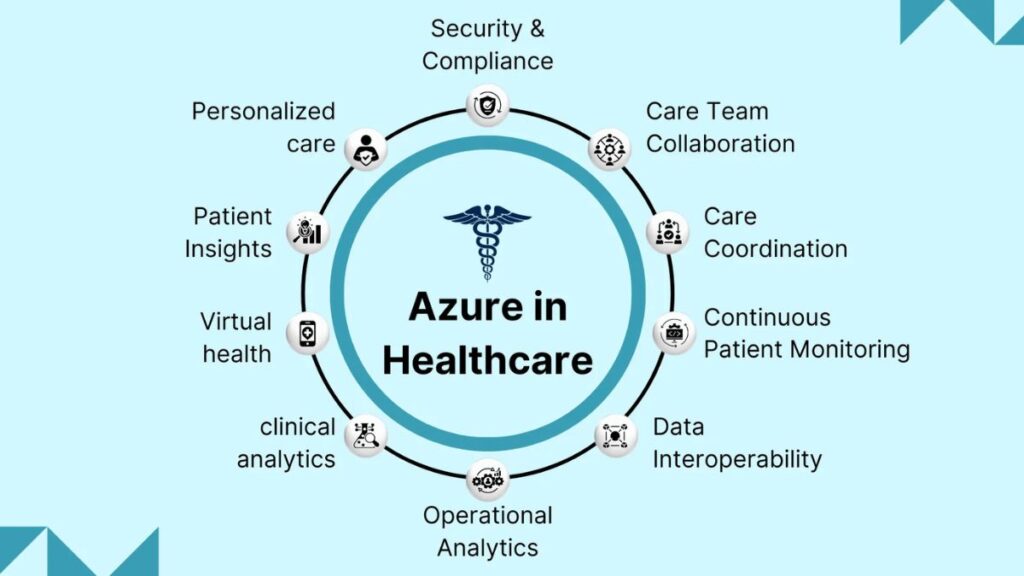
In an era where patient-centric care, real-time data sharing, and coordinated treatment plans are becoming essential, healthcare data interoperability remains one of the most pressing challenges in the U.S. healthcare system. Despite rapid digital transformation, data silos persist across hospitals, clinics, labs, and payers. Microsoft Azure, through its advanced cloud technologies and healthcare-specific innovations, is making significant strides in breaking down these silos. azure partner in United States are playing a critical role in modernizing the way healthcare data is stored, shared, analyzed, and secured — transforming interoperability from a persistent hurdle into a strategic advantage.
Understanding the Interoperability Challenge
Healthcare data interoperability refers to the ability of various health information systems and software applications to communicate, exchange, and use data effectively. In the U.S., interoperability has been historically fragmented due to multiple Electronic Health Record (EHR) vendors, non-standardized data formats, regulatory hurdles, and outdated IT infrastructure. This fragmentation hinders care coordination, increases administrative burden, and puts patient outcomes at risk.
Azure Cloud Services in USA: A Foundation for Transformation
Microsoft Azure has emerged as a powerful enabler of healthcare transformation by offering a secure, compliant, and highly scalable platform. Azure cloud services in USA provide healthcare organizations with the infrastructure and tools needed to meet the growing demands of interoperability and patient data exchange.
Here are key ways Azure contributes to enhancing healthcare data interoperability:
1. Azure Health Data Services: Unified Data Models and FHIR Integration
At the core of Azure’s strategy is Azure Health Data Services, a platform-as-a-service (PaaS) offering purpose-built to support Protected Health Information (PHI) in the cloud. It unifies data across formats such as HL7, FHIR (Fast Healthcare Interoperability Resources), DICOM (Digital Imaging and Communications in Medicine), and unstructured clinical notes.
Azure Health Data Services supports the FHIR standard, the centerpiece of modern interoperability efforts in the U.S. mandated by the 21st Century Cures Act. By adopting FHIR-based APIs, Azure empowers providers, payers, and developers to easily exchange structured healthcare data in real time — making longitudinal patient records, care plans, and claims data more accessible and actionable.
2. Integration with Existing Health IT Systems
Interoperability is not just about storing data in the cloud; it’s about integrating seamlessly with existing systems. Azure provides connectors and APIs that help healthcare organizations bridge on-premises EHRs like Epic or Cerner with Azure cloud services in USA. Through Azure Logic Apps and Azure API Management, organizations can create custom workflows that enable secure and compliant data transfer between legacy systems and modern cloud-native applications.
This hybrid model ensures that healthcare organizations don’t need to abandon their existing IT investments but can instead incrementally modernize and interconnect their infrastructure.
3. Enabling Analytics and Machine Learning on Unified Data
Once healthcare data is unified on Azure, it becomes available for deeper analytics, predictive modeling, and AI-driven insights. Azure Synapse Analytics, Power BI, and Azure Machine Learning are widely used in the U.S. healthcare sector to uncover patterns in patient data, identify at-risk populations, and forecast treatment outcomes.
By enabling this level of intelligent data usage, Azure helps organizations go beyond mere interoperability and towards data-enabled care innovation. For example, predictive analytics on Azure can alert clinicians about potential patient deterioration, allowing for earlier interventions.
4. Security and Compliance at Scale
Healthcare data is among the most sensitive categories of information, and any solution supporting interoperability must meet stringent compliance standards. Azure cloud services in USA are compliant with major regulatory frameworks, including:
- HIPAA (Health Insurance Portability and Accountability Act)
- HITECH (Health Information Technology for Economic and Clinical Health Act)
- CMS (Centers for Medicare & Medicaid Services) Interoperability Rules
- NIST standards
Azure also offers built-in tools such as Azure Policy, Microsoft Purview, and Azure Security Center to enforce data governance, manage access controls, and protect against breaches. These capabilities ensure that data exchange across systems doesn’t come at the cost of security or regulatory compliance.
5. Empowering Patient Access and Engagement
Modern interoperability is not limited to B2B data exchanges — it must also empower patients to access and manage their health records. Azure supports the development of consumer-facing applications that connect to FHIR APIs and provide patients with real-time access to their medical history, lab results, prescriptions, and care plans.
By integrating Azure Active Directory B2C and Microsoft Entra ID, healthcare providers can create secure patient portals and mobile apps that offer personalized and permissioned data access, enhancing transparency and engagement.
6. Interoperability in Public Health and Population Health Initiatives
Azure is increasingly being used by U.S. public health agencies and population health programs to aggregate and analyze data from multiple sources. During the COVID-19 pandemic, Azure cloud services in USA were pivotal in supporting state and federal dashboards, vaccine tracking systems, and outbreak modeling.
Azure’s ability to consolidate data across providers, labs, and government systems helps identify health disparities, manage chronic disease programs, and coordinate large-scale interventions — all of which require a high degree of interoperability.
7. Partner Ecosystem and Open Standards Support
Microsoft has built a vast ecosystem of healthcare ISVs, digital health startups, and system integrators in the U.S. that leverage Azure to build interoperable health solutions. By supporting open standards and open-source tools, Azure fosters a collaborative innovation environment.
Azure API for FHIR, for instance, is an open-source implementation that allows developers to rapidly build interoperable applications that comply with federal interoperability mandates. The open nature of Azure solutions ensures that healthcare organizations are not locked into proprietary architectures.
Real-World Use Cases in the USA
Several U.S.-based healthcare organizations have already realized the power of Azure for data interoperability:
- Johns Hopkins Medicine uses Azure to aggregate and normalize data from disparate sources, allowing clinicians to view comprehensive patient insights in real time.
- Humana, one of the largest health insurers in the U.S., adopted Azure Health Data Services to provide FHIR-based access to claims and encounter data, enabling greater transparency for patients and developers.
- Providence Health uses Azure to build interoperable solutions that integrate EHR data, IoT device data, and AI models for better chronic disease management.
Conclusion
As the U.S. healthcare system continues to shift toward value-based care, care coordination, and digital empowerment, data interoperability is no longer a technical luxury — it’s a strategic imperative. Microsoft Azure is leading this transformation by offering a secure, compliant, and highly interoperable cloud platform that meets the evolving needs of healthcare providers, payers, regulators, and patients.
From FHIR integration and legacy system bridging to AI analytics and secure patient engagement, Azure cloud services in USA are accelerating healthcare interoperability and paving the way for a more connected, efficient, and patient-focused future.