
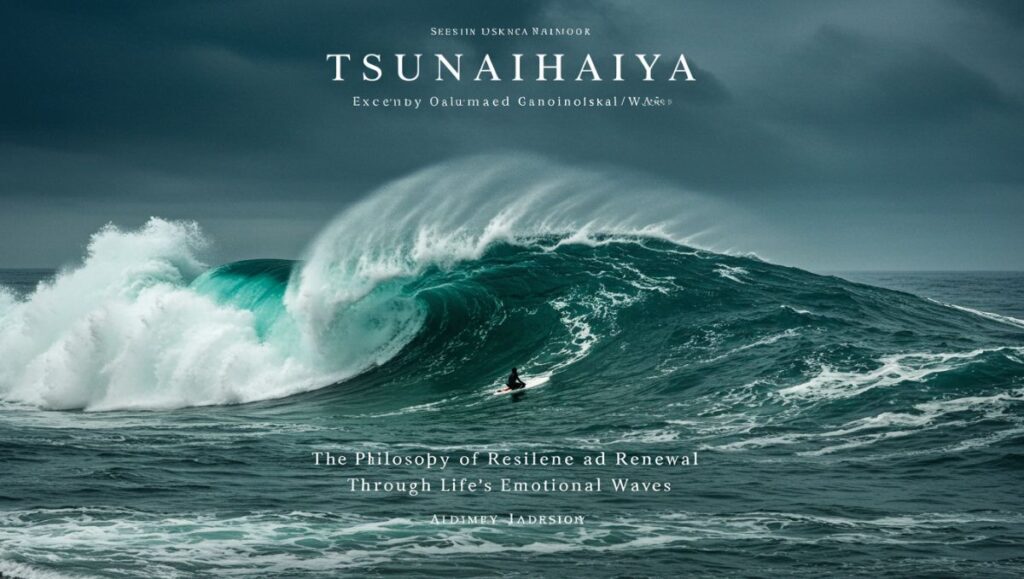
In a world constantly shifting beneath our feet, where change and chaos seem inevitable, a new wave of thought emerges — one that doesn’t resist the storm but flows with it. This is the essence of Tsunaihaiya, a philosophical and motivational concept rooted in the symbolism of a tsunami — immense, powerful, and transformative.
The word Tsunaihaiya blends the imagery of “tsunami,” representing unstoppable natural force, with the idea of “haiya”, a sound or spirit of awakening, renewal, and release. Together, they form a concept that teaches us how to face emotional turbulence with grace, strength, and self-awareness.
At its heart, Tsunaihaiya is not about avoiding life’s storms. It’s about becoming the wave itself — learning to harness your inner force, rise from emotional depths, and transform destruction into rebirth.
The Meaning Behind Tsunaihaiya
The philosophy of Tsunaihaiya begins with a single truth: life moves in waves.
Sometimes calm and gentle, sometimes fierce and overwhelming, but always in motion. Just like the tides, our emotions, relationships, and experiences follow cycles of growth, loss, and renewal.
Breaking Down the Word
-
Tsunai (Tsu-nai) – derived from tsunami, representing power, motion, and emotional energy.
-
Haiya – symbolic of release, breath, and renewal — the exhale after a storm.
Together, they create a symbolic balance: power and peace, force and flow, impact and healing.
Tsunaihaiya teaches us that resilience isn’t rigid; it’s fluid. True strength comes not from resistance, but from adaptability. Like water, we survive by flowing around obstacles, not by breaking against them.
The Core Principles of Tsunaihaiya Philosophy
Tsunaihaiya is built on five guiding principles that help individuals navigate personal growth, adversity, and transformation. Each principle represents a stage in the emotional and spiritual journey toward renewal.
1. The Rising Tide – Awareness
Before any great wave forms, there’s a shift in the sea.
In Tsunaihaiya, this symbolizes self-awareness — recognizing the emotional energy building within us. Awareness allows us to sense when change is coming and prepare to move with it rather than be overwhelmed.
2. The Wave’s Crest – Acceptance
At the peak of emotion or struggle, we face moments of truth. This is where acceptance comes in.
Instead of denying fear, grief, or failure, Tsunaihaiya teaches us to acknowledge them fully. Acceptance doesn’t mean surrender — it means seeing reality clearly so that we can respond with wisdom.
3. The Crash – Release
Just as every wave must fall, every emotion must be released.
Tsunaihaiya views emotional release as a purifying act — the natural outcome of intensity. Crying, meditating, writing, or expressing pain through art are all ways to let the storm pass. Holding back emotion only deepens the pressure; release allows healing to begin.
4. The Retreat – Reflection
After the wave crashes, the ocean withdraws to gather strength again.
This is the stage of reflection — where we integrate lessons learned from the storm. Reflection helps us understand why we experienced certain struggles and how they’ve reshaped our inner landscape.
5. The Calm Sea – Renewal
When the storm passes, the water becomes still, and new life begins to grow.
This stage symbolizes renewal — a rebirth of self. Through Tsunaihaiya, we emerge stronger, wiser, and more aligned with our authentic nature.
Tsunaihaiya as Emotional Philosophy
Emotions, like waves, are natural forces — not enemies to be conquered but energies to be understood.
Tsunaihaiya encourages emotional literacy — the ability to recognize, interpret, and manage emotional patterns. It teaches that emotions are not signs of weakness but messages from within, guiding us toward balance.
For example:
-
Anger becomes the wave’s force — showing us where boundaries are crossed.
-
Sadness becomes the tide’s retreat — urging reflection and healing.
-
Joy becomes sunlight on the water — reminding us to celebrate calm moments.
When we learn to “surf” these emotional currents rather than drown in them, we embody the true essence of Tsunaihaiya.
The Spiritual Dimension of Tsunaihaiya
Beyond psychology, Tsunaihaiya carries a spiritual message: the universe itself moves in cycles of destruction and rebirth.
Every storm, no matter how violent, clears the way for renewal.
This mirrors natural and spiritual principles found across cultures:
-
In Hinduism, destruction by Shiva precedes creation.
-
In Buddhism, suffering leads to enlightenment.
-
In nature, forest fires lead to fertile regrowth.
Tsunaihaiya unites these universal truths into one living philosophy: To live fully is to rise, crash, and rise again.
Tsunaihaiya and Modern Life
In the modern world, we face constant storms — digital overload, financial stress, emotional burnout, and global uncertainty. Tsunaihaiya provides a mindset for navigating these challenges with resilience and mindfulness.
1. Emotional Resilience
Rather than resisting stress, Tsunaihaiya teaches us to channel it constructively. When emotional “waves” rise, we learn to surf them — to move with change instead of against it.
2. Adaptability
Tsunaihaiya reminds us that rigidity breaks under pressure, but flexibility endures. Adapting to life’s changing tides is the secret to longevity in both personal and professional life.
3. Mindful Leadership
In business or relationships, Tsunaihaiya encourages leaders to act like skilled sailors — reading the waves, sensing patterns, and guiding others calmly through turbulence.
4. Healing from Trauma
Trauma often feels like drowning. The Tsunaihaiya approach helps individuals process pain by reframing it as part of a natural cycle — a necessary release before healing can occur.
5. Reconnection with Nature
At its foundation, Tsunaihaiya reconnects us with the natural world. Observing the sea’s rhythm reminds us that chaos and calm are both sacred, both necessary.
Practical Ways to Live the Tsunaihaiya Philosophy
Philosophy becomes powerful only when applied. Here are practical methods to integrate Tsunaihaiya into daily life:
1. Flow Meditation
Spend a few minutes each day visualizing your thoughts as waves.
Allow them to rise, crest, and fall without judgment. This trains your mind to accept impermanence and find peace amid motion.
2. Emotional Journaling
When you feel overwhelmed, write freely — let emotions crash onto paper. Don’t censor or analyze; just release. This is the practice of the wave’s “crash” and “retreat.”
3. The 5-Breath Reset
When facing tension, take five slow breaths:
-
Inhale (rise)
-
Hold (crest)
-
Exhale (release)
-
Pause (retreat)
-
Inhale again (renew)
This mimics the wave cycle, restoring balance to body and mind.
4. Creative Expression
Art, music, and movement embody Tsunaihaiya’s flow. Expressing feelings creatively allows transformation through energy rather than suppression.
5. Gratitude Reflection
After every emotional storm, list three things the experience taught you. Gratitude turns pain into wisdom — the highest form of renewal.
Tsunaihaiya and Collective Humanity
On a global scale, Tsunaihaiya can serve as a metaphor for humanity’s evolution.
Our world faces countless storms — environmental crises, wars, inequality — yet within these upheavals lies the potential for awakening.
Just as nature balances destruction with regeneration, societies can rebuild stronger systems after disruption.
Tsunaihaiya calls for collective resilience — cooperation instead of conflict, empathy instead of apathy.
When applied to social consciousness, Tsunaihaiya becomes more than philosophy; it becomes a movement toward harmony — teaching that even after the biggest waves, the ocean always returns to calm.
Quotes That Embody the Tsunaihaiya Spirit
“You cannot stop the waves, but you can learn to surf.” — Jon Kabat-Zinn
“From the deepest waters, the strongest swimmers are born.”
“Every collapse is an invitation to rise with new rhythm.”
“The sea teaches us that peace is not the absence of motion but the grace within it.”
These words reflect the heart of Tsunaihaiya — the art of transforming life’s chaos into clarity.
The Legacy of Tsunaihaiya
As a modern philosophy, Tsun-aihaiya resonates with a generation seeking balance between strength and surrender.
It offers a framework that combines Eastern mindfulness, Western psychology, and universal human resilience.
Whether adopted as a mindset, a personal practice, or even a lifestyle movement, Tsunaihaiya reminds us that:
-
Storms are not punishments but passages.
-
Pain is not weakness but transformation.
-
Renewal is not found in resistance, but in release.
Tsunaihaiya isn’t about avoiding waves — it’s about becoming the ocean.
Conclusion: Rising Beyond the Storm
In the end, Tsunaihaiya teaches a timeless truth: the greater the wave, the deeper the strength it awakens within us.
When life’s tides rise high, we have two choices — to fight the current or to learn its rhythm.
Choosing Tsunaihaiya means choosing courage through chaos, wisdom through movement, and peace through transformation.
It is a reminder that even after the mightiest storms, the sea always finds stillness again. And so can we.