Introduction
Adaptability and efficiency are critical to success in today’s fast-changing business landscape. Organizations are rethinking how work gets done, prioritizing flexibility and cost-effective solutions without compromising quality. One powerful strategy is leveraging remote professionals who seamlessly integrate into operations and deliver specialized skills on demand. Virtual assistants (VAs) have become the backbone of agile, modern operations, providing essential support across various industries. As remote work and digital transformation accelerate, the role of VAs continues to expand. Businesses seeking an edge increasingly turn to a company that hires & trains virtual assistants, ensuring they access highly qualified, pre-vetted talent capable of elevating productivity. These professionals are redefining efficiency and transforming traditional workforce structures for the better.
Understanding virtual assistants’ evolution, key benefits, and practical applications is crucial for organizations aiming to remain competitive. Whether streamlining administrative tasks or providing specialized expertise, VAs equip businesses to focus on growth strategies while delegating day-to-day responsibilities. This surge in VA adoption is driving significant changes in everything from team dynamics to cost management, reflecting the new era of digital collaboration.
Evolution of Virtual Assistants
The concept of virtual assistance began with professionals handling basic clerical tasks remotely, but rapid advancements have fueled remarkable growth in scope and capability. Armed with project management tools, customer service software, and cloud-based platforms, today’s VAs are adept at multitasking and taking on specialized functions once reserved for in-house teams. Their integration into business ecosystems enables companies to adapt quickly in fast-changing markets, mirroring the ongoing digital workplace evolution described by Harvard Business Review.
Remote work technologies and global connectivity have broken geographic barriers, empowering virtual assistants to deliver diverse services around the clock. This transformation empowers individual specialists and reshapes organizational structures, making distributed teams a competitive norm across industries.
Key Benefits of Virtual Assistants
Cost Efficiency and Flexibility
One of the standout advantages is cost savings. By engaging VAs, companies avoid overheads tied to physical office spaces, insurance, and long-term salaries. Virtual assistants are typically hired flexibly, allowing for tailored engagement that matches workflow needs, from project-based assignments to ongoing support.
Access to Global Talent
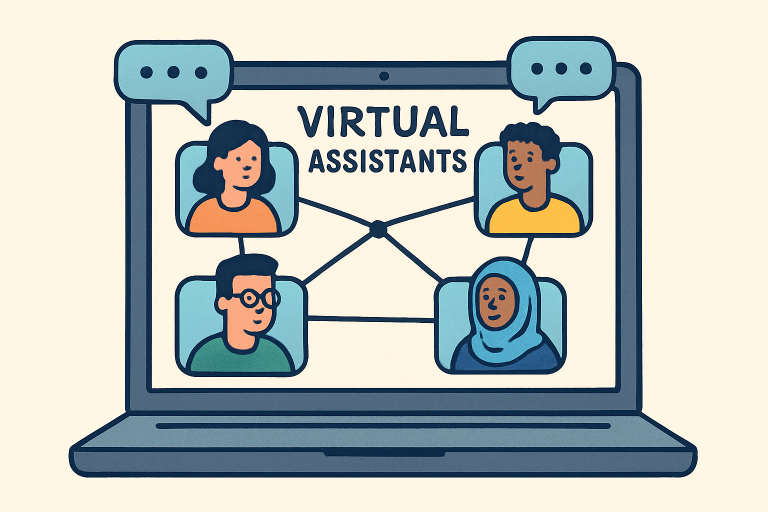
Partnering with a company specializing in virtual assistance unlocks a vast talent pool, enabling businesses to secure specialized expertise worldwide. Whether it’s market research, graphic design, bilingual customer support, or a private equity firm needing a venture capital virtual assistant, this model delivers talent without relocation hurdles and time-zone limitations.
Enhanced Productivity
Core staff can focus on high-value strategic initiatives by delegating routine tasks—scheduling, inbox management, or data entry—to skilled VAs. This increases day-to-day efficiency and boosts overall job satisfaction and innovation capacity for the primary team.
Tasks Managed by Virtual Assistants
The list of responsibilities handled by VAs has broadened extensively. Core administrative support remains foundational, but many now provide additional, industry-specific services:
- Calendar and schedule management
- Travel planning and logistics support
- Customer inquiries and live chat support
- Database management and CRM updates
- Bookkeeping, invoice processing, and expense reporting
- Social media content creation and management
- Email marketing and campaign coordination
- Assistive research and document preparation
Industries Leveraging Virtual Assistants
Virtual assistants are pivotal in multiple sectors. In e-commerce, VAs facilitate timely customer service, manage order fulfillment, and oversee inventory coordination. Real estate agencies use VAs for client follow-up, appointment scheduling, and property listings management. Healthcare organizations assign VAs to administrative patient tasks, appointment reminders, and insurance processing. Tech companies rely on VAs for technical troubleshooting and large-scale data management.
The versatility of VAs is increasingly recognized in sectors like legal support, education, and consulting, where confidentiality and efficient information handling are paramount. As an Entrepreneur describes, smaller businesses tap into virtual assistance to streamline costs and compete with larger market players.
Integrating Virtual Assistants into Your Business
- Identify Needs: List core, repetitive, or specialized tasks that can be delegated. Administrative overhead, scheduling, travel, and follow-ups are typical starting points.
- Select the Right VA: Clearly define desired skills and experience. Choose candidates aligned with your industry’s specific demands.
- Set Clear Expectations: Develop transparent job descriptions, process guidelines, and KPIs for every VA role. Open communication is essential for aligned goals.
- Utilize Collaboration Tools: Implement cloud-based project management and communication tools to monitor workflow, share updates, and ensure accountability.
Companies can achieve seamless integration by establishing strong onboarding processes and providing regular feedback while minimizing the learning curve.
Future Trends in Virtual Assistance
The future of virtual assistance is increasingly shaped by technology and the move toward workforce specialization. AI-driven automation enables VAs to take on more complex tasks like chat-based customer support, predictive analytics, and advanced workflow automation. This enhancement of VA capabilities is expected to trigger even broader adoption, as businesses anticipate cost savings and quality improvements.
- AI Integration: Sophisticated chatbots and automation revolutionize client interactions, data entry, and routine analysis.
- Increased Specialization: VAs offer tailored services for legal, medical, tech, and creative fields, ensuring high standards and compliance.
- Global Collaboration: Cross-border teams are the new norm, supported by mobile apps, cloud solutions, and 24/7 global reach.
Embracing the evolving landscape of virtual assistance positions businesses not just for short-term gains but for sustained, strategic advantage in an increasingly digital future.
Final Thoughts
The growing adoption of virtual assistants reflects a fundamental shift in how businesses operate in a fast-paced, technology-driven environment. By combining specialized expertise, global accessibility, and advanced digital tools, they empower organizations to achieve more with fewer resources. Their ability to streamline processes, enhance productivity, and maintain strong security practices makes them valuable assets across industries. As companies face evolving challenges and opportunities, virtual assistants offer the flexibility and scalability to adapt quickly. This transformative support improves operational efficiency and fosters innovation, enabling professionals to focus on high-impact goals and long-term business growth.