
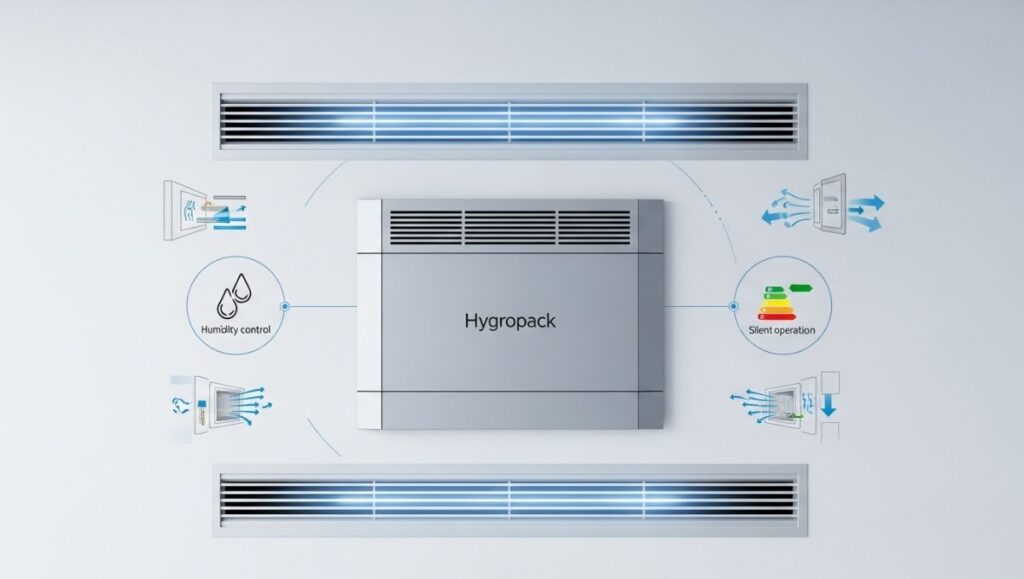
In buildings where comfort, air quality, and energy efficiency matter, choosing the right equipment is key. One such component making waves in the ventilation sector is the Hygropack system—especially in residential and light commercial installations. This article dives into what Hygropack is, how it works, why it matters, its advantages and limitations, and best-practice tips for selection and installation.
What Is Hygropack?
Hygropack refers broadly to a range of ventilation terminal devices—often air extraction or ventilation grilles/bouches—that are hygro-regulable, meaning they adjust airflow depending on humidity levels. In many published references, Hygropack is used in conjunction with French manufacturer Nather’s “ALIZÉ HYGRO” series, described as:
This means the device senses humidity (for example in a bathroom or kitchen) and adjusts its ventilation rate accordingly. Instead of a fixed extraction airflow, the device increases extraction when humidity rises (e.g., after a shower), helping reduce condensation, mold risk, and improve indoor air quality.
In essence, Hygropack is a smart ventilation terminal that is humidity-sensitive and energy-efficient.
How Does Hygropack Work?
Here’s a breakdown of the mechanism:
-
The unit is installed as part of a ventilation system (often simple or mechanical ventilation in bathrooms, kitchens, WC, etc.).
-
It includes a humidity sensor (or operates with a membrane that responds to relative humidity) that controls airflow rate. For example, one model lists a range of 5-30 m³/h triggered by humidity.
-
Under low humidity conditions (normal ambient air), the device maintains a minimal extraction rate, keeping energy consumption low.
-
When humidity rises (steam from shower, cooking, etc.), the device opens up (or motorises) to extract more air—thus lowering moisture and improving indoor air comfort.
-
After conditions normalise, airflow returns to baseline.
Thus, Hygropack gives ventilation that is dynamic rather than static.
Where and Why Use Hygropack?
Typical Use-Cases
-
Bathrooms and shower rooms (where humidity peaks)
-
Kitchens (where steam and humidity are generated)
-
WCs and other sanitary areas
-
Anywhere that needs precise moisture/air-quality control without over-ventilating all the time
Key Benefits
-
Better moisture control: Rising humidity triggers higher extraction, reducing risk of condensation and mould.
-
Energy efficiency: Since ventilation rate adapts, less energy is wasted when the space is dry.
-
Improved indoor air quality (IAQ): Removes humid, stale, or odorous air more effectively.
-
Compliance and flexibility: Many modern building regulations emphasise variable ventilation and demand-control; Hygropack helps meet those.
-
Reduced noise and drafts: Because baseline rate is lower, the system runs quieter when full extraction isn’t needed.
Technical Specifications & Considerations
When evaluating Hygropack (or similar hygro-regulating ventilation terminals), keep in mind the following:
-
Airflow range: Models list ranges like 10-45 m³/h. E.g., one model from Nather lists “10-45/45 visio” for diam 80mm duct.
-
Duct diameter: Many versions use Ø 80 mm for sanitary areas.
-
Sensor/trigger mechanism: Some use electrical connection (12 V) or are passive hygro-membrane.
-
Baseline (low) flow vs. boost (high) flow when humidity triggers.
-
Activation criteria: Humidity threshold settings (for example 60-70% RH) and sometimes integral timer or delay.
-
Installation context: Suitability for existing or new ventilation networks, connection to single- or dual-flow VMC systems.
-
Maintenance and lifespan: Like any mechanical/hygro device, periodic cleaning and checking is beneficial.
Advantages & Limitations
Advantages
-
On-demand ventilation adapts to need → better comfort & lower energy use.
-
Particularly useful in humid zones: bathrooms, kitchens, even laundry rooms.
-
Helps building owners/occupants manage humidity, avoid mould, maintain healthy indoor environment.
-
Often compatible with building regulations and energy-efficient ventilation strategies.
Limitations
-
Initial cost: Hygro-terminal devices cost more than fixed-flow grilles or simple extraction fans.
-
Sensor malfunction risk: If the sensor or mechanism fails, the terminal may stick at baseline or max, reducing efficiency or causing discomfort.
-
Installation complexity: Requires correct integration with the ventilation system (duct sizing, balancing, controls) to function properly.
-
Maintenance needs: Dust, lint or debris can impact the sensor/airflow.
-
Not a complete solution: While very useful for extraction terminals, overall system still needs proper design (ducts, fan, pressure balancing). It’s a part, not the whole.
Best-Practice Tips for Selection & Installation
-
Correct sizing: Ensure the terminal’s airflow range aligns with the room volume and usage patterns.
-
Appropriate duct diameter: Following manufacturer’s requirement (e.g., Ø 80 mm) ensures proper flow and low noise.
-
Positioning: Install near humidity sources (shower, stove) but also ensure drawing air appropriately from the space.
-
Sensor calibration: If adjustable, set the humidity threshold sensibly (e.g., ~65-70% RH) to avoid constant high extraction or too-slow response.
-
Integration with fan/unit: The terminal must coordinate with the fan or ventilation box; if the fan cannot deliver the higher rate, benefits are limited.
-
Ensure clean duct and terminal: Regularly inspect and clean to prevent reduced airflow or sensor misreading.
-
Sound insulation and airflow noise: Because the terminal may operate at higher flows, ensure duct routes and outlets minimise noise and drafts.
-
Testing and verification: After installation, measure actual flows at baseline and max states; verify humidity response time.
-
User awareness: Educate occupants about how the device works (e.g., why extraction increases when showering) so they don’t try to disable it.
Future Outlook and Trends
As buildings become more airtight (for energy efficiency) and indoor air-quality standards become stricter, devices like Hygropack gain relevance. Here are some trends:
-
Integration with smart home systems: Humidity terminals could feed data to home automation systems or building management systems for advanced control.
-
Sensor networks & adaptive control: Coupling humidity sensors with CO₂ or occupancy sensors for multi-parameter ventilation regulation.
-
Energy optimisation: Using adaptive terminal devices to complement heat-recovery ventilation systems, reducing thermal losses.
-
Maintenance-free designs: Better sensor durability and self-monitoring functionalities.
-
Regulations tightening: Building codes increasingly demand “demand-controlled ventilation” or dynamic flow rather than fixed rates — thereby making devices like Hygropack key compliance elements.
Conclusion
In summary, Hygropack devices offer a practical, efficient way to regulate ventilation by adapting airflow to humidity levels. Especially in spaces where moisture peaks (bathrooms, kitchens), such systems help improve comfort, prevent mould, and save energy. Their effectiveness depends on correct sizing, installation, and integration into the full ventilation system. While they are not a silver bullet for all ventilation issues, when used appropriately they enhance both building performance and occupant health.