
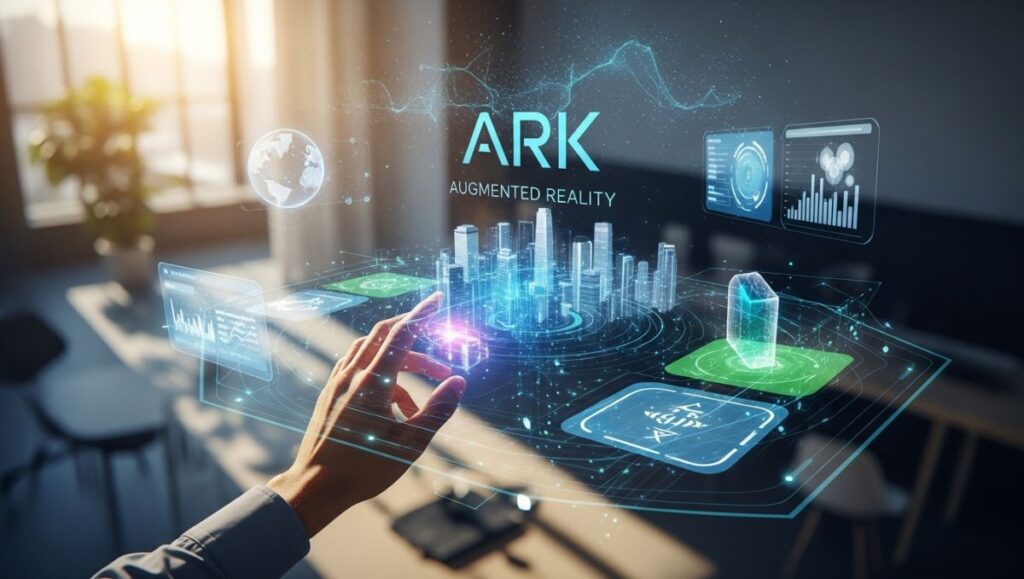
Over the past decade, technology has rapidly evolved from simple 2D interfaces to fully immersive digital experiences. Among these innovations, Augmented Reality (AR) stands out as one of the most transformative. By blending the digital and physical worlds, AR enables users to experience interactive environments where virtual objects coexist with real surroundings.
One of the most promising and innovative applications of this technology is ARK Augmented Reality — a dynamic AR ecosystem that aims to revolutionize the way individuals, brands, and businesses engage with the digital realm. Whether in education, gaming, retail, or industrial design, ARK’s approach to augmented reality is redefining how humans perceive and interact with technology.
What Is ARK Augmented Reality?
ARK Augmented Reality (often abbreviated as ARK AR) is an advanced technology platform that combines augmented reality, 3D visualization, and artificial intelligence to deliver interactive digital experiences layered over the real world. Its name, “ARK,” symbolizes a vessel of innovation — bridging physical and virtual realities to create a seamless user experience.
At its core, ARK AR provides tools and frameworks that empower developers, businesses, and creators to design AR experiences that enhance communication, engagement, and learning. Through mobile applications, smart glasses, and web-based platforms, ARK AR enables users to visualize data, explore environments, and interact with objects as if they were part of their natural surroundings.
How ARK Augmented Reality Works
Augmented reality works by overlaying computer-generated content — such as images, animations, or sounds — onto the real world through a digital device. ARK Augmented Reality takes this concept further by integrating multiple technologies to deliver smooth, intelligent, and context-aware experiences.
1. Data Capture and Mapping
ARK AR uses cameras, sensors, and computer vision algorithms to scan and understand the user’s environment. This process, known as spatial mapping, allows the system to recognize surfaces, distances, and real-world objects.
2. Digital Object Placement
Once the environment is mapped, ARK AR overlays 3D digital objects in precise positions relative to the real world. These objects move naturally as users shift their perspective, maintaining a realistic sense of depth and presence.
3. Interaction and AI Integration
What makes ARK unique is its integration with artificial intelligence. The platform can analyze user behavior, gestures, and voice commands to enable intuitive interaction with virtual elements — turning static visuals into responsive, intelligent systems.
4. Rendering and Display
ARK AR uses real-time 3D rendering engines to ensure that augmented objects appear lifelike, with accurate lighting, texture, and shadows. This technology allows users to view and manipulate objects from multiple angles, creating a truly immersive experience.
Key Features of ARK Augmented Reality
1. Real-Time Object Recognition
ARK AR can detect and respond to physical objects in the user’s environment, making it ideal for applications like retail visualization, product demonstrations, and technical training.
2. Cross-Platform Accessibility
Whether accessed through a smartphone, tablet, or AR headset, ARK offers seamless compatibility. This versatility allows users to engage with AR experiences anytime, anywhere.
3. AI-Powered Context Awareness
By combining AR with AI, ARK delivers adaptive experiences that adjust to user context — such as location, time, and behavior. For example, in retail, ARK can recommend products based on what a user is viewing.
4. 3D Visualization Tools
ARK’s high-definition 3D models create stunningly realistic visuals, perfect for industries such as architecture, engineering, and education.
5. Cloud-Based Infrastructure
Through its cloud architecture, ARK allows for real-time collaboration and data sharing. Users can access AR projects remotely, making teamwork more efficient and scalable.
Applications of ARK Augmented Reality
1. Education and Training
ARK AR transforms traditional learning by enabling students to explore 3D models of complex concepts. Imagine a biology class where learners can interact with a virtual human heart or a physics lesson featuring real-time simulations. For vocational training, ARK provides realistic practice environments, reducing risks and costs.
2. Retail and E-Commerce
Retailers use ARK to allow customers to try products virtually before purchasing. From trying on clothes to visualizing how furniture fits in a living room, ARK enhances online shopping with interactive previews that boost consumer confidence and satisfaction.
3. Architecture and Real Estate
Architects and real estate developers benefit from ARK’s visualization tools, which let clients walk through digital models of buildings before they’re constructed. ARK AR turns blueprints into immersive, interactive experiences that improve project presentations and decision-making.
4. Healthcare and Medical Simulation
ARK is making strides in healthcare by assisting in medical training and surgical planning. Through detailed AR simulations, doctors can visualize organs, bones, or surgical procedures in 3D, improving accuracy and patient outcomes.
5. Gaming and Entertainment
The gaming industry is one of ARK’s most exciting fields. Players can immerse themselves in augmented environments that blend virtual storytelling with physical movement — a concept popularized by games like Pokémon GO, but now more advanced and realistic.
6. Industrial Maintenance and Manufacturing
For manufacturing, ARK provides step-by-step AR instructions to guide workers through assembly, repair, or maintenance processes. This reduces human error, increases safety, and improves operational efficiency.
The Technology Behind ARK AR
ARK’s technology stack includes multiple advanced systems that work together to deliver reliable and engaging AR experiences:
-
Computer Vision: Enables devices to recognize real-world environments and objects.
-
SLAM (Simultaneous Localization and Mapping): Allows ARK to track movement and map surroundings in real time.
-
AI and Machine Learning: Power predictive analytics and adaptive responses within the AR environment.
-
3D Rendering Engines: Produce photorealistic visuals that blend seamlessly with the physical world.
-
Cloud Computing: Ensures scalability, collaboration, and data synchronization across devices.
Together, these technologies allow ARK to bridge the gap between imagination and reality — bringing digital information to life in ways that were once science fiction.
Benefits of Using ARK Augmented Reality
1. Enhanced User Engagement
By combining visual, auditory, and tactile elements, ARK AR creates experiences that captivate attention and enhance understanding. This makes it an invaluable tool for marketing, learning, and entertainment.
2. Improved Decision-Making
With realistic visualizations, users can test ideas, analyze outcomes, and make informed choices before executing real-world actions — whether designing a product or planning a construction project.
3. Cost and Time Efficiency
ARK reduces the need for physical prototypes and repeated manual processes. For industries like engineering and retail, this means lower production costs and faster go-to-market times.
4. Accessibility and Collaboration
Through its cloud-based platform, ARK enables remote teamwork and knowledge sharing, helping teams across different locations collaborate in real-time AR environments.
5. Sustainable Innovation
By minimizing material waste and improving visualization accuracy, ARK contributes to more sustainable workflows across industries.
Challenges and Limitations
While ARK Augmented Reality presents incredible potential, it also faces certain challenges:
-
Hardware Requirements: High-quality AR often demands powerful devices with advanced sensors.
-
User Adoption: Some users are still unfamiliar with AR technology, leading to slower adoption rates.
-
Privacy Concerns: AR experiences that collect environmental data must ensure user privacy and security.
-
Development Costs: Building complex AR applications can require specialized skills and higher initial investment.
Despite these challenges, ARK continues to evolve, making AR more accessible and efficient with each new update.
The Future of ARK Augmented Reality
The future of ARK AR looks promising. As wearable technologies like AR glasses and mixed reality headsets become mainstream, ARK is poised to integrate deeper into daily life — from smart city navigation to virtual tourism and immersive social media experiences.
With the rapid development of 5G networks, ARK will soon deliver even more seamless, high-speed AR experiences without latency issues. In addition, the growing synergy between AR and blockchain technology could lead to secure ownership of digital assets, paving the way for virtual economies within AR ecosystems.
In essence, ARK AR is more than just a technological innovation — it’s a step toward a phygital world, where the physical and digital merge into a single, continuous experience.
How Businesses Can Leverage ARK AR
For organizations considering integrating ARK into their workflow, here are some practical strategies:
-
Start with Pilot Projects: Experiment with small-scale AR applications, such as virtual product displays or interactive ads.
-
Integrate with Marketing Campaigns: Use AR experiences to engage customers and differentiate your brand.
-
Train Employees: Provide AR-based simulations for safer, faster learning.
-
Partner with Developers: Collaborate with AR professionals to tailor ARK solutions for specific business goals.
-
Measure Results: Use analytics to track engagement, performance, and ROI for continuous improvement.
Conclusion
ARK Augmented Reality represents the cutting edge of immersive technology — a system that not only overlays digital elements onto the physical world but also enhances the way humans think, learn, and interact. From education to enterprise, ARK’s ability to combine creativity, intelligence, and practicality makes it a cornerstone of the future digital landscape.
As we move toward a world where augmented and virtual realities become everyday tools, ARK stands as a symbol of progress — unlocking new dimensions of experience and redefining what it means to connect with technology.