
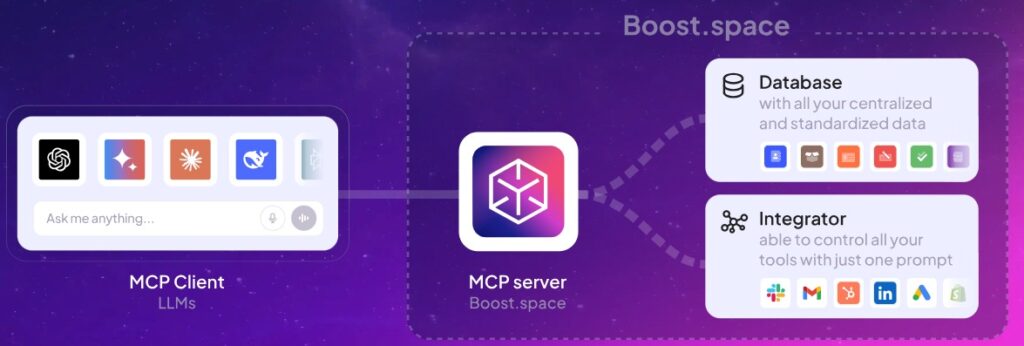
As organizations adopt automation and AI at scale, the challenge is no longer simply connecting apps—it’s ensuring every integration is context-aware, secure, and ready for the autonomous workflows that define tomorrow’s enterprise. The Model Context Protocol (MCP) is at the heart of this evolution, emerging as a new open standard that empowers digital agents and automation to work with continuity, memory, and robust governance across tech stacks.
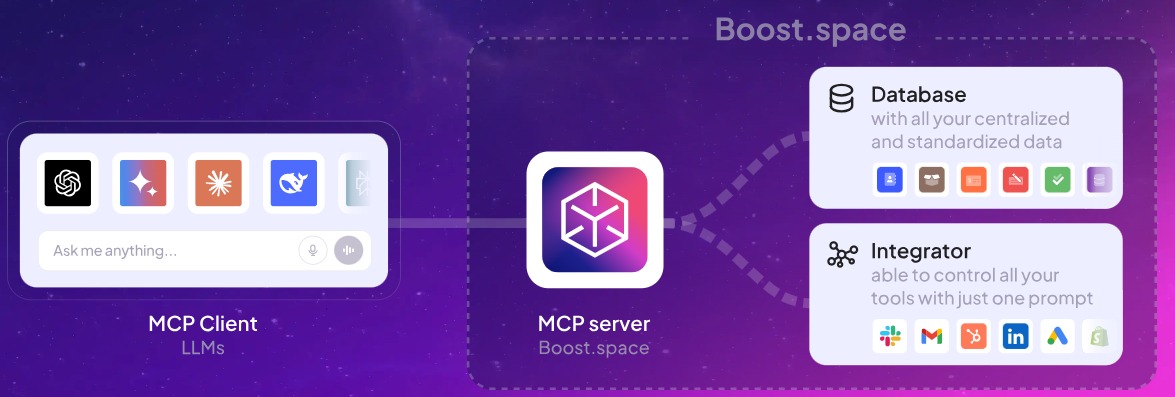
What is Model Context Protocol (MCP)?
Model Context Protocol is an open, universal framework designed to give enterprise AI, automations, and integration platforms a shared context and a common “language.” Unlike traditional integrations—where each app or system might have its own isolated APIs—MCP creates a persistent memory layer and structured way for digital agents to access, process, and update data, regardless of source.
Why MCP Matters in the Age of Intelligent Automation
Traditional integrations move data in one direction with limited context. This approach works for simple triggers, but falls short for today’s agentic automation where workflows span multiple tools, rely on historical data, and must uphold enterprise-grade security and compliance. MCP addresses these gaps by ensuring:
– Seamless, bi-directional data exchange:
Information moves with structure and meaning, so digital agents “understand” relationships and can keep context across sessions and apps.
– Memory and continuity:
AI agents don’t start from zero every time. MCP’s persistent memory layer means actions are informed by history, user preferences, and business logic.
– Robust governance and compliance:
Fine-grained access controls, data lineage, and support for data privacy (GDPR, SOC 2, ISO 27001) are inherent in the way MCP enforces security protocols.
Key Benefits and Applications
– Accelerated AI deployment:
With a unified context protocol, businesses rapidly connect LLMs and automations to real business processes—driving faster, smarter decisions.
– Reduced integration overhead:
Rather than building custom connectors for every system, one MCP interface integrates with thousands of apps, simplifying maintenance.
– Foundation for agentic enterprise:
MCP enables autonomous workflows—AI that can reason, plan, and act reliably across the entire stack, not just in isolated silos.
Building the Agentic Enterprise with MCP
Forward-thinking organizations are already leveraging Model Context Protocol to orchestrate complex workflows, manage data at scale, and unlock true ROI on their AI investments.
To learn more about how MCP is transforming secure, AI-ready integration and making automation future-proof, visit Boost.space MCP.
How MCP Is Already Changing the Enterprise Landscape
Organizations using Model Context Protocol are reporting dramatic improvements in both the efficiency and resilience of their digital operations. For example, companies that previously struggled with fragmented workflows are now able to connect ERPs, CRMs, and custom AI agents through a single governed data layer. This not only consolidates data and automations, but also reduces integration complexity and lowers maintenance burden for IT teams.
MCP’s persistent memory layer is particularly transformative when deploying advanced AI use cases. Imagine a scenario where a digital agent handling customer support seamlessly recalls the full history of user interactions, purchase data, and product preferences—all thanks to a unified MCP foundation. This approach enables AI to provide faster, more personalized service, triggering corrective workflows and business actions proactively rather than reactively.
The Road Ahead: Enabling the Agentic, AI-Ready Organization
As the need for agility and data-driven decision-making accelerates, more enterprises are recognizing that the Model Context Protocol is not just another technical standard—it is the backbone for trusted, autonomous automation. MCP’s unified approach powers advanced governance (auditing, access control, GDPR compliance), unlocks real-time business insights, and supports rapid adaptation to new market and regulatory demands.
Looking forward, MCP will play a key role in the shift toward agentic enterprises—where digital workers (AI agents, chatbots, automation scripts) don’t simply execute static tasks, but collaborate, reason, and plan autonomously. By standardizing how context and memory are shared, MCP future-proofs the enterprise for innovations in AI, machine learning, and beyond.
To stay ahead in the evolving digital landscape, now is the best time to explore the possibilities of Model Context Protocol. Discover how your organization can benefit at Boost.space MCP .