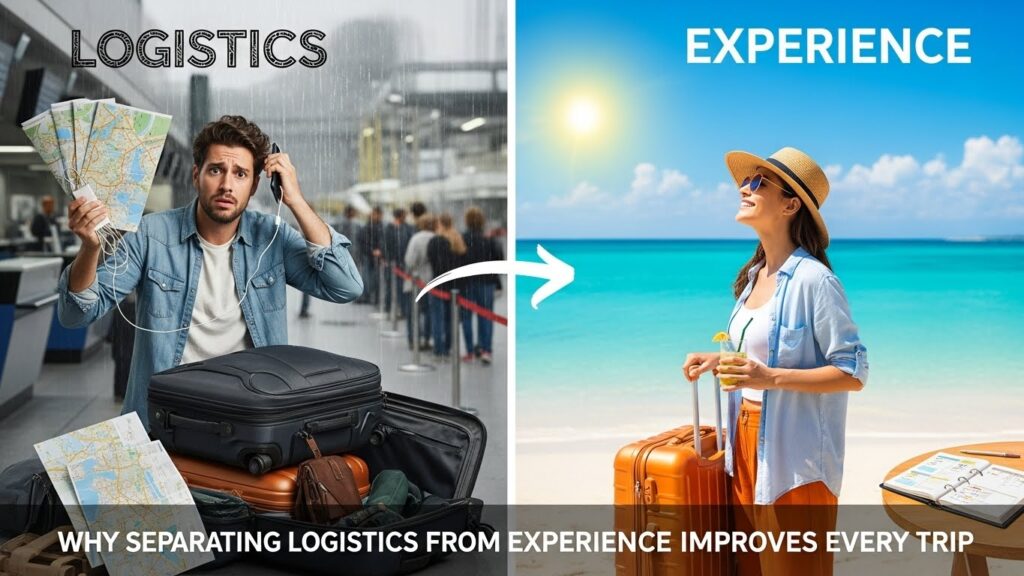
Travel often feels demanding, not because of distance, but because too many responsibilities are carried at once. Movement, planning, timing and coordination compete for attention, leaving little room to actually enjoy the experience. Trips feel smoother and more rewarding when logistics are separated from the experience itself. This shift changes not only how travel unfolds, but how it is remembered.
Separating logistics from experience means allowing practical arrangements to run quietly in the background. Instead of managing every detail personally, some elements are handled independently. This creates space for presence, flexibility and genuine engagement with the surroundings.
How Logistics Can Overwhelm the Experience
Logistics demand structure. They rely on schedules, confirmations and contingencies. While necessary, they can dominate attention if not handled thoughtfully. When logistics and experience are tightly intertwined, every delay or change interrupts enjoyment.
This constant management pulls focus away from the reason for traveling in the first place. The mind stays busy tracking what still needs to happen rather than noticing what is happening now. Over time, this turns even exciting trips into exercises in coordination.
Experience Thrives on Openness
Experience thrives on openness rather than control. It grows in moments that are unplanned and lightly held. When attention is not tied to managing details, curiosity has room to emerge.
Separating logistics allows experience to breathe. It removes the pressure to optimise every moment and replaces it with the freedom to respond naturally. This openness often leads to richer memories and a deeper sense of connection to a place.
Letting Systems Handle What They Do Best
Systems exist to handle complexity. Using them effectively allows travellers to step out of constant oversight. When logistics are delegated or automated, they stop competing for attention.
For trips involving motorcycles, this separation can be especially impactful. Coordinating movement, timing and care requires focus that can overshadow the experience. Arranging vehicle transportation in Montana allows that complexity to be handled independently. With the motorcycle accounted for, attention shifts fully to the trip itself rather than the mechanics behind it.
This does not reduce involvement. It refines it.
Mental Lightness Improves Flexibility
When logistics are separated, flexibility increases. Changes feel manageable instead of disruptive. There is less pressure to stick rigidly to plans because fewer elements depend on constant alignment.
Mental lightness allows adaptation. Weather shifts, spontaneous stops and extended stays become opportunities rather than problems. The trip responds to the traveller, not the other way around.
Why Every Trip Benefits from This Approach
Separating logistics from experience works regardless of destination or travel style. It reduces stress, improves focus and enhances enjoyment. The benefits are subtle but consistent.
Trips feel calmer from the beginning. Transitions are smoother. Energy is spent on noticing, learning and enjoying rather than managing and correcting.
Making Space for What Travel Is Meant to Be
Travel is not just about reaching a place. It is about how movement feels along the way. When logistics are allowed to operate quietly, experience comes forward naturally.
By separating the two, travel becomes less about control and more about connection. Each trip gains room to unfold on its own terms, creating experiences that feel fuller, lighter and more lasting.