
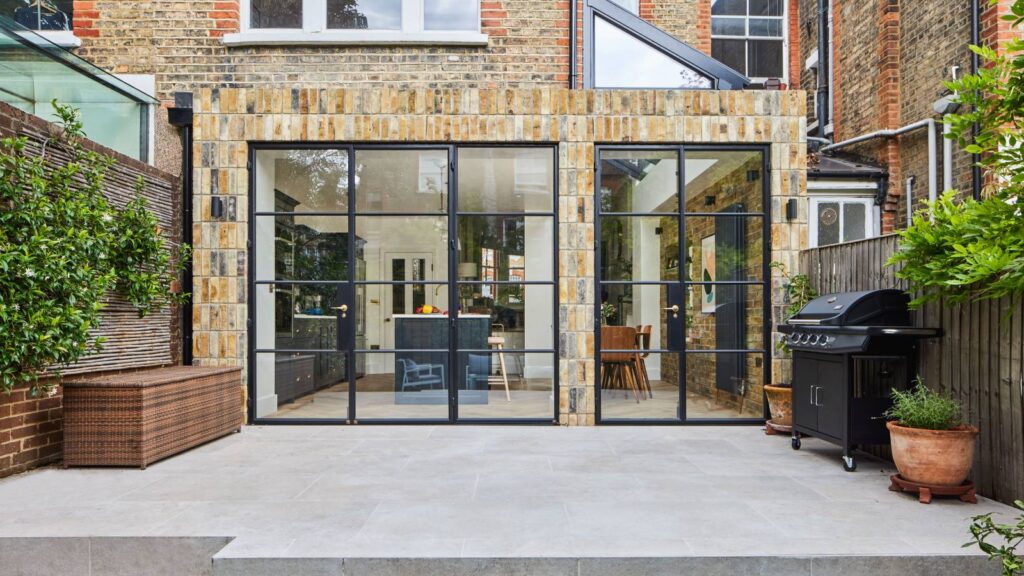
You want to extend your home. Before you spend money on architects and designs, you need to know a basic question: do you need Planning Permission? Some extensions fall under Permitted Development Rights. That means you can build without waiting months for council approval. But size matters. Get the dimensions wrong and suddenly you need permission you weren’t expecting.
Understanding what size extension actually qualifies for Permitted Development in the UK, or learning the specific measurements that determine whether you need Planning Permission, helps you make realistic decisions before you commit to anything.
Click here to read more about the what size extension can i build without planning permission.
If you want to know more about how Extension Architecture assesses whether your specific property and your specific extension idea qualify, or understand the technical restrictions that sometimes disqualify seemingly small projects, you’ll see why getting this right from the start matters. The rules are specific. Not knowing them costs time and money.
Basic Limits Allowed Under Permitted Development
Permitted Development Rights allow certain extensions to be built without Planning Permission. But there are strict limits. Size is one factor. Location is another.
For a single storey extension, the basic rule is straightforward in concept but tricky in practice. The extension can’t be more than 4 meters deep. It can’t exceed a certain percentage of your original garden area. It can’t have certain types of roofing.
But here’s what catches people: these rules apply to the whole property, not just one extension. If you’ve already built an extension, that counts toward your limits. You can’t just build another one because you want one on a different side.
Also, your property type matters. Terraced houses have different limits than detached houses. Semi detached has different limits than terraced.
Location matters too. If you’re in a Conservation Area, different rules apply. If you’re in certain restricted areas, more restrictions exist.
The basic principle is this: Permitted Development lets you build minor extensions without planning approval. The word minor is doing a lot of work in that sentence.
Size Rules for Single Storey Extensions
Single storey extensions that qualify for Permitted Development have specific limits.
The extension can’t be more than 4 meters deep measured from the existing rear wall of your house. That’s the key measurement. Not the overall size. Not the square footage. The depth from your existing wall.
The extension can’t cover more than 50 percent of your original garden area. Original matters here. Not current. Not after you’ve already built something. Original.
The eaves height (where the wall meets the roof) can’t exceed the eaves height of your existing house. Usually. There are exceptions but generally this is the rule.
The roof ridge height can’t exceed the ridge height of your existing house. If your house has a pitched roof, the extension roof can’t be higher.
For flat roofs on extensions, the height limit is different. Generally lower than pitched roof limits.
These measurements sound simple but they’re technical. A millimeter over in one direction and you’ve exceeded limits.
This is where architects in london come in. They know how to measure correctly. They know which measurements matter. They design extensions that stay within limits.
How Extension Architecture Helps Check Your Property Limits
Assessing whether your property qualifies for Permitted Development requires systematic checking.
First, Extension Architecture looks at your property type. Is it terraced? Detached? Semi detached? Each has different rules.
Second, they assess location. Are you in a Conservation Area? Listed building? Restricted area? These factors change what qualifies.
Third, they measure your property. They take exact measurements of the existing house. The garden. The walls and roof heights. These measurements determine what’s possible.
Fourth, they look at your specific extension idea. How deep? How wide? What roof type? What coverage percentage? They check whether it meets all the requirements.
Only after this systematic assessment do they tell you whether your project qualifies for Permitted Development or whether you need Planning Permission.
A design and build company without this architectural expertise might assume something qualifies when it doesn’t. Then you start work and discover you needed permission you didn’t get. That’s a disaster.
Height, Depth, and Width Restrictions to Know
Understanding specific measurements helps you grasp whether your idea actually works.
Depth is typically the most restrictive. Four meters is the common limit. That’s about 13 feet. If you’re thinking of a deeper extension, you probably need Planning Permission.
Width usually isn’t restricted. You can extend the full width of your property. The restriction is depth, not width.
Height is restricted by your existing house. You can’t go higher than what already exists. This prevents your extension from dominating the property visually.
For flat roof extensions, the height restriction is usually lower. Maybe 3 meters eaves height depending on circumstances.
Roof slope matters. Pitched roofs have higher ridge height limits than flat roofs.
These restrictions exist to prevent extensions from becoming major visual changes to your property. The idea is that Permitted Development is for minor work. Major work needs planning review.
When You Must Apply for Full Planning Permission
Even if your extension seems small, Planning Permission is required in certain situations.
If your property is in a Conservation Area and the extension exceeds certain limits, Planning Permission is required.
If your building is listed, Planning Permission is almost always required. Listed buildings can’t do much without consent.
If your extension exceeds the four meter depth limit, Planning Permission is needed.
If your extension would cover more than the allowed garden percentage, Planning Permission is required.
If you’re extending forward (toward the street), Planning Permission is usually required. Extensions forward change the property’s appearance significantly.
If you’ve already used your Permitted Development allowance, another extension requires Planning Permission.
If your property is on a corner plot or in a specific location type, different rules apply and Planning Permission might be required.
Double storey extensions almost always require Planning Permission. They’re too visually prominent for Permitted Development.
Building Regulations Still Applies
This is crucial: qualifying for Permitted Development doesn’t skip Building Regulations.
You still need Building Regulations approval. You still need inspections. You still need to meet safety standards. Structural requirements. Fire safety. Ventilation. Electrical. Plumbing.
Building Regulations approval takes time but it’s usually faster than Planning Permission plus Building Regulations combined.
You can’t skip this step. It’s mandatory regardless of whether Planning Permission is required.
Why Architects Matter For Getting This Right
Getting extension sizes right requires expertise. You can’t just guess.
Architects london know these rules. They measure accurately. They design to stay within limits. They avoid expensive mistakes.
A design and build company working with experienced architects avoids the trap of assuming something qualifies when it doesn’t.
The cost of getting it wrong is enormous. Starting work without permission. Getting caught. Having to stop. Tearing down what you built. Starting over with Planning Permission. Months of delays. Thousands in extra costs.
Getting it right from the start protects you.
Your extension size determines whether you need Planning Permission. Four meters is typically the depth limit. Garden coverage percentages matter. Location matters. Property type matters.
Before you commit to anything, have an architect assess your specific situation. They know the rules. They know your local authority. They know what qualifies.
That clarity shapes your whole project. You know your timeline. You know your costs. You can plan accordingly.
Extension Architecture does this assessment regularly. They know what works and what requires Planning Permission. Talk to them about your extension idea. They’ll tell you what’s actually possible on your property.