
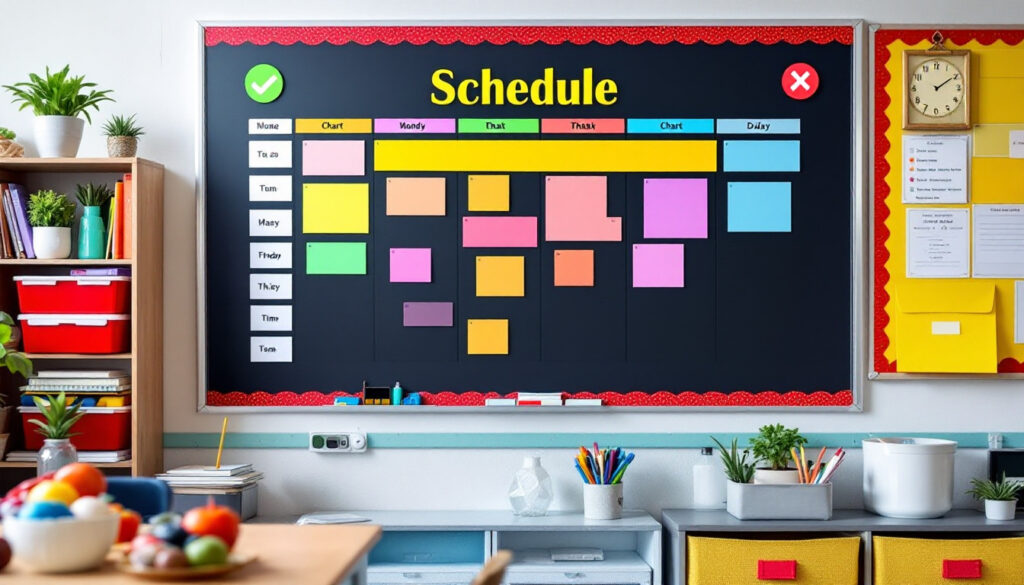
Meltdowns at bedtime. Tantrums during transitions. Constant battles over daily activities. If these scenarios sound familiar, you’re not alone. Many families struggle with helping their children navigate daily routines and transitions smoothly. The good news? There’s a powerful tool that can transform these challenging moments into manageable, even enjoyable experiences: visual schedules.
Visual schedules are structured sequences of pictures, symbols, or words that represent activities in the order they will occur. Originally developed as an evidence-based intervention in Applied Behavior Analysis (ABA), these tools have proven invaluable for children with autism, ADHD, developmental delays, and even neurotypical children who thrive on routine and predictability.
Whether you’re a parent seeking solutions at home or working with a certified ABA therapist, understanding how to create and implement effective visual schedules can dramatically reduce stress and increase independence for children of all abilities.
What Are Visual Schedules and Why Do They Work?
Visual schedules provide a concrete, predictable framework that helps children understand what’s happening throughout their day. Unlike verbal instructions that disappear once spoken, visual schedules remain available for constant reference, reducing anxiety and confusion.
The effectiveness of visual schedules stems from several key principles. First, they tap into the visual processing strengths that many children possess, particularly those with autism spectrum disorders. Second, they provide structure and predictability, which reduces anxiety about unknown expectations. Finally, they promote independence by allowing children to self-monitor their progress through activities.
Research consistently supports the use of visual schedules as an evidence-based practice. The National Professional Development Center on Autism Spectrum Disorders identifies visual schedules as one of the most effective interventions for promoting independence and reducing challenging behaviors.
Types of Visual Schedules
Visual schedules come in various formats, each suited to different developmental levels and individual needs.
Object Schedules
Object schedules use real items to represent upcoming activities. For example, a toothbrush might represent teeth brushing, or a backpack might indicate it’s time to leave for school. These work particularly well for young children or those with significant developmental delays who may not yet understand picture representations.
Picture Schedules
Picture schedules use photographs or illustrations to represent activities. They’re ideal for children who understand that pictures represent real objects and actions. Many families start with actual photographs of their child performing each activity, as this creates the strongest connection between the visual and the real experience.
Written Schedules
Text-based schedules work best for children who can read independently. These might include simple words for younger readers or detailed task lists for older children and teens.
Combination Schedules
Many effective visual schedules combine multiple formats, using pictures alongside words or adding time indicators to help children understand duration and sequencing.
Creating Effective Visual Schedules
The key to successful visual schedules lies in thoughtful design and personalization. Start by observing your child’s daily routines and identifying specific transition points or activities that cause difficulty.
Choose visuals that your child can easily understand and relate to. If using pictures, ensure they’re clear, uncluttered, and directly represent the intended activity. Consider your child’s developmental level—while a photograph of a bathtub might work for one child, another might need a picture of themselves actually taking a bath to make the connection.
Make the schedule interactive by incorporating a system for marking completion. This might involve moving completed picture cards to a “finished” section, checking off items with a marker, or placing stickers next to completed activities. This visual progress tracking provides immediate feedback and a sense of accomplishment.
Consider the schedule’s portability and durability. Laminated cards with velcro backing allow for easy rearrangement and cleaning. For families on the go, compact, portable versions ensure consistency across different environments.
Implementing Visual Schedules Successfully
Successful implementation requires patience, consistency, and often guidance from professionals like a certified ABA therapist who can provide individualized strategies based on your child’s specific needs.
Begin with simple, familiar routines before expanding to more complex schedules. Morning routines often work well as starting points because they’re typically consistent and contain clear, discrete steps. Introduce the schedule gradually, walking through each step with your child and demonstrating how to use the visual supports.
Consistency across environments amplifies effectiveness. If your child uses a visual schedule at home, consider sharing the concept with teachers, caregivers, and other family members to ensure continuity of support.
Be prepared to make adjustments. Some children need more detailed breakdowns of activities, while others prefer broader categories. Pay attention to your child’s responses and modify the schedule accordingly.
Benefits Beyond Behavior Management
Visual schedules offer advantages that extend far beyond simply reducing challenging behaviors. They actively promote independence by allowing children to self-direct their activities without constant adult prompting. This independence builds confidence and self-esteem as children experience success in managing their own routines.
Communication skills often improve when children can point to or reference their schedule to express their needs or understand expectations. For children with limited verbal abilities, visual schedules become a bridge to more effective communication.
Executive functioning skills receive a significant boost through visual schedule use. Children learn to sequence activities, manage time, and transition between tasks—skills that serve them well throughout life.
Family stress typically decreases as daily routines become more predictable and manageable. Parents report feeling more confident in their ability to support their child’s needs when armed with effective visual supports.
Troubleshooting Common Challenges
Even well-designed visual schedules sometimes encounter obstacles. If your child resists using the schedule, consider whether the visuals are appropriate for their developmental level or if the routine itself needs modification. Sometimes resistance indicates that steps are too complex or that the child needs additional support in understanding how to use the system.
Inconsistent use often stems from lack of adult follow-through rather than child resistance. Ensure all caregivers understand the system and commit to using it consistently. A certified ABA therapist can provide training and support to ensure proper implementation across all environments.
Some children become overly rigid with their schedules, experiencing distress when routines change. While structure is beneficial, building in flexibility helps children develop coping skills for unexpected changes. Consider adding “surprise” or “change” cards to help children understand that schedules sometimes need modification.
Professional Support and Resources
While many families successfully implement visual schedules independently, professional guidance can be invaluable, especially for children with more complex needs. A certified ABA therapist can conduct detailed assessments to determine the most appropriate visual supports for your child’s specific learning style and challenges.
These professionals can also provide training on advanced implementation strategies, data collection methods to track progress, and modifications for different environments or situations. They understand how to integrate visual schedules with other behavioral interventions for maximum effectiveness.
Many families find that initial consultation with a certified ABA therapist provides the foundation they need to successfully implement and maintain visual schedules at home, with periodic check-ins to ensure continued progress.
Building Lifelong Skills Through Visual Support
Visual schedules represent more than temporary behavior management tools—they’re investments in long-term independence and success. The skills children develop through consistent visual schedules transfer to academic settings, social situations, and eventually workplace environments.
As children grow and develop, their visual schedules can evolve to match increasing independence and complexity. What begins as a simple morning routine chart can develop into sophisticated planning systems that support teens and young adults in managing school, work, and personal responsibilities.
The confidence and self-management skills fostered through early visual schedule use create a foundation for lifelong success. Children learn that they can handle expectations, complete tasks independently, and manage their own behavior—lessons that serve them well into adulthood.
Start small, stay consistent, and don’t hesitate to seek professional guidance when needed. With patience and the right approach, visual schedules can transform daily struggles into opportunities for growth, independence, and family harmony.