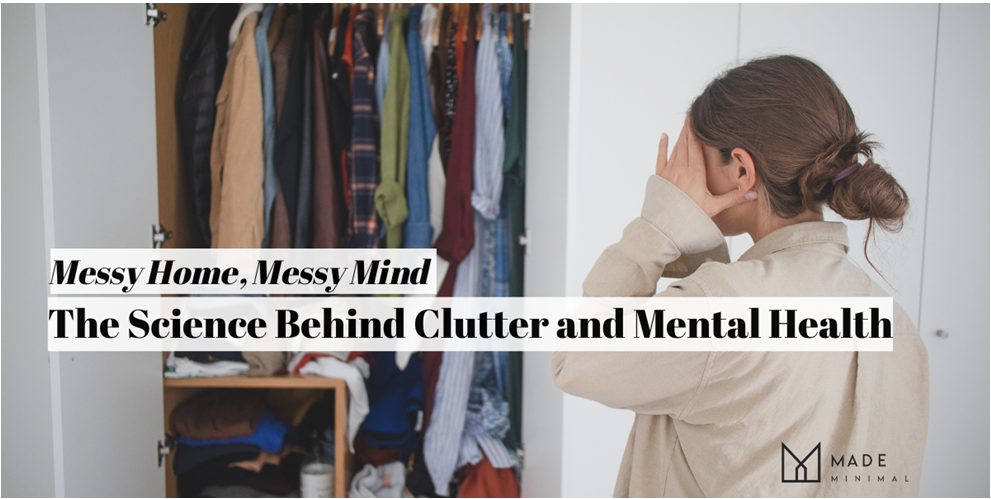
Your cluttered home is affecting your mental health with increased stress, disrupted focus, and elevated anxiety levels.
When you walk into a cluttered room and instantly feel overwhelmed, stressed, or unable to concentrate properly, it’s the impact of the clutter working against your brain’s natural processes.
If your home feels chaotic and you think you can’t create lasting change, that’s not the case at all. Our team at MadeMinimal helped many Australians create calmer, more organised homes that support better mental wellness.
In this article, we’ll explore how your environment directly impacts your psychological well-being. You’ll get to know:
- Why clutter triggers stress responses in your brain
- The hidden mental health costs of disorganised spaces
- Science-backed benefits of decluttering for anxiety and focus
- Practical steps to create a calmer home environment
Ready to change your space and your mental health? Let’s dive in.
Cognitive Overload: The Mental Toll of Clutter
Your messy home impacts your brain with constant visual noise that forces your mind to work overtime processing unnecessary stimuli. This mental juggling act drains your cognitive resources and leaves you feeling mentally exhausted before you’ve even started your day.

Every pile of papers, scattered belongings, and misplaced items competes for your attention, creating what scientists call “visual crowding.” With all this visual chaos happening around you, your working memory becomes cluttered too. The reason this becomes a problem is that it makes thinking clearly, making decisions, or concentrating on important tasks much harder.
Also, the relationship between clutter and mental health becomes particularly evident when we examine decisional procrastination. The moment you’re surrounded by so much stuff, even simple choices feel overwhelming. In this case, your brain starts avoiding decisions altogether because it’s already working hard to process visual chaos, starts avoiding decisions altogether.
Before you know it, you fall into a vicious cycle where the stress of indecision adds to the mental burden of living in disorder.
Common examples of decisional procrastination in cluttered spaces include:
- Avoid choosing what to wear each morning.
- Postponing meal planning and grocery shopping decisions.
- Delaying important paperwork buried in desk piles.
- Spending 10 minutes hunting for keys instead of 2 seconds hanging them up (we’ve all been there!).
The result is that life becomes a series of delayed choices. And each one, whether you realise it or not, adds mental weight to an already overloaded system.
Now that we understand how clutter affects your thinking, let’s explore the deeper emotional impact it has on your daily mood and mental state.
The Emotional Burden of a Cluttered Space
Have you ever noticed how your mood shifts the moment you walk into a chaotic room? It’s because our physical environment is deeply connected to our emotional state.
 When our spaces feel out of control, we often feel the same way inside. The thing is, clutter creates a visual mess as well as triggers our emotional responses that can affect our mental well-being in profound ways.
Here are the two main ways clutter impacts your emotional health:
Clutter’s Link to Anxiety and Depression
A cluttered home can raise your stress hormone levels and create a biological response similar to chronic anxiety. Research shows that for many women, dealing with a cluttered home leads them to have higher levels of cortisol (a stress hormone) throughout the day. That’s like having your body stuck in fight-or-flight mode even when you’re trying to relax at home.
What’s more, the constant visual reminders of unfinished tasks create a background hum of unease that follows you throughout your day. This persistent feeling that you need to do something, but never complete it, can drain your emotional energy before you even tackle your priorities.
Helpful Tip: If you find yourself feeling overwhelmed by your surroundings, start with one small area, like a bedside table or kitchen counter. You’ll see that clearing even a tiny space gives your brain a visual break and creates momentum for more changes.
How a Messy Home Creates Shame and Social Strain
A messy home can make you feel embarrassed about inviting friends over, isolated from social connections and defensive about your living situation. The shame that comes with clutter often leads people to avoid hosting gatherings or feel anxious about unexpected visitors.
Nothing says “surprise panic attack” quite like an unannounced doorbell ring when your lounge room looks like a tornado hit it.
This social isolation can significantly impact your quality of life and contribute to feelings of anxiety and depression. And when you’re also worried about hiding your living space from others, it creates additional stress layers that multiply the original problem.
However, the relationship between our environment and emotions works both ways. When we improve our spaces, we often see improvements in our mood too. With some practical strategies, you can start breaking free from clutter’s emotional grip and transform both your space and your mental well-being.
Creating Mental Clarity Through Home Organisation
Since you know how deeply clutter affects your emotional well-being, the next step is taking action to change your relationship with your space. The good news is that you don’t need professional help or expensive organising systems to start seeing improvements. Often, small, consistent changes in how you approach your belongings can create the mental clarity you’re looking for.
Here are three proven approaches to help you move from chaos to control:
Building an Organised Environment One Step at a Time
We understand that looking at years of accumulated belongings can feel like an overwhelming task that’s impossible to tackle. But trust us, you don’t need to change your entire home in one weekend to start feeling better about your space. You can build cleaning habits that take just a few minutes each day and still see meaningful results.
For example, if you’re dealing with paperwork clutter, start by sorting mail for five minutes when you walk in the door. If clothes are taking over your bedroom, spend ten minutes each evening putting items back where they belong. These small actions help you get rid of the mental burden that comes with visual chaos.
The “One-In, One-Out” Rule for Less Clutter
The “one-in, one-out” rule helps you prevent future clutter from building up by maintaining balance in your things. Every time you bring something new into your home, remove one existing item. In this way, you gain control over your environment and reduce the stress of collecting more than you can manage.
We once helped a Brisbane family who felt overwhelmed by their children’s toys scattered throughout their living areas. After adopting this rule, they found that their kids became more selective about new purchases and began taking better care of their existing belongings.
That’s what happens when you give your family clear boundaries around possessions.
Recognising Hoarding Disorder and When to Seek Help
Do you find it nearly impossible to throw anything away, even items with no practical value? Then you might be dealing with a hoarding disorder (a serious mental health issue that goes beyond simple clutter).
This condition means you have ongoing trouble letting go of possessions, no matter what they’re worth, and you can’t use your living spaces safely.
When clutter starts affecting your daily life or relationships, it’s time to reach out to a mental health professional who understands these challenges. Always keep in mind that the right support can help you address both the emotional and practical sides of this issue.
Break Free From Clutter’s Mental Hold
Your cluttered home is causing you overwhelming stress, scattered focus and emotional burden that affects every aspect of your daily life. However, you can break free from this cycle and create the calm, organised environment you deserve with the right approach.
Throughout this article, we’ve explored how clutter creates cognitive overload, triggers anxiety and shame, and disrupts your daily peace. We’ve also shared practical strategies for building organised habits, preventing future accumulation and recognising when professional support might help.
So take that first step toward change today. And if you need guidance on your journey to a calmer home, our team is always there to support.