In today’s fast-paced financial environment, underwriters are facing mounting pressure to process loans faster, with higher accuracy and less risk. Traditional underwriting methods, which rely heavily on manual review of financial documents, are not only time-consuming but prone to human error. Enter the Bank Statement Analyzer—a game-changing technology that is revolutionizing how financial institutions evaluate an applicant’s creditworthiness.
What is a Bank Statement Analyzer?
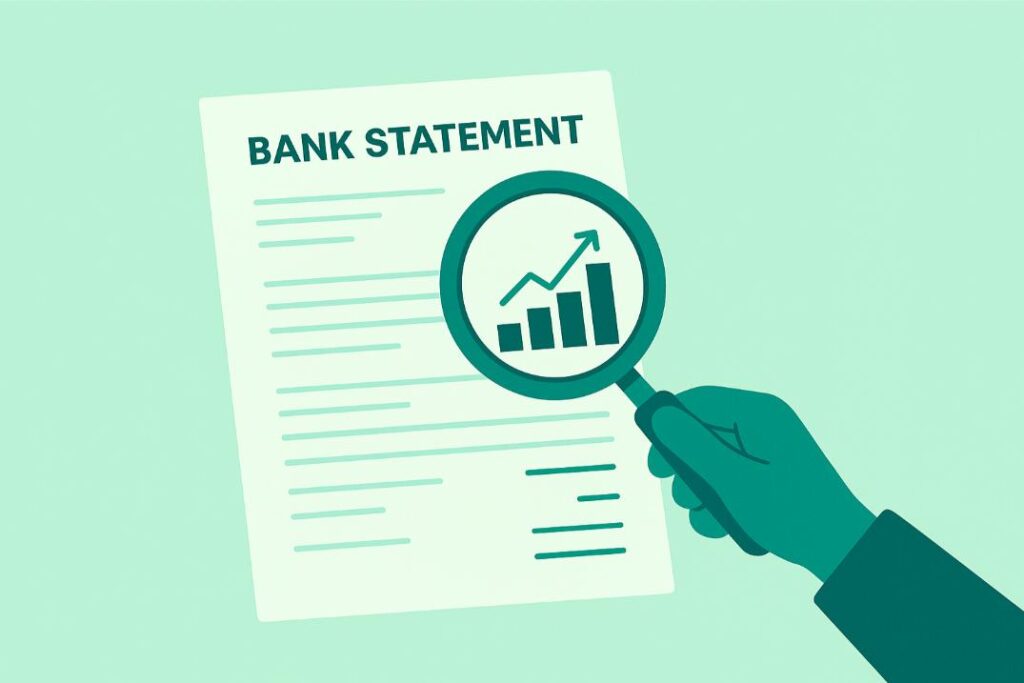
A Bank Statement Analyzer is an advanced software tool that automates the extraction, interpretation, and analysis of financial data from bank statements. Whether it’s a personal loan, mortgage, or small business financing, this tool allows underwriters to assess a borrower’s financial behavior, cash flow, income patterns, and spending habits with incredible speed and precision.
These tools use optical character recognition (OCR), artificial intelligence (AI), and machine learning (ML) to convert static bank statements into actionable data. Instead of manually scanning through pages of transactions, underwriters can now rely on automated reports that summarize the applicant’s financial health.
Why Traditional Underwriting Needs an Upgrade
Traditional underwriting requires underwriters to:
- Manually review pages of statements
- Validate income and expense consistency
- Identify fraudulent activities or red flags
- Estimate risk based on limited historical data
This manual process can take hours or even days, particularly when dealing with self-employed individuals or applicants without a formal credit history. It also leaves room for oversight, especially when analyzing large volumes of transactions or multiple bank accounts.
Given the increasing demand for digital loan applications and quicker decision times, manual underwriting simply can’t keep up. That’s where a Bank Statement Analyzer makes a substantial difference.
Key Features of a Bank Statement Analyzer
- Automated Data Extraction
The software extracts data from PDFs, images, or scanned copies of bank statements in seconds, removing the need for manual entry.
- Transaction Categorization
It classifies each transaction—like salary credits, rent payments, loan EMIs, and utility bills—into predefined categories, providing a clear picture of spending behavior.
- Income & Expense Analysis
With pattern recognition, the analyzer identifies regular income sources and monthly obligations, helping to calculate accurate debt-to-income (DTI) ratios.
- Fraud Detection & Anomaly Alerts
Sophisticated algorithms flag suspicious activities like sudden cash inflows, bounced checks, or multiple NSF (non-sufficient funds) instances.
- Risk Scoring & Creditworthiness
Many analyzers assign a risk score based on financial habits, enabling lenders to make more informed decisions.
Benefits for Lenders and Financial Institutions
1. Faster Turnaround Time
Automating the underwriting process significantly reduces loan approval timelines—from days to minutes. This improved efficiency allows lenders to serve more customers, especially in high-volume lending scenarios.
2. Improved Accuracy
By eliminating human error and applying standardized analysis methods, a Bank Statement Analyzer enhances the accuracy of credit assessments.
3. Reduced Operational Costs
With fewer resources needed for manual review, banks and NBFCs (Non-Banking Financial Companies) can optimize staffing and lower operational costs.
4. Enhanced Compliance and Audit Readiness
The analyzer creates audit trails and digital reports, making it easier for institutions to meet regulatory compliance and undergo financial audits.
5. Better Customer Experience
Applicants enjoy faster loan decisions without the need to upload excessive paperwork or wait for prolonged reviews.
Use Cases in the Financial Industry
- Personal Loans & Credit Cards: Analyze personal banking behavior to determine eligibility quickly.
- SME Lending: Assess the cash flow health of small businesses that may not have formal financial statements.
- Mortgage Loans: Verify income sources and recurring expenses for property buyers.
- Buy Now, Pay Later (BNPL) Models: Evaluate customer affordability in real time.
The Role of AI and Machine Learning
AI and ML are at the core of modern Bank Statement Analyzers. These technologies continuously learn from new data sets, improving the software’s ability to detect subtle financial patterns and anomalies over time. They enable predictive modeling, allowing lenders to forecast an applicant’s financial behavior based on past trends.
Moreover, AI helps in adapting the analyzer to various formats, banking institutions, and geographies—making it a scalable solution for both local lenders and global financial players.
Challenges and Considerations
While the benefits are compelling, deploying a Bank Statement Analyzer also comes with a few challenges:
- Data Privacy & Security: Financial data is highly sensitive. Institutions must ensure compliance with data protection laws like GDPR or India’s DPDP Act.
- Integration with Legacy Systems: Some banks still operate on legacy infrastructure, making integration a technical hurdle.
- Accuracy of OCR: Poor quality bank statements or scanned images may lead to inaccurate data extraction if not handled with advanced OCR models.
However, with the right vendor and robust API integration, these challenges can be effectively managed.
The Road Ahead
As digital transformation in banking continues to accelerate, tools like the Bank Statement Analyzer will become indispensable. They not only enhance underwriting accuracy but also contribute to financial inclusion by assessing thin-file or no-file applicants who lack traditional credit scores.
We are entering an era where smart underwriting isn’t just a competitive advantage—it’s a necessity. Embracing this technology today means being prepared for the future of lending tomorrow.
Conclusion
The Bank Statement Analyzer is more than a fintech buzzword—it’s a transformative solution that’s reshaping how loans are evaluated and approved. With its ability to automate, analyze, and deliver insights in real-time, this tool is the future of financial underwriting. Financial institutions that adopt this innovation are setting themselves up for operational excellence, faster growth, and a superior customer experience.