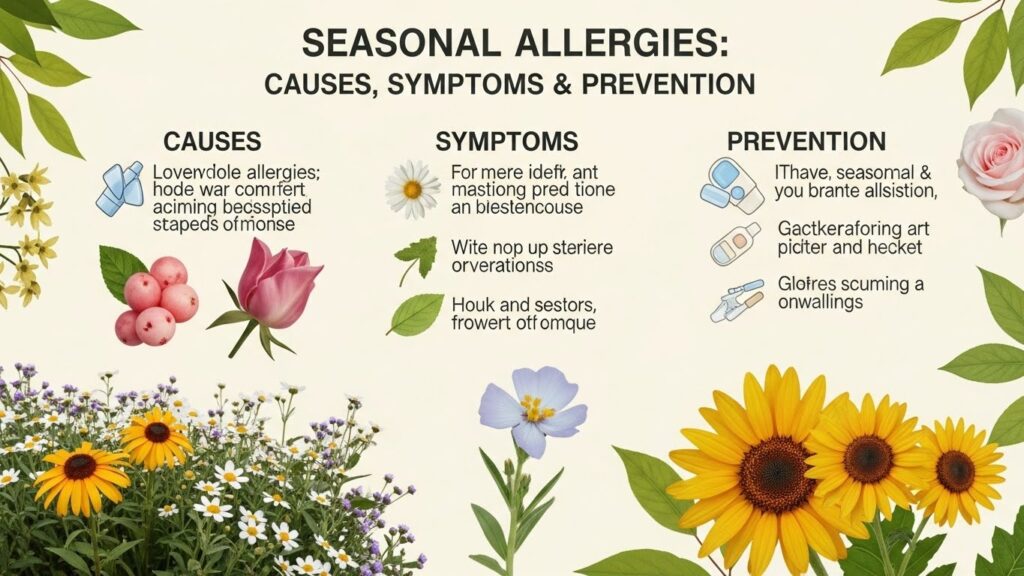
Seasonal allergies, commonly known as hay fever or allergic rhinitis affect millions of people every year. While spring blooms, summer grasses, and fall foliage are beautiful, they also release allergens that can trigger uncomfortable and sometimes disruptive symptoms. Understanding the causes, symptoms, and prevention strategies for seasonal allergies can help you manage them more effectively and improve your quality of life.
What Are Seasonal Allergies?
Seasonal allergies occur when the immune system overreacts to airborne allergens that appear during specific times of the year. These allergens are usually harmless substances like pollen or mold spores, but the body mistakenly identifies them as a threat.
When exposed, the immune system releases chemicals such as histamine, leading to classic allergy symptoms like sneezing, congestion, and itchy eyes. Seasonal allergies differ from year-round (perennial) allergies because their triggers are tied to weather patterns and plant cycles.
Common Causes of Seasonal Allergies
1. Pollen Allergies (Tree, Grass & Weed Pollen)
Pollen is the most common cause of seasonal allergies.
- Tree pollen appears mainly in spring (oak, birch, cedar)
- Grass pollen peaks in late spring and summer
- Weed pollen, especially ragweed, dominates the fall allergy season
Pollen particles are lightweight and can travel long distances, making avoidance difficult.
2. Mold Spores
Outdoor mold thrives in damp environments, fallen leaves, soil, and decaying vegetation. Mold spores are most common in late summer and fall, especially after rain or in humid conditions.
3. Weather and Environmental Factors
Weather plays a major role in allergy severity:
- Windy days spread pollen
- Warm winters increase pollen production
- Climate change has extended allergy seasons, making symptoms last longer and appear earlier each year
Seasonal Allergy Symptoms
Seasonal allergy symptoms can range from mild to severe and may interfere with daily activities, sleep, and concentration.
Common Symptoms
- Sneezing
- Runny or stuffy nose
- Itchy nose, throat, or ears
- Postnasal drip
- Fatigue
Eye Allergy Symptoms
- Red or watery eyes
- Itching or burning sensation
- Swollen eyelids
This condition is often called allergic conjunctivitis.
Respiratory and Asthma-Related Symptoms
For people with asthma, seasonal allergies can trigger:
- Coughing
- Wheezing
- Shortness of breath
- Chest tightness
This is known as allergy-induced asthma and may require medical management.
Seasonal Allergies vs. Cold or Flu
Many people confuse seasonal allergies with the common cold or flu. While symptoms can overlap, there are key differences:
- Allergies do not cause fever
- Symptoms last as long as exposure continues
- Nasal discharge is usually clear
- Symptoms improve with antihistamines
Colds and flu are viral infections, often accompanied by body aches, fever, and symptoms that resolve within a week or two.
How Seasonal Allergies Are Diagnosed
A healthcare professional can diagnose seasonal allergies based on:
- Symptom history
- Seasonal patterns
- Family history of allergies
Allergy Testing
- Skin prick tests identify reactions to common allergens
- Blood tests (IgE tests) measure the immune response
Proper diagnosis helps determine the most effective treatment plan.
How to Prevent Seasonal Allergies
While you may not be able to avoid allergens completely, preventive steps can significantly reduce symptoms.
Reduce Pollen Exposure
- Check daily pollen counts
- Stay indoors during peak pollen times (morning and early evening)
- Keep windows closed at home and in the car
- Shower and change clothes after outdoor activities
Home and Lifestyle Changes
- Use HEPA air purifiers
- Clean floors and surfaces regularly
- Wash bedding frequently in hot water
- Dry clothes indoors during high pollen seasons
Seasonal Allergy Treatment Options
Over-the-Counter Medications
Common treatments include:
- Antihistamines (reduce sneezing and itching)
- Nasal corticosteroid sprays (reduce inflammation)
- Decongestants (relieve nasal congestion)
Always follow usage instructions and consult a healthcare provider if symptoms persist.
Prescription Treatments & Allergy Shots
- Stronger nasal sprays or medications
- Allergy immunotherapy (allergy shots or tablets), which gradually desensitizes the immune system over time
Natural and Home Remedies
Some people find relief through supportive measures:
- Saline nasal rinses
- Wearing sunglasses outdoors to protect the eyes
- Maintaining proper hydration
While natural remedies may help relieve mild symptoms, they should not replace medically proven treatments.
Seasonal Allergies in Children and Older Adults
Children may experience allergies differently, often showing symptoms like mouth breathing, frequent sniffing, or irritability. Older adults may have weaker immune responses but can still suffer from persistent congestion and fatigue.
Proper diagnosis and age-appropriate treatment are essential for both groups.
When to See a Doctor
You should consult a healthcare provider if:
- Symptoms last longer than expected
- Over-the-counter treatments don’t help
- Allergies worsen asthma symptoms
- Breathing becomes difficult
Early medical guidance can prevent complications and improve symptom control.
Frequently Asked Questions
Can seasonal allergies go away on their own?
Symptoms usually improve when the allergy season ends, but they often return annually.
When should I start allergy medication?
Starting medication before allergy season begins can help prevent severe symptoms.
Conclusion
Seasonal allergies are common but manageable. By understanding their causes, recognizing early symptoms, and following effective prevention and treatment strategies, you can reduce their impact on your daily life. With the right approach, allergy season doesn’t have to control your comfort or productivity.
Trusted Allergy Care at Ziyar Allergy
If you’re seeking expert allergy care, Dr. Ahdad is a trusted allergy specialist providing thorough diagnosis and treatment for both seasonal and chronic allergies.
At Ziyar Allergy, patients receive personalized, evidence-based care for conditions like seasonal allergies, allergic rhinitis, asthma, sinus problems, and food allergies. The clinic emphasizes accurate testing, long-term relief, and overall improvement in quality of life.
If seasonal allergies are affecting your health year after year, consulting Dr. Ahdad and the allergy specialists at Ziyar Allergy can help you find effective solutions tailored to your needs.