Joint replacement surgery is a type of orthopedic surgery where a damaged joint, typically a knee, hip, or shoulder, is replaced with an artificial implant to get the joint working again. Post-surgery, patients often benefit from physiotherapy, which uses exercise to restore mobility after joint replacement. In fact, patients who had regular physiotherapy after a total knee replacement saw significantly improved physical function within just three to four months, compared to those who received little or no physiotherapy, a systematic review in BMC Musculoskeletal Disorders reveals. Gentle, guided exercises effectively restore mobility and prevent scar tissue formation to help patients get back on their feet faster. What’s more, physiotherapists also offer valuable support and education to boost patient confidence and help them overcome any fear about using their new joint.
Physio leads to a quicker recovery
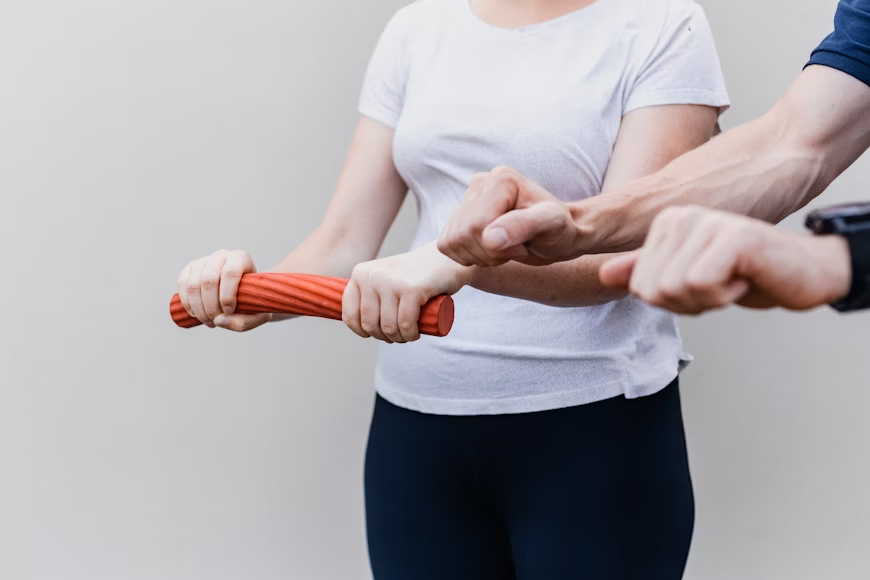
The sooner patients start physiotherapy after joint replacement surgery, the better and faster they tend to recover. In fact, research shows that patients who began physio within 24-48 hours after surgery had reduced hospital stays of around 1.8 days, along with better mobility and muscle strength compared to those who delayed physio. Early physiotherapy typically begins with assisted exercises to help patients regain joint movement before they can move independently on their own. This often involves a bit of help from the physiotherapist. For example, patients often start with heel slides in bed. By sliding their heel up toward their knee, they strengthen their hamstrings and improve hip and knee flexibility. These gentle, assisted exercises reduce stiffness and boost circulation, which, therefore, helps patients regain functional mobility faster.
Prevents scar tissue
Physiotherapy also reshapes tissues around the joints, which reduces the formation of scar tissue. Prescribed, gentle exercises get the joint capsule and surrounding tissues moving and stretching; this stimulates collagen production, which, in turn, supports the development of healthy, flexible scars. This is particularly important after total knee replacement surgery, as it usually involves larger incisions than other joint surgeries, which can lead to more scarring. Scar tissue usually starts to form within a few days after surgery, and this process continues for around three weeks. This is natural and a normal, healthy part of the body’s healing process. But, if you don’t keep the area mobile, the scar tissue can become dense and restrictive, which leads to reduced flexibility. To help avoid stiffness after TKR knee surgery, patients begin gentle exercise in hospital and continue them at home to keep tissues healthy and mobile. With regular physio, most people are able to get back to their normal activities within a few months, with a full range of motion in the knee.
Boosts patient confidence
Physiotherapy doesn’t just help with physical recovery; it also boosts patient confidence, which is just as important for a fast, smooth recovery. Understandably, patients often worry about doing damage to their new joint after surgery, which can make them afraid to exercise. This, in turn, results in weaker muscles and slows down the overall healing process. But with the right guidance from a physiotherapist, patients can learn to move safely in a way that works for them. Thanks to this tailored support, patients become more confident with their new joint and begin to make real progress in their recovery. As a result, they’re more willing and eager to get back to their usual routine.
Physiotherapy plays a pivotal role in recovering after joint replacement surgery. By showing patients how to exercise gently and safely, physios successfully help patients get back on their feet faster.