
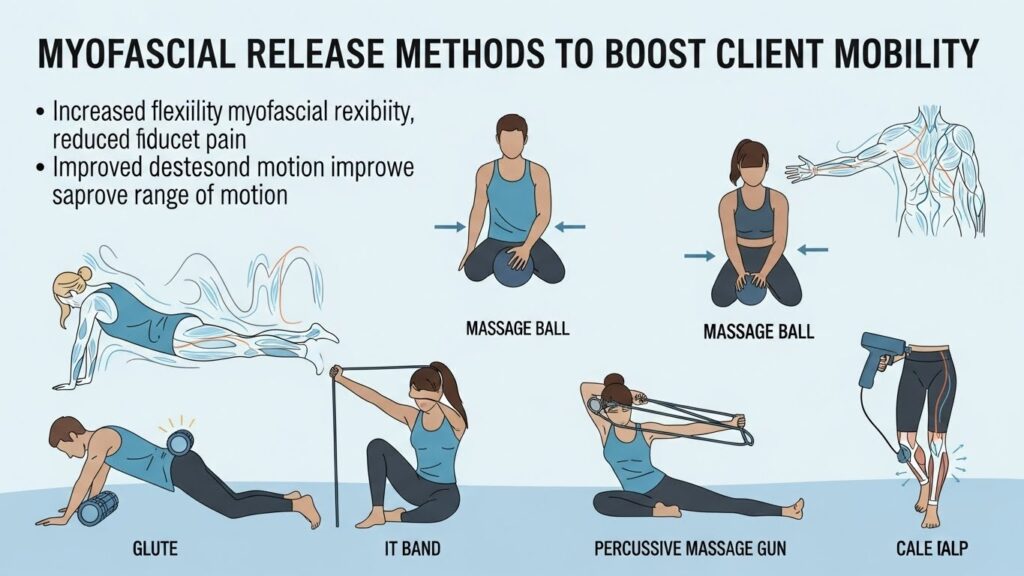
Helping the Body Move Better Every Day
Stiff muscles and tight movement patterns are common problems for many clients. Long work hours, stress, poor posture, and limited movement can all affect how the body feels and performs. When muscles and connective tissue lose flexibility, everyday actions like bending, lifting, or even walking can feel uncomfortable.
Myofascial release focuses on easing tension in the fascia, which is the connective tissue that surrounds muscles. When this tissue becomes tight, it can limit motion and cause discomfort. Fitness professionals often look for safe and effective ways to help clients move with less restriction. Learning how to apply pressure using simple methods can make a big difference in overall mobility and comfort.
This article explains how myofascial release supports better movement, how guided pressure techniques help the body recover, and how fitness professionals can safely introduce these practices into training routines.
Understanding Fascia and Its Role in Movement
Fascia is a thin layer of connective tissue that wraps around muscles, joints, and organs. It helps keep everything in place while allowing smooth movement. When fascia is healthy, muscles slide easily and joints move freely.
Problems begin when fascia becomes tight or dehydrated. This can happen due to inactivity, repetitive movements, or poor recovery habits. Tight fascia may cause muscles to feel stiff, sore, or weak. Over time, limited mobility can lead to poor movement patterns and increased injury risk.
Releasing tension in the fascia allows muscles to return to their natural length. This supports better posture, smoother motion, and improved body awareness. Myofascial release works best when applied slowly and with proper control.
Why Guided Pressure Techniques Are Effective
Applying steady pressure to tight areas helps stimulate blood flow and relax overactive muscles. This process encourages the nervous system to reduce muscle guarding, which is the body’s response to stress or discomfort.
Benefits of guided pressure methods include:
- Improved joint range of motion
- Reduced muscle soreness after workouts
- Better movement control during exercise
- Increased body awareness and balance
When pressure is applied correctly, clients often notice immediate improvements in how their bodies feel. Over time, regular practice can support long term mobility and recovery.
Supporting Clients With Simple Mobility Practices
Fitness professionals play an important role in teaching safe movement habits. Mobility work should never feel rushed or painful. Instead, it should focus on slow, controlled pressure and relaxed breathing.
Key points to guide clients include:
- Move slowly and avoid sharp pain
- Focus on breathing while applying pressure
- Spend extra time on tight or sensitive areas
- Maintain proper body alignment during the process
Consistency matters more than intensity. Short sessions performed regularly can lead to noticeable improvements in flexibility and comfort.
How Pressure-Based Techniques Fit Into Training Plans
Mobility work can be added to warm ups, cool downs, or recovery days. Before training, it helps prepare muscles for movement. After training, it supports relaxation and tissue recovery.
Common areas that benefit from focused pressure include:
- Calves and ankles for walking and running
- Hips for squatting and lifting
- Upper back and shoulders for posture
- Thighs for lower body strength and balance
Educating clients on why these areas matter helps them stay motivated and engaged. When clients understand the purpose behind each technique, they are more likely to practice it consistently.
Teaching Safe and Effective Self Release
Safety is essential when guiding clients through self release methods. Improper use or excessive pressure can cause discomfort or bruising. Clear instruction and supervision help prevent these issues.
Important safety tips include:
- Avoid bony areas and joints
- Stop if numbness or sharp pain occurs
- Encourage hydration after sessions
- Adjust pressure based on client comfort
Clients should feel supported, not pushed. A calm and patient teaching style builds trust and confidence.
Building Better Results Through Education
Knowledge empowers clients to take care of their bodies outside training sessions. Teaching them how connective tissue affects movement gives them tools they can use daily.
Many professionals deepen their understanding of these methods through continued education. Programs focused on Foam Rolling for Myofascial Release provide structured guidance on proper technique, anatomy awareness, and client safety. This knowledge allows trainers to confidently support mobility goals in a variety of fitness settings.
When education meets practical application, clients benefit from safer and more effective sessions.
Encouraging Long Term Mobility Habits
Mobility improvements do not happen overnight. Clients often need reminders that progress comes from patience and consistency. Simple daily routines can help maintain healthy movement patterns.
Suggestions for building habits include:
- Short sessions before bed or after workouts
- Focusing on one or two tight areas at a time
- Pairing mobility work with breathing exercises
- Tracking progress in flexibility and comfort
These small steps add up over time and support lasting results.
Helping Different Client Types Improve Movement
Every client has unique needs. Desk workers may struggle with hip and upper back tightness. Athletes may need focused recovery for overused muscles. Older adults may want gentle ways to stay mobile and comfortable.
Adjusting pressure, positioning, and session length helps meet individual needs. Education in Foam Rolling for Myofascial Release helps professionals adapt techniques safely for different body types and fitness levels.
Understanding when to modify or avoid certain techniques is just as important as knowing how to perform them.
Creating Confidence Through Better Movement
When clients move better, they feel more confident in daily life and exercise. Improved mobility often leads to better posture, smoother workouts, and reduced discomfort. This confidence encourages consistency and long term fitness success.
Myofascial release supports the body’s natural ability to recover and adapt. When used correctly, it becomes a powerful tool for enhancing movement quality.
Final Thoughts on Improving Client Mobility
Mobility is the foundation of healthy movement. Without it, strength and endurance become harder to maintain. Myofascial release offers a simple and effective way to reduce tension and support better motion.
By teaching safe pressure techniques and educating clients on fascia health, fitness professionals can improve training outcomes and client satisfaction. Continued learning in Foam Rolling for Myofascial Release helps trainers apply these methods with confidence and care.