In today’s digital-first world, information is everything. Companies, researchers, and organizations depend on accurate and structured data to make decisions. One of the most effective tools for gathering this information is the list crawler.
A list crawler is a type of web crawler or bot designed specifically to extract and organize lists of information from websites. Whether collecting product catalogs, email addresses, job postings, or research data, list crawlers have become essential for automating data collection in a fast and efficient way.
This article dives deep into how list crawlers work, their uses, advantages, and the ethical considerations surrounding them.
What is a List Crawler?
A list crawler is a specialized software tool that navigates websites, scans their content, and extracts structured lists of information.
Unlike general-purpose crawlers, which gather massive amounts of raw data, list crawlers are designed with precision extraction in mind. They target specific categories such as:
-
Product listings
-
Service directories
-
Contact details
-
Classified advertisements
-
Event schedules
By focusing on lists, these crawlers make data easier to use and analyze.
How List Crawlers Work
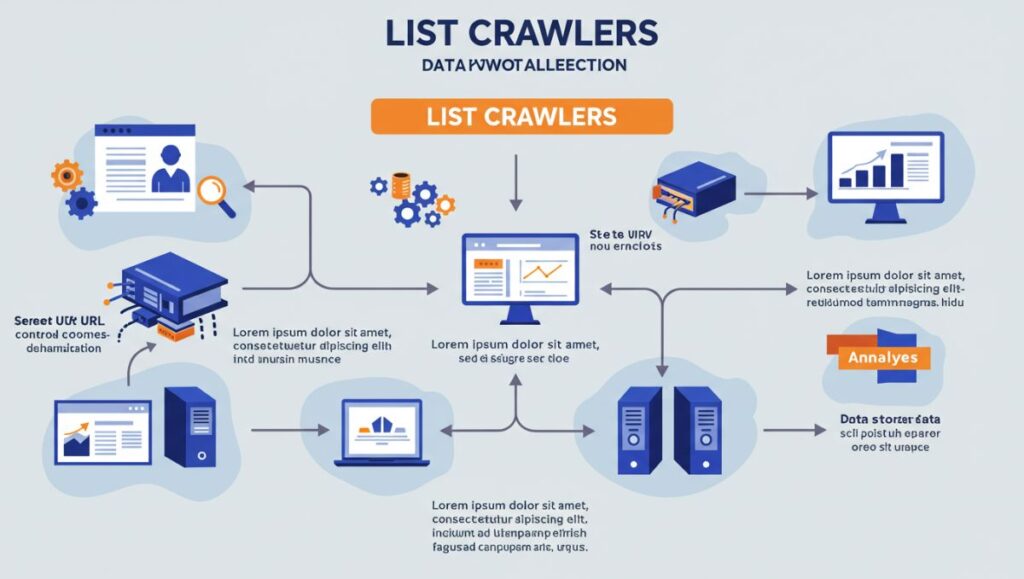
crawlers operate through a systematic process:
-
Website Access – The crawler begins by accessing the target website.
-
HTML Parsing – It scans the site’s structure, identifying the parts containing lists or structured data.
-
Pattern Recognition – Algorithms detect repeating patterns, such as rows in a table or items in a list.
-
Data Extraction – Relevant information is copied and stored in a structured format (CSV, JSON, database).
-
Export and Analysis – Users can then analyze, filter, or integrate the extracted lists into other systems.
Some advanced crawlers use machine learning to improve accuracy, adapting to changes in website structures.
Applications of List Crawlers
1. E-Commerce
Online retailers use crawlers to:
-
Monitor competitor prices
-
Collect product catalogs
-
Track stock availability
2. Job Market Analysis
Recruitment agencies rely on crawlers to gather job postings from multiple platforms, helping them identify trends and opportunities.
3. Real Estate
List crawlers extract property details from real estate portals, compiling information on prices, locations, and amenities.
4. Market Research
Companies use crawlers to build consumer databases, monitor trends, and gather customer reviews.
5. Academic and Scientific Research
Researchers use list crawlers to gather structured datasets from public sources for analysis and study.
Advantages of Using List Crawlers
Adopting crawlers offers numerous benefits:
-
Efficiency: Automates hours of manual data collection.
-
Scalability: Can handle thousands of web pages quickly.
-
Accuracy: Reduces human error in copying data.
-
Customization: Tailors the extraction to focus on relevant fields.
-
Integration: Works with databases, CRM software, and analytics tools.
By saving time and improving precision, crawlers allow professionals to focus on insights rather than repetitive tasks.
Challenges and Limitations of List Crawlers
Despite their advantages, crawlers come with challenges:
-
Website Restrictions: Some websites block crawlers using security measures.
-
Data Accuracy: Poorly structured websites may cause errors in extraction.
-
Maintenance: Frequent website updates require crawler adjustments.
-
Legal and Ethical Concerns: Not all data is legally available for scraping.
Organizations must balance efficiency with responsibility when deploying crawlers.
Ethical and Legal Considerations
The use of list raises important ethical and legal questions.
-
Copyright: Some data may be protected and not available for free extraction.
-
Privacy: Collecting personal information (like emails or phone numbers) can violate privacy laws.
-
Terms of Service: Many websites prohibit automated scraping in their usage policies.
To stay compliant, companies should:
-
Use crawlers only on public, non-restricted data.
-
Respect robots.txt guidelines of websites.
-
Ensure that collected data complies with GDPR and other privacy laws.
Future of List Crawlers
With the rise of big data, AI, and automation, list crawlers are expected to evolve significantly:
-
Smarter Crawling: AI-driven crawlers will adapt better to website changes.
-
Real-Time Extraction: Instant updates for dynamic content.
-
Enhanced Accuracy: Improved algorithms will reduce errors.
-
Integration with AI Analytics: Extracted lists will feed directly into predictive models.
-
Ethical Crawling Frameworks: Legal standards will guide safer data practices.
Crawlers are likely to become an even more important tool in industries where data is the backbone of decision-making.
Best Practices for Using List Crawlers
To maximize benefits while minimizing risks, follow these best practices:
-
Define Objectives Clearly – Know exactly what lists you want to extract.
-
Choose the Right Tool – Use reliable, updated list crawler software.
-
Respect Website Policies – Stay compliant with legal frameworks.
-
Validate Data – Always clean and verify extracted information.
-
Secure Storage – Protect extracted data with proper encryption.
Popular Tools for List Crawling
Several tools and platforms are available for effective list crawling:
-
Scrapy – An open-source Python framework for web crawling.
-
Octoparse – A user-friendly, no-code data extraction tool.
-
ParseHub – Handles complex websites with dynamic content.
-
Apify – Provides cloud-based crawler automation.
-
Custom Scripts – Tailored solutions built for specific industries.
Each tool offers unique features, and the choice depends on the scope and complexity of the project.
Conclusion
List crawlers have become indispensable in the age of data-driven decision-making. By automating the collection of structured information, they save time, improve accuracy, and empower organizations across industries.
However, responsible use is key. Ethical considerations and legal compliance must guide every project to ensure that the benefits of list crawlers do not come at the expense of privacy or security.
As technology advances, crawlers will continue to grow smarter, faster, and more adaptable — cementing their role as a critical tool in the digital economy.