

Redefining Service with Voice AI
Restaurants are rapidly evolving their approach to customer experience by embracing voice artificial intelligence (AI) solutions. As consumers expect convenience and speed, AI-driven voice platforms are transforming how guests interact with restaurants, streamlining everything from menu navigation to order placement. Advanced solutions are enabling guests to place their orders, customize preferences, and even make special dietary requests without waiting for direct assistance from staff. This new format is revolutionizing traditional hospitality models and elevating service standards across the industry.
Unlike old-school ordering methods, voice AI can process requests rapidly and accurately, eliminating bottlenecks and long wait times. For busy restaurants, these platforms provide guests with instant access to essential information—such as dish ingredients, wait times, or hours of operation—and enable operators to serve more customers per shift while minimizing mistakes. With reliable voice technology, dining becomes smoother on both sides of the counter. To gain more knowledge about using restaurant voice AI, click here: https://www.soundhound.com/voice-ai-solutions/restaurants.
Key Drivers Behind the Adoption of Restaurant Voice AI
Several pressing industry trends fuel the momentum behind voice AI adoption in restaurants. Staffing shortages exacerbated by labor market fluctuations are prompting operators to automate repetitive tasks, allowing existing team members to devote more time to high-touch guest interactions. Additionally, labor costs continue to rise, especially in busy urban areas, and demand for contactless and hygienic solutions remains high in the wake of the COVID-19 pandemic.
According to QSR Magazine, restaurant leaders see AI as a way to improve operational efficiency and secure a competitive edge. It’s not just about cutting costs—adopting AI technology is also about improving accuracy, speeding up transactions, and meeting customer demand for service that fits modern lifestyles.
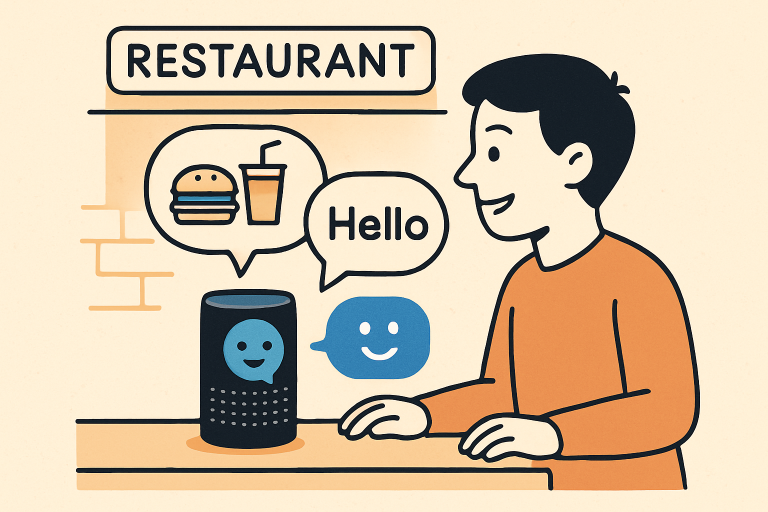 Everyday Examples of Voice AI in Action
- Voice-activated ordering: Guests speak their order at kiosks or drive-thru lanes, cutting down lines and manual entry errors.
- Reservations and booking: Voice assistants handle table reservations, waitlists, and preference settings for diners without the need for calling or app navigation.
- On-demand information: Guests ask for dish details, nutritional information, or allergen content, receiving instant answers that enhance transparency and trust.
- Back-of-house coordination: Staff leverage voice commands to manage kitchen workflow, call for supplies, or coordinate timing, allowing for more seamless team operations.
Benefits for Operators and Staff
Integrating voice AI isn’t just about guest-facing enhancements—it brings measurable advantages for restaurant operators and their teams. Perhaps the biggest benefit is operational efficiency: voice systems automate routine tasks, such as order-taking or answering common guest queries. This reduces human error, speeds up service, and helps teams handle peak periods without added stress.
Staff are freed from monotonous duties, allowing them to focus on high-value activities such as personalized guest service, upselling, or resolving issues. As a result, employee satisfaction can improve, contributing to lower turnover rates—one of the biggest challenges facing the restaurant industry today. Fewer mistakes, faster service, and happier teams all contribute to better reviews, higher customer return rates, and stronger bottom lines.
Data Protection and Guest Privacy
With every new technology comes the responsibility to protect customer data. Restaurants implementing voice AI must ensure robust safeguards for all data collected, following best practices such as encryption, regular security audits, and strict access controls. Consumer trust is paramount, and recent guidelines from the Federal Trade Commission emphasize the importance of transparency in privacy policies and proactive efforts to prevent data breaches.
Operators should clearly communicate with patrons about how their information is used and stored, offering options to opt out or anonymize data whenever possible. This not only ensures compliance with evolving regulations but also demonstrates respect for guests’ rights in the digital era.
Current Research and Industry Statistics
Industry research indicates a promising trajectory for voice AI in the hospitality sector. According to a study cited by the National Restaurant Association, over half of diners report openness to using voice assistants for order placement, reservations, and information requests. Adoption is particularly strong among younger consumers and those who prioritize digital convenience. Projections indicate that investment in voice-driven platforms will continue to climb as restaurants expand their focus on seamless digital integration.
Market research from Forbes further supports this trend, showing that AI technologies now shape everything from menu design to kitchen workflow and customer engagement strategies.
Challenges Restaurants Are Facing Today
Despite compelling advantages, integrating voice AI comes with real hurdles. One major challenge is system compatibility: voice platforms must seamlessly connect with point-of-sale, kitchen display, and reservation software already in use. This level of integration requires time, investment, and ongoing technical support.
Another barrier is user adoption. Both customers and staff require clear training and education to feel at ease interacting with AI systems. Gathering regular feedback and adjusting the approach based on real-world use helps ensure technology serves, rather than frustrates, its users. Staying adaptable is critical as voice AI evolves and regulatory landscapes shift.
Preparing for the Restaurant of Tomorrow
Looking ahead, voice AI will be the backbone of a new era in restaurant service. Operators should consider a phased approach: pilot small implementations, evaluate their impact, and refine strategies before scaling up. Equally important is striking a balance between automation and a human touch—ensuring that technology enhances, rather than replaces, genuine hospitality.
Restaurants focused on long-term success should stay informed about emerging trends, regulatory changes, and advances in voice technology. Actively seeking out staff and guest feedback ensures that changes align with evolving needs and expectations.
Summary
Voice AI is revolutionizing restaurant operations by streamlining ordering processes, reducing wait times, and enhancing the overall customer experience. From drive-thru voice assistants to automated phone systems, this technology enables staff to work more efficiently while meeting the rising expectations of customers. As adoption grows, Voice AI is reshaping how restaurants deliver faster, smarter, and more personalized service.