
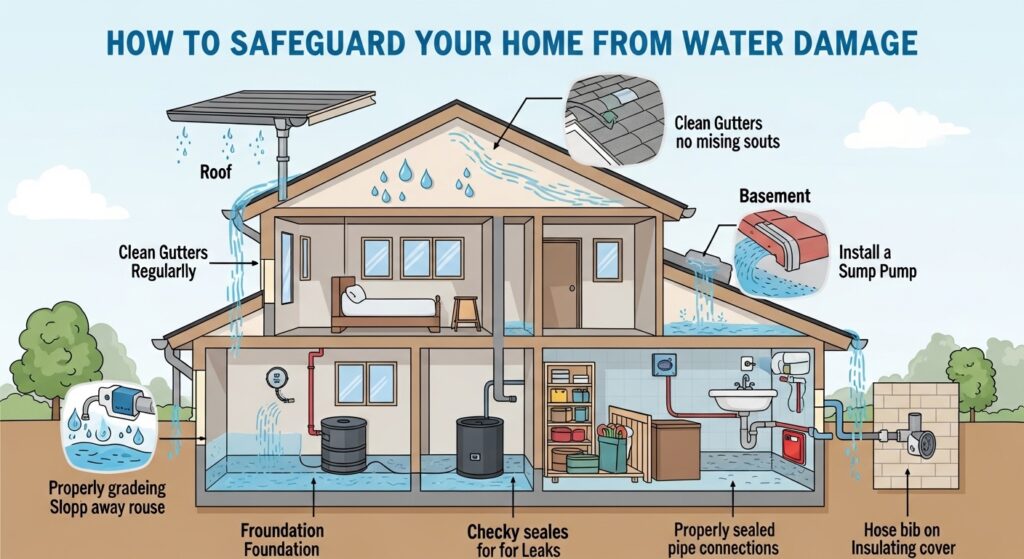
Water damage is one of the most common and costly issues facing homeowners, often resulting in significant repairs and major inconveniences. Taking proactive steps to protect your property can prevent headaches, protect your investment, and ensure your family’s safety. Whether it’s a burst pipe or heavy rain, knowing how to protect your home can make all the difference. If you ever experience severe water issues, you can count on professional solutions like Pure Restore water damage restoration in Denver.
By adopting routine maintenance strategies and installing preventive tools, you can shield your home from hidden leaks, mold, and structural problems. Every homeowner can take simple steps to reduce risk, such as regularly checking appliances and ensuring proper drainage around the property.
Regular Inspections and Maintenance
Performing regular inspections on your household plumbing and water-based appliances can help prevent disasters before they occur. Inspect areas under sinks, behind toilets, and around water heaters for puddles, rust, or visible corrosion. Replace outdated hoses on appliances like washing machines and dishwashers with reinforced stainless-steel versions, which are less likely to rupture. Proactive maintenance not only wards off unexpected leaks but also extends the life of your appliances.
Install Water Leak Detection Devices
Modern leak detection devices offer homeowners added peace of mind by monitoring for unexpected water activity in high-risk areas, such as basements, laundry rooms, and beneath sinks. Upon detecting moisture, these sensors send instant alerts to your smartphone or sound an alarm on-site. Advanced models can automatically shut off your main water supply to minimize damage. Early response opportunities like these can help prevent what might otherwise be a major emergency.
Maintain Gutters and Downspouts
Clogged gutters and downspouts are frequent causes of water damage to roofs, siding, and foundations. Ensure leaves, nests, or other obstructions are cleared out at least twice a year, particularly after heavy storms or the fall season. Secure downspouts to direct water at least five feet away from your foundation, which helps prevent pooling near the exterior walls.
Seal Windows, Doors, and Cracks
Water often finds its way indoors through poorly sealed windows, doors, and foundation cracks. Inspect and replace worn-out weather stripping and caulking annually, and pay special attention before rainy seasons. Use high-quality, waterproof caulk to fill gaps and prevent moisture intrusion. Addressing these vulnerabilities can save you from costly repairs and slow-developing issues like mold growth.
Install a Sump Pump
A sump pump is a critical defense in homes with basements or crawl spaces. Installed in a pit at the lowest point, it collects and redirects water away from your structure when levels rise. Regularly confirm the system is operational by checking the power source and testing it with water. Battery-powered backup pumps are also worth considering to ensure protection during storms or electrical outages.
Know Your Water Shut-Off Valve
Every homeowner and resident should be familiar with the location and operation of the main water shut-off valve. In the event of a serious leak or pipe burst, shutting off the supply immediately can prevent disastrous damage. Conduct regular walkthroughs with household members to instill confidence in turning off the water quickly in an emergency.
Insulate Pipes to Prevent Freezing
Frozen pipes can crack or burst, releasing large amounts of water in a short period. Protect vulnerable pipes in unheated areas using foam sleeves or insulation wraps, and on especially cold nights, leave faucets dripping to keep water moving. Always maintain your home’s temperature above 50 degrees Fahrenheit (10 degrees Celsius), even when away, and open cabinet doors to allow warmer air to reach plumbing beneath sinks. More on pipe insulation and winterization can be found at the Consumer Reports site.
Landscaping and Grading
The contour of your yard can significantly affect whether water flows toward or away from your foundation. Ensure that soil slopes away from the home at least six inches over the first ten feet. Planting beds and lawn areas should be designed to encourage runoff away from your walls. Avoid overwatering landscaping adjacent to your foundation, and consider installing French drains if you experience recurrent puddling.
Conclusion
By following these vital steps, you can keep your home safe from water intrusion and its potentially devastating consequences. Proactive attention to maintenance, detection, and drainage will pay off in the long run, keeping your property and family secure.