
Understanding how dogs express their needs and emotions is essential for forming a meaningful, responsive relationship with your canine companion. Dogs have developed a rich system of communication that relies on a blend of body language, vocal cues, and, more recently, technological aids. This awareness not only deepens the bond between dogs and their owners but can also help prevent miscommunication and unmet needs. Many owners turn to specialized resources such as dog readings to learn more about the subtle cues their pets display daily.
Recognizing these communicative signals can be transformative. Not only does it help caregivers address their dog’s needs more promptly, but it also leads to a happier, healthier pet. By observing and interpreting even the smallest tail wag or whine, you can foster trust and security within your home. Besides enriching the bond you share, this understanding supports training efforts and can improve both canine and human well-being over time.
Research suggests that improving your ability to read and respond to your dog’s communication style can have far-reaching effects on their behavior and happiness. According to sources like the American Kennel Club, learning a dog’s body language empowers owners to better anticipate their pets’ needs and feelings, leading to fewer misunderstandings and a stronger, healthier relationship.
Body Language
Body language is a fundamental part of how dogs communicate. Their entire body, from nose to tail, provides cues about their emotional state and intentions. An upright, wagging tail typically means a dog is excited or happy, while a tucked tail signals anxiety, fear, or submission. Similarly, a relaxed posture with soft eyes and loose ears suggests comfort, but if the dog’s body stiffens or the ears flatten, this may indicate stress or potential aggression.
Common Body Language Signals
- Tail Wagging: Can signal happiness or excitement, though the speed and position of the wag can further indicate feelings ranging from playful to nervousness.
- Ear Position: Erect ears suggest alertness, while ears pinned back typically indicate fear or discomfort.
- Posture: A relaxed or playful posture indicates contentment, while a crouched stance can denote fear or uncertainty.
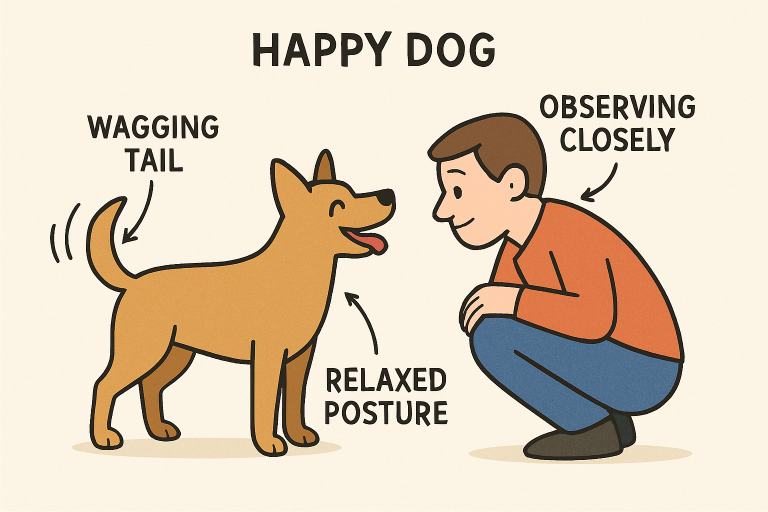
Being attuned to these signs helps owners proactively support their dog, reducing the likelihood of stress or behavioral issues.
Vocalizations
Dogs communicate a variety of messages through sound. Barking is perhaps the most recognized vocalization, used for everything from alerting to danger to seeking attention. Growling often warns of discomfort or aggression and indicates that a dog wants space. Whining may signal distress, anxiety, or a desire for something such as food or a walk. Howling, a trait inherited from their wolf ancestors, typically serves for long-distance communication or as a response to certain noises.
Context Matters
Understanding the context behind a vocalization is as important as the sound itself. The environment, situation, and accompanying body language provide essential clues to interpreting your dog’s message. For example, a dog may bark due to excitement when you come home, but the same bark may sound different when they’re alerting you to a noise outside.
Facial Expressions
Facial expressions are another powerful component of canine communication, especially in interactions with humans. Dogs are known to use “puppy dog eyes” to connect emotionally with their owners. This expression, characterized by raised eyebrows and a soft gaze, can make them appear more innocent or endearing and is often used to solicit attention or food.
Studies have shown that dogs adjust their facial expressions when being watched by humans, demonstrating an awareness that their signals can influence our behavior. A soft, relaxed mouth and blinking eyes often indicate contentment, while a wrinkled brow or bared teeth can signal concern or aggression.
Innovative Communication Tools
In the quest to better understand and communicate with dogs, technology has introduced tools such as soundboards. These devices allow dogs to press buttons labeled with words or concepts like “play,” “food,” or “outside.” Some dogs have been observed combining words creatively, such as pressing “want” and “walk” to ask for a stroll outdoors. This kind of assisted communication provides new insight into their cognitive abilities and offers dogs a means to express complex needs directly to their owners.
Research into animal communication tools is ongoing and has already shown promising results. It also proves that when given the right resources, dogs are eager and able to develop even more sophisticated forms of expression.
Human Perception Challenges
Despite the wealth of signals dogs provide, humans often misinterpret or overlook these cues. This is especially common when people project their own emotions or intentions onto canine behavior, a phenomenon known as anthropomorphism. According to a study by Arizona State University, many misunderstandings stem from a lack of awareness of dog-specific signals, leading to unmet emotional and physical needs.
Bridging this communication gap requires patience, observation, and education. Training yourself to see the world from your dog’s perspective, rather than your own, is a critical step in building a more trusting and responsive relationship.
Strengthening Human-Dog Communication
There are several effective strategies for deepening your communicative rapport with your dog:
- Educate Yourself: Take time to study canine body language, vocalizations, and behavior patterns to develop a more nuanced understanding of what your dog is trying to tell you.
- Observe Context: Context transforms meaning. Always consider the surrounding environment and circumstances when interpreting your dog’s signals.
- Use Consistent Cues: Consistency in training commands, gestures, and positive reinforcement builds clarity and trust between you and your pet.
- Engage in Training: Invest in regular training sessions focused on cooperative skills that not only reinforce understanding but also strengthen your bond.
By consistently observing, learning, and adapting, you and your dog can achieve more harmonious and fulfilling communication. This leads to a deeper connection and ensures that your canine companion’s needs and emotions are both understood and respected.