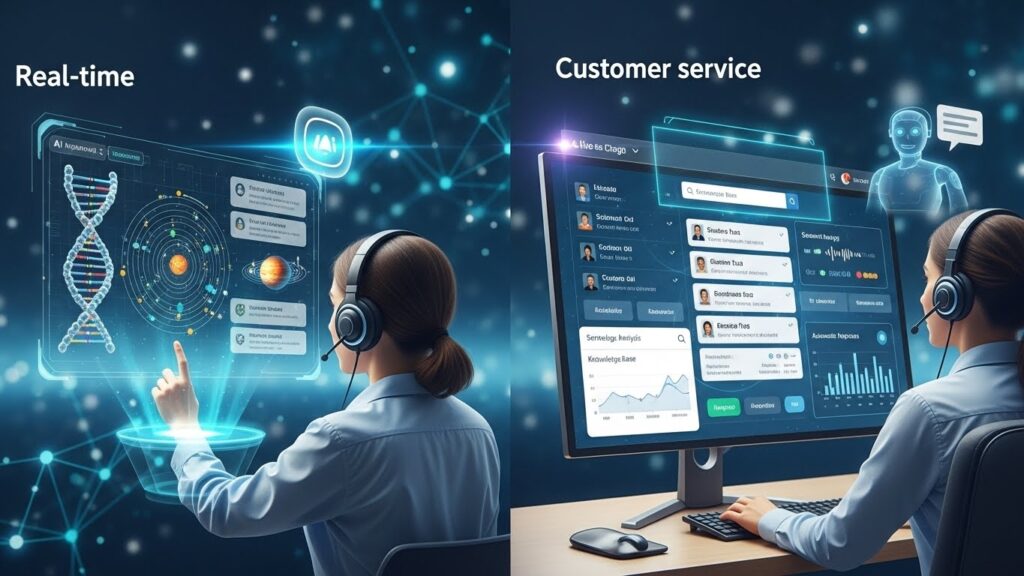
Imagine a world where every student gets personalized tutoring whenever they need it and every customer gets instant, accurate support without waiting in line. That future is already here, powered by advanced AI systems that are reshaping how people learn, shop, and interact with businesses.
AI is no longer a futuristic buzzword. It is a practical, everyday tool used by organizations, educators, and even automotive dealerships. From AI for Students helping learners accelerate their progress to AI conversational agents for dealership customer service elevating customer experiences, artificial intelligence is quietly powering a significant shift in how we solve problems.
In this guest post, we dive into the major trends, applications, and business opportunities behind this AI movement and why it matters now more than ever.
Why AI Is Becoming Essential in Both Learning and Customer Experience
Artificial intelligence has moved from novelty to necessity.
Businesses and educational institutions are turning to AI because the demands of digital audiences have changed. Students expect flexible, individualized learning. Customers expect instant support, accurate answers, and frictionless experiences.
What used to require large teams, heavy budgets, or slow processes can now be automated or enhanced by intelligent systems.
Three major forces drive this shift:
- Rising need for personalized experiences
- Increasing pressure to operate efficiently
- Rapid adoption of digital-first tools post-pandemic
Let’s explore how these trends play out.
AI in Education: How AI for Students Is Transforming Learning
Education has entered a new chapter. Students learn differently than they did even five years ago. They multitask, learn on mobile devices, use video-based knowledge, and expect personalized guidance.
This is where AI for Students comes in.
Personalized Learning at Scale
AI tools can analyze learning patterns, pace, strengths, and weaknesses to create custom learning paths for each student. No two learners behave the same, so a one-size-fits-all system no longer works.
AI-powered education platforms can:
- Recommend learning modules
- Identify gaps and areas requiring revision
- Adjust difficulty levels
- Offer real-time feedback
- Turn complex concepts into simple visuals
This personalization is something human instructors struggle to deliver consistently at scale.
AI Tutors and 24-7 Academic Support
Students often struggle outside classroom hours. AI tutoring systems fill this gap by providing on-demand help.
Capabilities include:
- Solving math or science problems step by step
- Explaining concepts in different ways
- Suggesting study routines based on performance
- Helping with language learning and pronunciation
This makes AI for Students a genuine ally instead of a replacement for teachers.
Automated Grading and Learning Insights
Teachers save hours each week with AI-based grading assistants. These systems can grade quizzes, detect patterns in student performance, and even flag academic risks early.
As a result, teachers spend more time mentoring instead of drowning in administrative tasks.
AI in Business: How Customer Experience Is Evolving
Education is not the only space undergoing rapid change. Dealerships and retail industries are also transforming through automation and AI.
One of the most effective tools driving this shift is the rise of AI conversational agents for dealership customer service.
Why Dealerships Are Turning to AI
Car buyers expect fast, accurate, and helpful support at every stage of the journey. But traditional customer service teams struggle with:
- High call volumes
- Repetitive questions
- After-hour inquiries
- Service appointment management
- Financing and product comparisons
AI agents solve these challenges without increasing staffing costs.
Instant Answers and 24-7 Service
AI conversational systems can instantly respond to thousands of customer questions simultaneously. No wait time, no transfers, no frustration.
Customers can ask about:
- Vehicle availability
- Pricing
- Service schedules
- Test drive bookings
- Financing options
- Warranty details
And they get an immediate, accurate response.
Lead Qualification and Sales Support
Smart AI agents do more than answer questions. They qualify leads, gather customer intent, and route hot prospects directly to human sales teams.
This ensures dealerships never lose potential buyers due to delays or unanswered messages.
Reducing Workload and Operational Costs
One of the biggest benefits of AI conversational agents for dealership customer service is cost efficiency. Dealerships reduce labor overload while providing better service.
This is why adoption is accelerating across North America.
The Convergence: Why AI Works So Well in Both Learning and Customer Service
Both education and customer service share similar challenges:
- High demand
- Limited human resources
- Need for instant support
- Rising expectations
- Complex decision paths
AI handles these challenges elegantly. Its ability to interpret language, understand context, learn from data, and respond in real time makes it ideal for these sectors.
Let’s look at the technologies powering this transformation.
Key Technologies Behind Modern AI Assistants
Natural Language Processing
NLP helps AI understand human language and respond naturally.
Machine Learning Models
ML allows AI to learn from patterns and improve over time.
Predictive Analytics
AI predicts behavior, needs, or performance, such as identifying students who might fall behind or customers likely to buy.
Conversational Interfaces
Chatbots, voice assistants, and virtual agents enable smooth, human-like conversations.
Integration and Automation Workflows
AI connects with CRM systems, learning management tools, dealership software, and more to perform tasks automatically.
Real-World Use Cases: What AI Already Makes Possible
1. Student Success Boosters
AI helps students study smarter, not harder. Systems identify weak spots and recommend personalized improvement strategies.
2. Smart Dealership Showrooms
AI conversational agents guide customers through vehicle selection like a digital sales consultant.
3. Service Appointment Automation
Dealership agents manage bookings, reminders, and follow-ups automatically.
4. Intelligent Grading Systems
Teachers reduce grading time by 60 to 90 percent using automated evaluation tools.
5. AI-Powered Financing Guidance
Agents help customers compare financing plans or understand credit requirements.
The Business Impact: Why Companies Should Pay Attention
AI does not just improve experience. It drives measurable business outcomes.
In education:
- Higher student engagement
- Improved performance
- Better retention rates
- Reduced admin workload
In dealerships:
- Faster response times
- Higher customer satisfaction
- More lead conversions
- Reduced support cost
- Increased sales efficiency
Businesses that adopt AI gain a clear competitive edge.
Choosing the Right AI Approach: A Practical Guide
Whether you want to improve student learning or enhance dealership operations, here is how to start.
1. Define your biggest challenges
Is it response time? Lead qualification? Student performance tracking?
2. Pick the right AI tools
Look for solutions that offer real-time support, integrations, and customization.
3. Start small and scale
Begin with a few use cases, test results, then expand.
4. Train your team
Your staff should understand how to use AI tools effectively.
5. Monitor performance
Track metrics such as response times, engagement, bookings, or student scores.
Common Mistakes to Avoid
- Implementing AI without clear objectives
- Expecting AI to replace humans
- Ignoring training
- Using AI without proper data
- Over-automating without maintaining human oversight
AI works best when it enhances people, not replaces them.
Conclusion: The Future Belongs to Intelligent Assistance
From empowering learners through AI for Students to transforming dealerships with AI conversational agents for dealership customer service, the rise of AI-driven support systems is reshaping how we communicate, learn, and make decisions.
Industries that move early will gain advantages in efficiency, responsiveness, and customer loyalty. Those that delay may struggle to keep up with fast-changing expectations.
AI is not just a technology shift. It is a new way of thinking about service, engagement, and human potential.
FAQs
1. How does AI help students learn better?
AI personalizes learning, identifies weaknesses, provides instant feedback, and offers 24-7 academic assistance.
2. What are AI conversational agents used for in dealerships?
They answer customer questions, schedule service appointments, qualify leads, and assist with product information and financing queries.
3. Is AI replacing teachers or dealership staff?
No. AI supports human teams by handling repetitive tasks and allowing them to focus on higher value work.
4. How can businesses measure AI success?
Track metrics such as response times, conversions, cost savings, customer satisfaction, and student performance improvements.