
Introduction
Training your dog can be one of the most rewarding aspects of pet ownership, setting the stage for a trusting, respectful, and joyful relationship. Positive reinforcement techniques inspire cooperation and encourage your dog to participate actively in learning. Practical methods are designed to foster understanding, reduce stress, and motivate good behaviour. For personalized guidance and support, many owners seek out reputable trainers such as Word Of Mouth Dog Training to jumpstart their training journey.
Dog owners can nurture confidence in their pets by focusing on encouragement rather than punishment. Positive reinforcement strengthens your dog’s desire to please, making training sessions enjoyable for you and your furry friend. These methods suit dogs of all ages and temperaments, making them universally recommended by animal behaviourists and veterinary professionals. Positive training sets dogs up for long-term success by emphasizing kindness, patience, and understanding.
Understanding Positive Reinforcement
Positive reinforcement is a scientifically validated strategy that rewards your dog immediately after a desired behaviour. This could include giving treats, verbal praise, affection, or playtime. Over time, your dog forms a clear association between the correct behaviour and the reward, which increases the likelihood of repeating it. Unlike punishment-based techniques—which often lead to fear or confusion—positive reinforcement encourages a deep bond and trust between owner and dog.
The philosophy behind this method is rooted in behavioural psychology and is endorsed by many experts for its effectiveness and humane approach. It is particularly valuable for building confidence, reducing anxiety, and preventing misunderstandings during training. Studies reported in sources like The Humane Society of the United States highlight the significant long-term benefits for pets and their families.
Clicker Training
Clicker training is a well-known variant of positive reinforcement that uses a small handheld device to produce a distinctive “click” sound. The click is an immediate marker to signal your dog that they have performed the desired behaviour correctly. It allows for exact timing, crucial for effective communication with your pet. After the click, the dog receives a treat or another favourite reward.
This method is valued for its clarity. Using a clicker removes ambiguity and speedily bridges the gap between action and reward, clarifying which behaviour is encouraged. Clicker training is successfully used for basic obedience, complex tricks, and behaviour modification, and is supported by leading organizations like the American Kennel Club.
Using Hand Signals and Praise
Incorporating visual cues alongside verbal commands can be a powerful strategy, as dogs are highly attuned to body language. Many dogs can understand simple hand signals—such as raising a palm to signal “sit” or using a sweeping motion for “down”—more easily than spoken instructions alone. Pairing signals with enthusiastic praise enhances their motivation and enjoyment during training sessions.
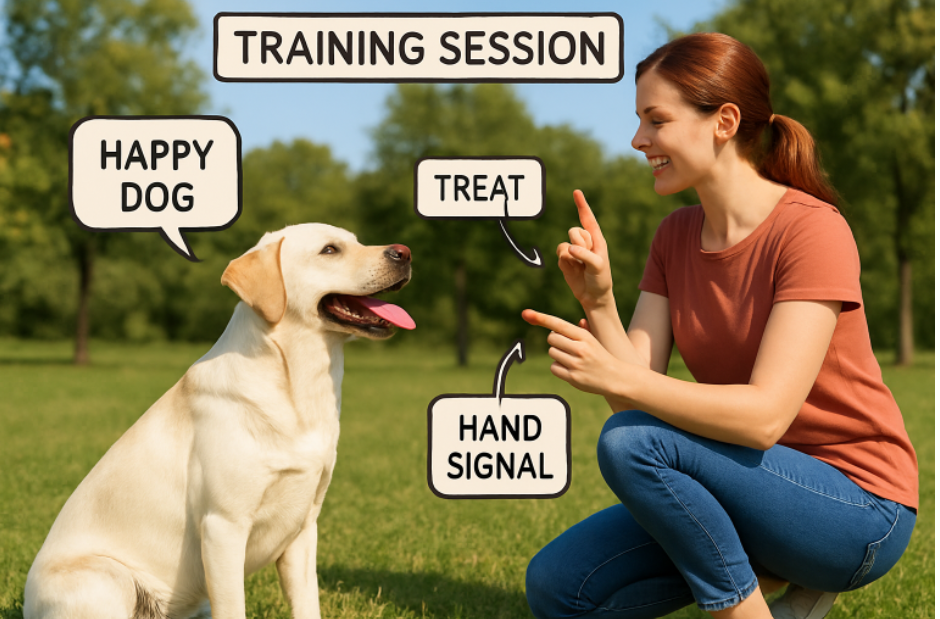 Consistency is vital when using hand signals. Select apparent, simple motions and use them reliably with each command. Over time, your dog will learn to associate each gesture and word with a specific behaviour, even in distracting environments. Experts often recommend that pet guardians introduce hand signals early and continue using them alongside verbal cues for the most transparent communication possible.
Incorporating Technology in Training
Modern technology has provided new tools to make dog training more convenient and interactive. Mobile training apps, live virtual coaching sessions, and smart trackers allow you to monitor your dog’s progress and tailor lessons to their needs from the comfort of your home. Wearable devices can track activity levels and remind owners of scheduled training times.
These digital resources offer easy access to expert guidance, video tutorials, and on-demand support communities. Online resources published by platforms such as Cesar’s Way can amplify your success when training your dog, whether you are reinforcing basic cues or addressing specific behavioural challenges.
Cognitive Training
Engaging your dog’s mind is as essential as physical exercise. Cognitive training exercises—such as puzzle feeders, interactive toys, nose work, and hide-and-seek games—stimulate mental faculties, reduce boredom, and foster problem-solving skills. These activities are essential for intelligent breeds or dogs that may become anxious or destructive when under-stimulated.
Cognitive challenges can be adapted to your dog’s age, ability, and interests, ensuring every session is both fun and rewarding. Developing your dog’s mental agility helps keep them sharp, boosts their confidence, and deepens the bond you share by making training a collaborative, enriching experience.
Customizing Training to Your Dog’s Needs
No two dogs are exactly alike. Some are more food-motivated, while others prefer toys or enthusiastic praise. Others may be susceptible to tone of voice or body posture. The most successful training programs are adapted to each dog’s unique preferences, learning speeds, and temperament. Take what motivates your dog best and use those incentives to your advantage.
Understanding and respecting your dog’s personality will help you tailor your approach, keep sessions positive, and avoid unnecessary frustration. Observing and responding to your dog’s stress signals ensures their comfort and promotes lasting results.
Benefits of Positive Training
Positive reinforcement builds eager, relaxed, and resilient canine companions. Studies consistently indicate that dogs with positive methods exhibit better overall health, fewer behavioural issues, and stronger bonds with their owners. Humane approaches help reduce the risk of anxiety, fear, and aggression, cultivating a home filled with trust and understanding.
Positive dog training emphasizes encouragement over correction, aligning with contemporary, science-backed animal welfare guidelines and helping you raise a well-behaved and genuinely happy pet.
Conclusion
Positive training techniques guarantee a more enjoyable experience for both dog and owner. Whether utilizing clicker training, hand signals, cognitive challenges, or innovative technology, consistency and kindness are the foundation of practical training. Invest the time to discover what works best for your unique companion, and you will be rewarded with a well-mannered, joyful, and deeply bonded pet for years to come.