
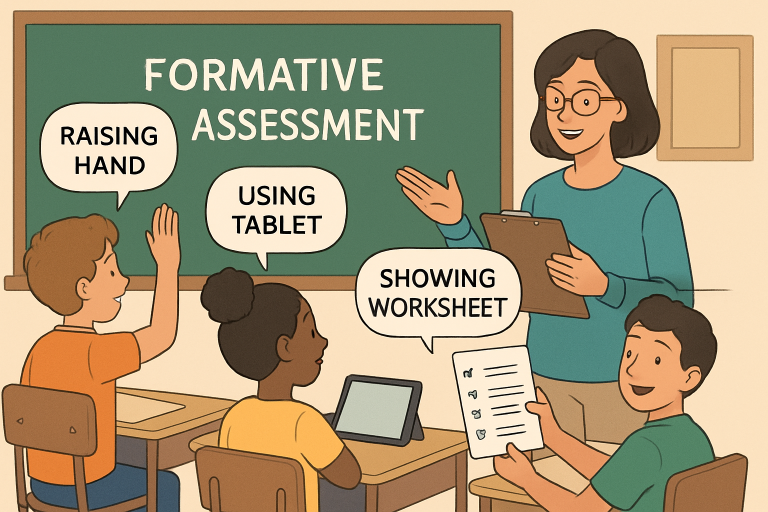
Formative assessment sits at the heart of responsive teaching, offering essential insights into students’ progress and understanding as lessons unfold. Rather than relying solely on high-stakes testing, educators can make use of a variety of real-time assessment strategies to better support, motivate, and guide their learners. Incorporating techniques like comprehension assessments for teachers helps provide targeted feedback and differentiated instruction, ensuring that the diverse needs of a classroom are met effectively.
By selecting purposeful formative assessment tools, teachers foster a classroom environment marked by high engagement and accelerated learning. Assessments used during the learning process give teachers the flexibility to pivot instruction, correct misconceptions, or deepen understanding right when students need it most. Whether through observation, direct questioning, or digital platforms, tapping into these formative strategies allows educators to personalize learning and support each student’s journey.
Understanding Formative Assessment
Formative assessment encompasses a range of strategies that enable educators to continuously gauge student learning throughout the instructional process. These techniques differ from summative assessments, such as standardized tests or final exams, which assess student achievement at the conclusion of a unit or course. Instead, formative assessments function as learning checkpoints that provide actionable information, benefiting both students and teachers in real time.
By design, formative assessment is flexible and adaptable, enabling educators to adjust their teaching in response to students’ needs. Whether addressing misconceptions or identifying areas for enrichment, teachers use this feedback loop to inform day-to-day decisions and boost the overall effectiveness of instruction.
Effective Formative Assessment Techniques
No single formative assessment strategy fits every classroom, so teachers are encouraged to blend a range of techniques to reach all learners. Among the most widely used methods are:
- Observations: Monitoring students during individual or group activities can provide sharp insights about comprehension, participation, and engagement levels.
- Interviews: Having students talk through their thought process, either individually or in small groups, allows teachers to uncover understanding and address confusion directly.
- Show Me: Asking students to demonstrate their work, solve a problem on the board, or complete hands-on activities offers concrete evidence of mastery.
- Hinge Questions: Strategically placed throughout the lesson, these questions serve as quick checks for understanding, helping teachers decide whether the class is ready to move forward.
- Exit Tasks: Short activities at the end of a lesson help teachers gauge what students learned and which concepts may need further reinforcement.
Implementing a mix of these approaches not only appeals to a range of learning preferences but also supplies educators with a rich tapestry of data to inform their teaching.
Integrating Technology in Formative Assessment
Technology is increasingly vital to formative assessment. Digital tools help educators gather, analyze, and respond to student data efficiently.
Multimedia tools empower students to respond with video, catering to those who express themselves best in alternative formats. Additionally, assessment platforms allow for open-response questions and real-time tracking of class progress. By leveraging technology, teachers can differentiate tasks, track learning trends, and foster a culture of formative feedback.
Benefits of Formative Assessment
The proactive use of formative assessment transforms the classroom experience for both teachers and students:
- Immediate Feedback: Real-time insights allow teachers to quickly address learning gaps or advance instruction for students who are ready for more challenging material.
- Student Engagement: Involving students in their own learning, formative assessment encourages participation and builds greater investment in academic progress.
- Personalized Learning: Teachers can modify lessons or employ targeted interventions, responding to needs identified through ongoing assessment cycles.
By embedding formative assessment into their routines, educators develop a rich picture of class progress that benefits every learner.
Challenges and Considerations
While formative assessment has undeniable value, it comes with specific challenges that require strategic solutions:
- Time Constraints: Designing and implementing multiple assessment types can place additional demands on class time and teacher preparation.
- Consistency: Ensuring equitable assessment practices across subjects or grade levels requires collaboration and regular review among teaching teams.
- Data Management: Collecting, interpreting, and acting on formative data necessitates well-organized systems and often the integration of technology platforms.
By starting with a few well-chosen techniques and building from there, teachers can gradually overcome these hurdles and normalize formative assessment as a cornerstone of classroom life.
Final Thoughts
Formative assessment underpins successful teaching and learning. By integrating a diverse set of techniques, including both traditional and digital strategies, educators ensure that every student’s needs are recognized and addressed promptly. Creating a feedback-rich environment, where assessment and instruction are closely intertwined, leads to improved outcomes, greater engagement, and more meaningful learning experiences for all students.