As cyberattacks grow more frequent and sophisticated, businesses are under increasing pressure to secure their digital environments. In response, many organizations turn to cyber insurance coverage Silverfort can help support, aiming to protect against financial losses from data breaches, ransomware, and system outages. However, with rising claims and stricter underwriting requirements, simply purchasing a policy is no longer enough.
This is where Silverfort steps in. By enhancing identity and access security, Silverfort helps organizations qualify for cyber insurance, reduce premiums, and meet insurers’ security requirements. In this article, we explore the intersection between cyber insurance coverage and Silverfort’s identity protection platform—and why they are increasingly being adopted in tandem.
What Is Cyber Insurance Coverage?
Cyber insurance is a specialized type of business insurance designed to cover financial losses resulting from cybersecurity incidents. Policies typically include protection for:
-
Ransomware attacks
-
Business interruption
-
Legal fees and regulatory fines
-
Notification and recovery costs
Due to the rapid evolution of cyber threats, insurers now expect policyholders to maintain robust cybersecurity controls—especially in areas like access management, multi-factor authentication (MFA), and privilege use monitoring.
Why Identity Security Matters for Cyber Insurance
Identity-based attacks are among the most common vectors for cyber breaches. According to numerous industry reports, over 80% of breaches involve compromised credentials or misuse of identity.
Key threat vectors include:
-
Phishing that captures user credentials
-
Brute-force attacks against login portals
-
Lateral movement within a network after initial access
-
Rogue access by insiders or compromised accounts
As a result, cyber insurers increasingly require policyholders to implement identity-centric security controls such as MFA, conditional access, and Zero Trust principles.
Introducing Silverfort
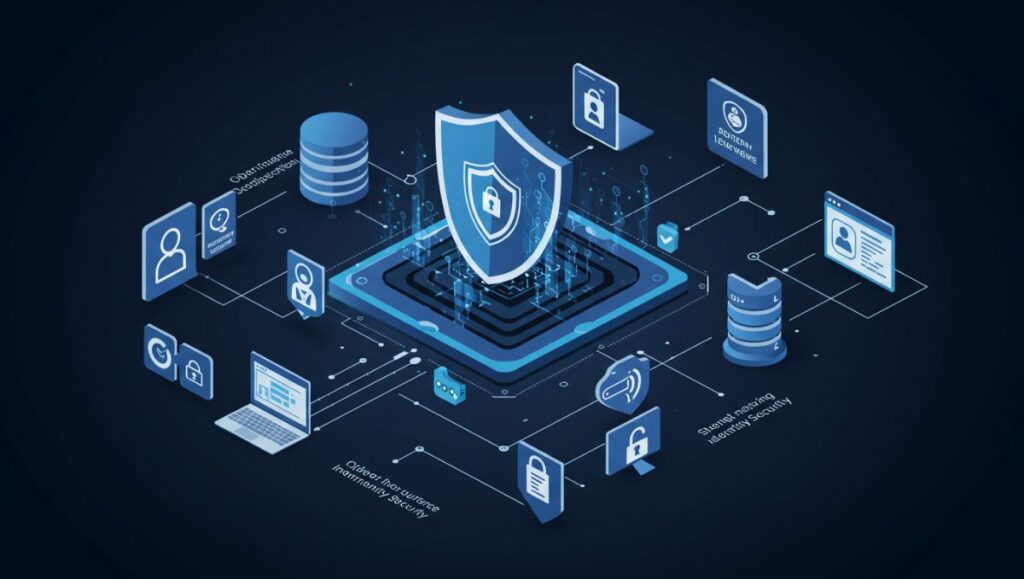
Silverfort is a cybersecurity platform that extends identity protection across all users, systems, and environments—including those that traditional MFA and identity solutions can’t reach.
Built on an agentless, proxyless architecture, Silverfort integrates with existing identity providers (e.g., Active Directory) to enforce MFA, access policies, and risk-based authentication on a broad range of assets, including:
-
Legacy applications
-
Command-line tools
-
VPNs and remote access
-
Service accounts and non-human identities
-
On-prem and cloud infrastructure
Silverfort helps organizations close critical identity security gaps, making them more compliant with cyber insurance standards and less vulnerable to attacks.
How Silverfort Supports Cyber Insurance Compliance
Silverfort plays a crucial role in helping organizations qualify for, retain, and optimize cyber insurance coverage by addressing key insurer concerns:
1. Enforcing Universal MFA
Most insurers now mandate MFA for all administrative accounts and remote access points. Silverfort enables:
-
MFA on systems that don’t natively support it
-
Adaptive MFA based on user behavior and context
-
Coverage of command-line tools and legacy systems
This ensures organization-wide MFA enforcement, even in complex, hybrid IT environments.
2. Implementing Zero Trust Access
Silverfort applies Zero Trust policies across all assets by continuously verifying trust and limiting lateral movement. This includes:
-
Step-up authentication for sensitive systems
-
Conditional access rules based on risk scores
-
Just-in-time access controls for admins and service accounts
These controls align with insurers’ increasing focus on Zero Trust architectures.
3. Monitoring and Logging Identity Activity
Insurers require visibility into identity usage to detect and respond to threats. Silverfort provides:
-
Centralized auditing of authentication and access attempts
-
Detection of unusual access patterns
-
Real-time alerts for suspicious behavior
This capability supports incident response readiness and insurance claims validation.
4. Reducing the Attack Surface
By protecting service accounts and unmanaged systems—often overlooked by traditional IAM tools—Silverfort helps reduce the organization’s identity attack surface, which directly impacts an insurer’s risk assessment.
Common Cyber Insurance Requirements Silverfort Helps Meet
Cyber insurers typically require the following security controls, all of which Silverfort supports:
| Cyber Insurance Requirement | Silverfort Capability |
|---|---|
| MFA on all remote access | Enforced via agentless, adaptive MFA |
| MFA on administrative accounts | Policy-based controls on local and domain admins |
| Protection for legacy and custom apps | MFA for non-standard, legacy, and proprietary systems |
| Logging and monitoring of access | Centralized access auditing and alerting |
| Zero Trust implementation | Risk-based access control across identity systems |
By fulfilling these requirements, organizations improve both policy eligibility and coverage quality.
Use Cases of Silverfort in Cyber Insurance Scenarios
Enterprise with Legacy Infrastructure
A large enterprise may struggle to apply MFA across legacy applications and on-prem systems. Silverfort extends MFA protection without rewriting code or deploying agents, meeting insurer requirements.
Remote Workforce Security
An organization with a remote or hybrid workforce can use Silverfort to secure VPN and RDP access with adaptive MFA, reducing risks of credential stuffing and unauthorized remote login.
Zero Trust Compliance
Organizations pursuing cyber insurance with Zero Trust architecture mandates can use Silverfort to enforce continuous identity verification across all systems and environments.
Audit-Ready Access Logs
In the event of a breach or insurance claim, Silverfort’s detailed logs provide clear evidence of access controls, authentication events, and policy enforcement—supporting insurance claims and compliance audits.
Silverfort and Insurance Providers: A Growing Partnership
With insurers tightening requirements amid an explosion in ransomware and breach claims, platforms like Silverfort are becoming strategic security partners for both insured companies and insurers themselves.
Some underwriters now specifically recommend or require identity security solutions like Silverfort as part of the underwriting process. Demonstrating robust identity controls can lead to:
-
Lower premiums
-
Broader coverage
-
Faster claims processing
-
Favorable renewals
By proactively implementing Silverfort, organizations show a mature security posture that aligns with today’s risk-aware insurance landscape.
Future Trends in Cyber Insurance and Identity Security
As both cyber threats and insurance models evolve, we expect to see greater alignment between security practices and insurability. Key trends include:
-
Increased emphasis on Zero Trust frameworks
-
Continuous security monitoring as a policy requirement
-
Dynamic underwriting based on live risk assessment
-
Pre-breach audits and risk scoring tools
-
Security scorecards tied to insurance pricing
Silverfort’s ability to continuously monitor, control, and adapt identity access makes it a vital tool in this emerging model of risk-adjusted insurance.
Final Thoughts
As cyberattacks continue to escalate, the cyber insurance coverage Silverfort supports has become a critical component of enterprise risk management. However, securing coverage—and keeping premiums in check—now depends on proving robust cybersecurity controls, particularly in identity and access management.
Silverfort empowers organizations to meet and exceed these expectations with its agentless, adaptive identity protection platform. By enforcing MFA everywhere, enabling Zero Trust access, and delivering complete visibility into identity activity, Silverfort helps companies not only qualify for cyber insurance but also prevent the breaches that lead to costly claims.