Running a successful business means ensuring every aspect of your property works as intended—including the plumbing system. Whether you operate a restaurant, medical office, or retail space, plumbing issues can quickly escalate, leading to costly repairs or service interruptions. Focusing on proactive maintenance and fast-response strategies helps prevent problems and keep your facility in top condition. For those seeking expert Greensboro commercial plumbing solutions, understanding the common challenges and how to address them is crucial to operational success.
The importance of commercial plumbing goes beyond basic functionality. Efficient plumbing is critical for health standards, customer satisfaction, and compliance with local codes. Facility managers or business owners often need to juggle regular inspections, preventive maintenance, and emergency response—all while keeping the business running smoothly.
Frequent challenges include everything from persistent clogs in high-traffic restrooms to inconsistent water pressure that can affect both restrooms and essential equipment. Business owners must understand the importance of quality materials and proper installation, as well as the benefits of partnerships with responsive professionals.
Proactive engagement with a skilled plumber can make a significant difference in efficiently managing these plumbing obstacles, minimizing the risk of downtime or regulatory penalties.
Frequent Clogs in High-Traffic Restrooms
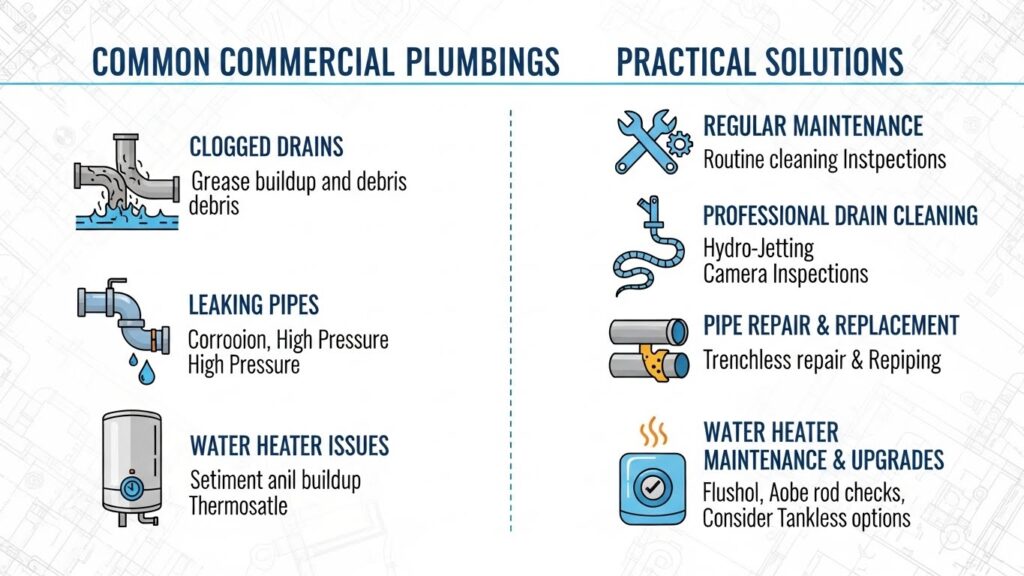
Restroom facilities in commercial settings are used significantly more than those in private homes, making clogs a common headache. Improper disposal of paper towels, sanitary items, and other debris exacerbates the issue. The best defense includes not only regular cleaning but also signage that clearly communicates what can and cannot be flushed. Investing in high-efficiency, commercial-grade toilets and sinks helps prevent clogs from forming in the first place.
Leaking Fixtures and Pipes
Small leaks can add up to significant water waste and major repair bills. Over time, dripping faucets, faulty flush valves, and failing seals can cause structural damage, promote mold growth, and increase utility costs. A comprehensive routine inspection schedule ensures minor leaks are caught early. Use high-quality, durable fixtures and prioritize replacing washers and seals to prevent leaks before they occur.
Sewer System Backups
Sewer backups are especially disruptive in commercial settings, causing unpleasant odors, sanitation issues, and potential business closures. Contributing factors include grease buildup, foreign objects, and even invasive tree roots. Schedule regular sewer line inspections and use hydrojetting as needed to keep lines clear. Any signs of backup, such as slow drains or gurgling toilets, should be investigated immediately to minimize damage and prevent health risks.
Pipe Corrosion and Deterioration
Older commercial buildings often struggle with outdated infrastructure. Metal pipes corrode, leading to leaks, discolored water, and decreased water quality. Regularly test water for unusual coloring or odor, as these are early signs of pipe issues. Upgrading to more corrosion-resistant materials such as PEX or PVC provides long-term benefits in efficiency and safety. Planning phased replacements can prevent business disruptions while addressing priority concerns.
Inadequate Water Pressure
Low or inconsistent water pressure frustrates customers and can disrupt essential business operations, including kitchen equipment and restrooms. Routine pressure checks and system balancing can pinpoint problems within the plumbing infrastructure. For facilities at risk of fluctuating supply or pressure, consider installing booster pumps or adjusting pressure-reducing valves to stabilize flow.
Aging Infrastructure
Plumbing systems in older commercial structures frequently lag behind modern standards, putting businesses at risk of leaks, inefficiencies, and regulatory non-compliance. Galvanized steel pipes, for example, are prone to rust and narrowing, leading to water flow issues. Facility managers should schedule comprehensive assessments of aging plumbing and commit to gradual system upgrades, including repiping with PEX or copper, to ensure code compliance and operational reliability.
Emergency Downtime Risks
A burst pipe or sewer backup can bring commercial activity to a standstill, damaging the business’s reputation and resulting in lost revenue. To mitigate these risks, maintain a partnership with a local, 24/7 commercial plumbing team prepared to handle emergencies. Develop a detailed emergency response plan that includes immediate shut-off procedures, key contact lists, and clear timelines for professional intervention.
Compliance with Plumbing Codes and Regulations
Commercial establishments are subject to rigorous health and safety codes governing their plumbing systems. Neglecting these requirements can result in fines, inspection failures, or even business closures. Stay current on local building codes and EPA regulations, and only hire fully licensed plumbers to perform any installation, repair, or inspection work.
Understanding and anticipating commercial plumbing challenges empowers business owners to keep their properties running smoothly, extend the lifespan of key infrastructure, and enhance customer satisfaction. Through expert partnerships, regular proactive maintenance, and informed decision-making, you can create a more reliable business environment, minimize costly surprises, and achieve compliance with municipal and federal standards.