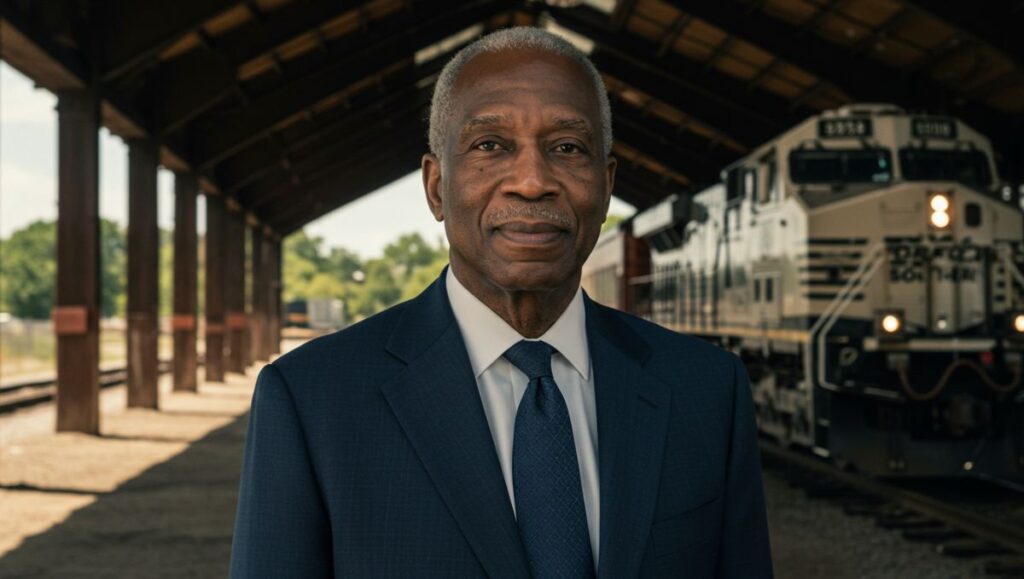
The American railroad industry has long been a symbol of progress, resilience, and transformation. It has powered commerce, connected cities, and supported economic growth for nearly two centuries. Behind the steel tracks and roaring locomotives are people whose dedication and vision have shaped the industry. Among them stands Claude Edward Elkins Jr, a remarkable figure whose professional journey reflects both grit and leadership.
From his humble beginnings as a railroad brakeman, Claude Edward Elkins Jr rose steadily through the ranks to become a respected executive leader at Norfolk Southern Corporation, one of the nation’s largest freight rail companies. His story is not just one of career advancement, but of perseverance, commitment to excellence, and a deep understanding of an industry that fuels America’s economy.
Early Career: Life as a Brakeman
When Elkins first entered the railroad industry, he worked as a brakeman, one of the most physically demanding and dangerous jobs in railroading. Brakemen are responsible for coupling and uncoupling cars, operating switches, inspecting trains, and ensuring the safe operation of freight lines.
This early experience gave Elkins a ground-level perspective on railroad operations. He learned the technicalities of train movement, safety protocols, and the importance of teamwork. More importantly, it gave him a sense of empathy for frontline workers, an understanding he would carry into his leadership roles later in his career.
Starting at the bottom provided Elkins with a strong foundation in practical railroad operations, which many executives lack. This hands-on knowledge would later inform his decision-making and leadership style.
Climbing the Ranks at Norfolk Southern
Elkins’s determination and work ethic quickly caught the attention of his supervisors. Over time, he transitioned into supervisory and managerial roles, proving his ability to lead, innovate, and improve operational efficiency.
At Norfolk Southern, a company formed in 1982 through the merger of Norfolk & Western Railway and Southern Railway, Elkins became part of an organization that prides itself on tradition, resilience, and adaptation to modern logistics. Rising through the ranks required him to master not only technical expertise but also people management, strategic planning, and business acumen.
Some key milestones in his ascent included:
-
Operations leadership: Managing crews, ensuring safety compliance, and optimizing train schedules.
-
Regional oversight: Taking charge of multiple terminals and districts, balancing efficiency with employee morale.
-
Corporate leadership roles: Transitioning from field management into executive-level decision-making, where he influenced strategy, safety culture, and long-term growth initiatives.
Leadership Philosophy
Elkins’s leadership style reflects the lessons he learned as a brakeman: safety, accountability, and respect for the workforce. He is known for emphasizing the following principles:
-
Safety First – Recognizing that railroad jobs can be hazardous, he pushed for investments in training, technology, and safety programs.
-
People-Centered Leadership – With firsthand experience of frontline challenges, Elkins built policies that respected employees and strengthened morale.
-
Efficiency Through Innovation – He encouraged modernization, including the adoption of advanced rail technologies and data-driven decision-making.
-
Mentorship – Believing in the power of guidance, he mentored younger professionals, many of whom rose into leadership positions themselves.
This philosophy positioned him as a trusted leader among employees and peers, someone who understood both the operational and human sides of railroading.
Contributions to Norfolk Southern
As Elkins advanced to the executive level, his influence grew in shaping Norfolk Southern’s reputation as a forward-looking company. His contributions include:
1. Strengthening Safety Culture
Safety has always been a cornerstone of Norfolk Southern, and under Elkins’s leadership, new initiatives were introduced to reduce workplace accidents, improve training, and modernize safety equipment.
2. Enhancing Operational Efficiency
Drawing on his early career, Elkins championed practical changes that improved train turnaround times, reduced delays, and streamlined freight handling.
3. Supporting Technological Integration
From automated track inspection to digital logistics systems, Elkins was a proponent of adopting modern technology to keep Norfolk Southern competitive.
4. Workforce Engagement
Elkins understood that the railroad was built not only on steel and engines but also on people. He fostered better communication between management and workers, bridging the gap between corporate goals and day-to-day realities.
5. Industry Advocacy
As a respected executive, Elkins represented Norfolk Southern in industry forums, contributing to policy discussions and advocating for sustainable railroad practices.
Challenges Faced
Elkins’s rise was not without obstacles. The railroad industry is subject to volatile fuel costs, labor disputes, regulatory changes, and technological disruption. As an executive, he faced:
-
Balancing efficiency with safety during times of cost-cutting pressures.
-
Adapting to environmental regulations while keeping freight operations profitable.
-
Managing workforce transitions as automation replaced certain manual jobs.
-
Navigating crises, including derailments, supply chain bottlenecks, and economic downturns.
Through these challenges, Elkins relied on his resilience and problem-solving skills—qualities shaped during his early days as a brakeman.
Influence on the Railroad Industry
Elkins’s journey is inspirational for many reasons:
-
He showed that career growth is possible from the ground up.
-
His story highlights the importance of practical, on-the-job knowledge in executive decision-making.
-
He became a role model for younger railroad employees aspiring to leadership roles.
-
His leadership contributed to Norfolk Southern’s reputation as an industry innovator.
By combining operational knowledge with executive vision, Elkins bridged the divide between field workers and corporate leaders.
Legacy and Inspiration
Claude Edward Elkins Jr leaves behind more than just a corporate title—he leaves a legacy of perseverance, leadership, and empathy. His life shows that true leadership is not built on shortcuts, but on hard work, respect, and a deep understanding of the people and systems one leads.
For Norfolk Southern employees, his story continues to serve as a blueprint for career growth. For the wider railroad industry, his contributions highlight the value of executives who remember their roots.
Conclusion
The railroad industry thrives on tradition and innovation, and few leaders embody that balance as well as Claude Edward Elkins Jr His rise from brakeman to executive leader at Norfolk Southern reflects the American ideal of hard work leading to success. More than a corporate success story, his career is a testament to humility, perseverance, and the belief that leadership means serving both people and progress.
Elkins’s journey reminds us that even in an era of automation and rapid change, the heart of the railroad will always be the people who dedicate their lives to keeping the trains running—and among them, his story will remain an enduring inspiration.