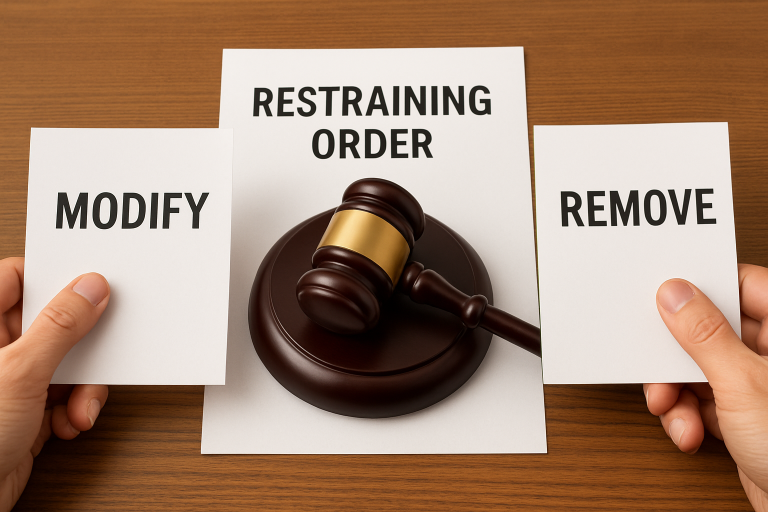
Restraining orders provide essential protection in cases involving harassment, threats, or domestic violence. However, circumstances sometimes change. This raises an important question for many in California: Can a restraining order be modified or removed? Understanding the legal framework can help individuals move forward safely and lawfully. The dedicated team at Griffith Young is well-versed in handling restraining order cases and can offer tailored advice for your specific situation.
Whether you are the protected party or the restrained individual, knowing your rights and options is crucial. The process for modifying or removing a restraining order differs from simply allowing it to expire and always requires careful legal navigation. This article explains the legal standards, procedural steps, and frequently asked questions to help you make informed decisions about restraining orders in California.
Understanding California Restraining Orders
Restraining orders are civil court orders that prohibit someone from contacting or coming near another individual. In California, there are several types of restraining orders, including domestic violence restraining orders, civil harassment restraining orders, and workplace violence restraining orders. Each serves to prevent harm and reduce the risk of repeated abuse or threats.
The court issues either a temporary or a permanent restraining order, depending on the facts presented. A temporary restraining order (TRO) generally lasts until a hearing is held, while a permanent order can last up to 5 years in California. If a restraining order is part of a family law case, it can also include child custody and visitation arrangements.
California law recognizes that personal circumstances can change. The restrained person may take significant steps to improve their behaviour, or the protected party may feel that ongoing protection is no longer necessary. In these cases, either party may file a request to modify or terminate a restraining order. The court will carefully evaluate all requests to ensure continued safety.
Can a Restraining Order Be Modified?
Yes, California courts allow either the protected person or the restrained person to request changes to a restraining order. Modifications can include altering the type or amount of contact allowed, changing the distance requirements, or modifying terms related to child custody and visitation. The court will only grant a modification if there is a significant change in circumstances that justifies the request. Examples include new evidence, successful completion of counselling programs, or improved behaviour by the restrained party.
Can a Restraining Order Be Removed?
Restraining orders can be removed (terminated) before their scheduled expiration date. This request can be made by either the protected person or, in some cases, the restrained person. To remove a restraining order, the party must petition the court and provide compelling reasons why the protection is no longer necessary. Common reasons include reconciliations, changes in circumstances, or evidence that the original threat has been resolved.
The court takes all termination requests very seriously and considers the potential risks to the protected person. Judges will weigh the facts presented during a hearing and expect to see documented evidence supporting the request. Removing a restraining order requires a careful legal approach, so seeking advice from experienced attorneys is often beneficial.
Steps to Request Modification or Removal
- File the Appropriate Court Forms: California courts require specific forms, such as Request to Modify or Terminate Restraining Order (Form DV-400 for domestic violence cases). These forms can be found on the California Courts website.
- Explain the Change in Circumstances: Clearly outline the reasons for the request and provide supporting documentation, such as counselling records, proof of compliance with court orders, or agreements between parties.
- Serve the Other Party: As with the original order, the other party must be served with the modification or termination request and the scheduled hearing date.
- Attend the Court Hearing: Both parties have a right to appear, present evidence, and respond to the court’s questions. The judge will decide based on the evidence presented.
- Obtain the Judge’s Order: If the request is granted, the court will issue updated paperwork reflecting the changes or removal of the order.
Important Considerations
Only a judge can change or lift a restraining order in California. Verbal agreements between parties are not legally binding. Violating the original order remains a criminal offense until the court’s decision is final. Both parties should keep thorough records, follow legal procedures, and refrain from informal negotiation without legal help. For broader information on protective orders and their removal nationwide, resources like Women’s Law.org provide valuable guidance.
Frequently Asked Questions
Can the protected person request that the restraining order be terminated?
Yes, the protected person can petition the court to have the restraining order removed. The judge may want to ensure that the request is voluntary and not made under pressure.
How long does it take for the court to modify or terminate a restraining order?
The process generally takes several weeks. It depends on the court’s schedule and the circumstances of the case. A hearing is required before any relief is granted.
Will the restraining order automatically end when it expires?
Yes, unless parties request an extension, the order will expire on the date specified in the court document. If further protection is needed, a renewal application must be filed.
Can a restraining order be modified while a criminal case is ongoing?
A family law restraining order may be modified, but criminal protective orders must be handled through the criminal court. It’s important to clarify the type of order in place.
Conclusion
California offers a legal path for those seeking to change or end a restraining order if their circumstances warrant it. Whether you wish to modify or remove an order, carefully following court procedures and seeking legal counsel are essential for safeguarding your rights and well-being. Navigating the legal system can be complex, but the right support and information will help you make the best decisions for your future.