Why Resilience Matters in Modern Hospital Systems
Hospitals today operate in an environment where rapid shifts in technology, policy, and societal needs have become the norm. Building resilience is not just about being prepared for major crises—it’s about sustaining high-quality patient care under routine and extraordinary stressors. Ensuring continuity of essential services is pivotal, as even brief disruptions can have significant consequences. Systems must be robust and flexible to adequately safeguard patients and staff, constantly evolving to address new challenges.
A proactive approach to both risk and opportunity is essential for supporting operational strength. One critical element in this strategy is comprehensive risk management through solutions like Coverys healthcare liability insurance, which empowers hospitals with the protection and confidence necessary to adapt quickly to uncertainty and secure their operations. Liability coverage is an often-overlooked but vital layer in any resilient healthcare strategy, reducing the risk of costly setbacks and enabling organizations to focus their resources on care delivery and innovation.
Addressing New Complexities in Healthcare Facilities
In the modern healthcare facility, complexity is the status quo. Hospitals are now sophisticated ecosystems combining physical infrastructure, digital technologies, and diverse clinical and nonclinical teams. Integrating electronic health records, advanced diagnostic equipment, and interconnected systems creates a web of dependencies that, while valuable, can also introduce operational vulnerabilities. Regulatory shifts and ever-evolving patient expectations add layers to this complexity, requiring hospitals to develop strong internal communication systems and streamlined workflows.
Navigating these complexities effectively means investing in adaptive protocols. These could include scenario-based planning, flexible staffing models, and cross-training for critical roles. By leveraging a combination of risk assessment tools and simulation exercises, hospitals can reveal process gaps and quickly deploy countermeasures before challenges escalate. Such proactive strategies can significantly improve operational efficiency and patient outcomes.
Leadership Approaches to Healthcare System Challenges
The role of hospital leadership has evolved in tandem with healthcare’s rising complexity. Today’s leaders must do more than manage—they must inspire, empower, and foster mutual trust and learning cultures. Investment in workforce development is paramount, from nurturing clinical skills to supporting mental well-being. Open channels for staff feedback help leadership remain attuned to the realities experienced by frontline workers—enabling rapid iteration of care models and administrative practices.
Clear, transparent communication backed by data-driven decision-making builds trust at all organizational levels. Leaders who embrace continuous learning and set the tone for adaptability build resilient systems and are positioned to thrive despite adversity. As seen in profiles of industry leaders making a difference, innovative thinking and empathy are essential for successfully navigating ongoing healthcare challenges.
Fostering Collaboration and Team-Based Strategies
Resilience in hospital systems depends heavily on the effectiveness of their teams. Interdisciplinary collaboration breaks down traditional silos, ensuring that patient needs are addressed comprehensively. Team-based models, such as multidisciplinary rounds and shared decision-making, leverage collective expertise and foster mutual support across departments. Research shows that collaboration enhances both patient outcomes and staff satisfaction. Hospitals that promote communication and teamwork can solve problems more quickly, reduce clinical errors, and create a more positive culture—key factors for managing emergencies or adopting new protocols.
Integrating Technology to Drive Operational Effectiveness
Digital transformation is at the heart of operational resilience in the healthcare sector. Hospitals that leverage electronic health records, telemedicine, AI-powered diagnostics, and remote monitoring gain significant advantages in scalability and capacity. These technologies not only streamline internal operations—reducing paperwork and administrative errors—but also extend access to care, particularly in underserved or rural communities.
However, true success requires more than the adoption of cutting-edge tools. Comprehensive staff training, workflow redesign, and rigorous data protection protocols are essential to ensure that technology supports clinical care without introducing new vulnerabilities. Establishing a culture of continuous technology evaluation and improvement is critical to realizing sustained benefits in both everyday and crisis scenarios.
Understanding Risk Management in Hospital Settings
Risk in the hospital environment extends from cybersecurity and data privacy to medical errors, malpractice, and supply chain vulnerabilities. Building a culture where risk management is proactive and embedded across all operations is vital to systemic resilience. Regular risk assessments, anonymous reporting systems, and frequent staff training help spot and mitigate threats before they grow.
Empowering staff to speak openly about mistakes and potential hazards fosters a transparent culture that improves patient safety and organizational learning. Hospitals should also periodically review emergency preparedness plans to address not just natural disasters, but also emerging risks such as ransomware attacks and global health emergencies. Hospitals that make safety and risk management a shared responsibility consistently demonstrate higher resilience and better patient outcomes.
Emerging Trends Shaping Hospital System Resilience
Several evolving trends are influencing how hospitals approach resilience. The shift toward value-based care demands hospitals optimize resources to deliver high-quality outcomes at lower costs. Population health management initiatives require building relationships with community resources and focusing on preventive care, often outside traditional inpatient settings.
Staff well-being is a growing focus area, as burnout and workforce shortages challenge hospitals to rethink support structures and flexible scheduling. The ever-increasing adoption of outpatient, home-based, and virtual care also means hospitals must develop new protocols to ensure quality and safety beyond their physical walls. Embracing these trends ensures hospitals remain relevant and can withstand uncertainty in an ever-shifting healthcare landscape.
Case Studies: Hospitals Leading the Way in Resilience
- An urban hospital network overhauled its emergency preparedness programs through cross-training, scenario drills, and real-time communications tools, which resulted in faster and more effective responses to local disasters.
- A regional healthcare system established robust staff well-being initiatives, including mental health support and flexible scheduling, which reduced turnover and increased patient satisfaction.
- A multi-site system deployed a telehealth platform, connecting rural patients to specialists and reducing unnecessary visits to emergency departments.
By examining these examples, hospital leaders can adapt proven resilience strategies within their own contexts. Emulating models prioritizing preparedness, workforce well-being, and intelligent technology use accelerates progress toward robust and adaptable healthcare systems.
Final Insights
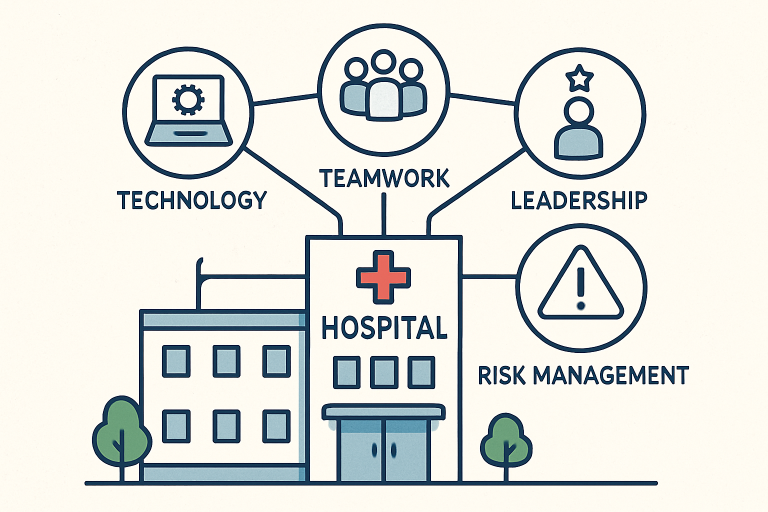
Building resilience in hospital systems is not a single initiative but an ongoing commitment that touches every aspect of operations—leadership, teamwork, technology, and risk management. Hospitals that embrace adaptability, proactive planning, and collaborative care models are better equipped to navigate uncertainty while maintaining high standards of patient care. As emerging trends and new challenges continue to reshape healthcare, resilience becomes the foundation for sustainable growth and trust. By learning from proven strategies and fostering a culture of continuous improvement, hospitals can secure both present stability and future readiness in an ever-changing landscape.