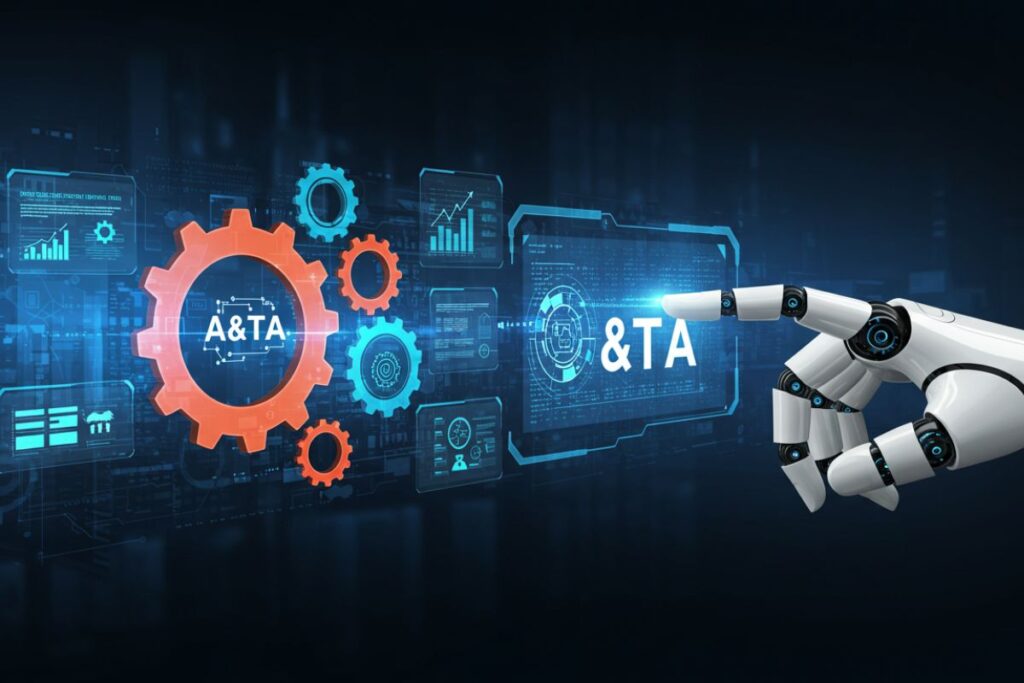
A&TA stands for Automation and Task Automation, a growing field focused on using technology to streamline repetitive tasks and improve operational efficiency. From startups to large enterprises, A&TA is transforming how organizations handle workflows, reduce human error, and enhance productivity across departments.
This article explores the core principles of A&TA, its real-world applications, tools involved, and the future of automation in business.
Understanding A&TA in the Digital Age
In the simplest terms, A&TA automates manual, rule-based tasks using software, scripts, bots, or systems. It eliminates the need for constant human intervention, allowing businesses to operate faster, smarter, and with greater consistency.
Whether it’s scheduling emails, processing invoices, or managing data, A&TA empowers organizations to save time, cut costs, and focus on value-driven work.
Key Benefits of A&TA
1. Improved Efficiency
Automation allows tasks that once took hours to be completed in seconds. Employees are freed from mundane work and can focus on strategic initiatives.
2. Reduced Human Error
Manual data entry and repetitive processes often lead to mistakes. With A&TA, these risks are minimized through consistent and rule-based execution.
3. Scalability and Flexibility
Businesses can scale operations without proportionally increasing resources. A&TA enables seamless growth by automating core processes.
4. Cost Reduction
By reducing the need for human labor on repetitive tasks, companies save money on staffing and time-related inefficiencies.
Applications of A&TA in Business
Finance & Accounting
-
Invoice processing
-
Payroll automation
-
Financial report generation
Human Resources
-
Resume screening
-
Employee onboarding workflows
-
Time-off approvals
Customer Support
-
Chatbots for FAQs
-
Automated ticket assignment
-
Feedback collection
Marketing
-
Social media scheduling
-
Email campaign automation
-
Lead scoring and CRM updates
IT and Security
-
System updates
-
Log monitoring
-
Threat detection scripts
These are just a few of the many ways A&TA can be integrated into everyday operations to bring exponential improvements.
Popular Tools Used in A&TA
Robotic Process Automation (RPA)
RPA platforms like UiPath, Blue Prism, and Automation Anywhere are key to executing task automation without changing existing systems.
Business Process Automation (BPA)
BPA tools such as Kissflow and Nintex allow for end-to-end automation of complex workflows, particularly in cross-functional teams.
Integration Platforms (iPaaS)
Zapier, Make (formerly Integromat), and Microsoft Power Automate enable seamless connectivity between apps and services to automate data flows.
AI & ML in Automation
Artificial Intelligence adds a layer of intelligence to A&TA, helping with decision-making, predictive analysis, and natural language processing.
How A&TA Supports Digital Transformation
Digital transformation requires businesses to adapt to fast-changing market conditions and consumer expectations. A&TA is a cornerstone of this evolution. It enables real-time responsiveness, data-driven decisions, and improved customer experiences.
By adopting A and TA, companies transition from traditional, manual processes to dynamic, automated systems that align with future-ready goals.
Challenges in Implementing A&TA
Despite its benefits, A&TA implementation can come with certain challenges:
1. Resistance to Change
Employees may fear job displacement or struggle to adapt to automated systems. Proper training and communication are essential.
2. Integration Complexity
Some legacy systems may not support modern automation tools, requiring additional investment in APIs or middleware.
3. Data Security Risks
Automation systems must be secured properly to prevent unauthorized access or data leaks, especially when handling sensitive information.
4. Initial Costs
Setting up A and TA tools and infrastructure requires upfront costs, though these are usually offset by long-term gains.
A&TA and the Future of Work
Automation and Task Automation are shaping what the future of work looks like. Routine jobs are being replaced by intelligent automation, while employees are shifting toward roles that require creativity, problem-solving, and human interaction.
In this hybrid environment, A and TA doesn’t eliminate jobs—it redefines them. Companies that embrace this change will lead the way in innovation and efficiency.
Best Practices for Adopting A&TA
To successfully implement A&TA, organizations should:
-
Start small: Begin with repetitive, low-risk tasks to test tools and gain confidence.
-
Choose the right tools: Match tools to your needs—RPA, AI, or workflow automation depending on your goals.
-
Train your team: Empower staff with knowledge and reskilling opportunities.
-
Monitor and improve: Continuously assess the performance of automated processes and refine them over time.
-
Ensure compliance: Automation should align with legal, ethical, and industry-specific guidelines.
Industry Examples of A&TA in Action
Healthcare
Hospitals use A and TA for patient data management, appointment scheduling, and insurance verification, reducing wait times and paperwork.
Retail
Retailers automate inventory updates, personalized email offers, and order fulfillment, enhancing customer satisfaction.
Manufacturing
Automated systems handle procurement, quality checks, and logistics, minimizing delays and improving production accuracy.
Education
Educational institutions automate student enrollment, grading, and administrative processes to free up educators for teaching.
Why A&TA Is a Strategic Investment
The return on investment (ROI) from A&TA is often rapid and sustained. Organizations gain:
-
Higher output with fewer errors
-
Reduced manual workload
-
Improved speed and accuracy of decision-making
-
Enhanced ability to scale operations
In competitive markets, A and TA is not just an operational tool—it’s a strategic asset that ensures long-term success.
Conclusion: Embrace the Power of A&TA
A&TA—Automation and Task Automation—is more than a technological trend; it’s a transformative force for modern organizations. From saving time and reducing errors to enabling growth and digital agility, A&TA is changing the way businesses operate.
Whether you’re a small business looking to optimize internal workflows or a large enterprise aiming to automate at scale, AandTA offers scalable, flexible, and future-proof solutions.