
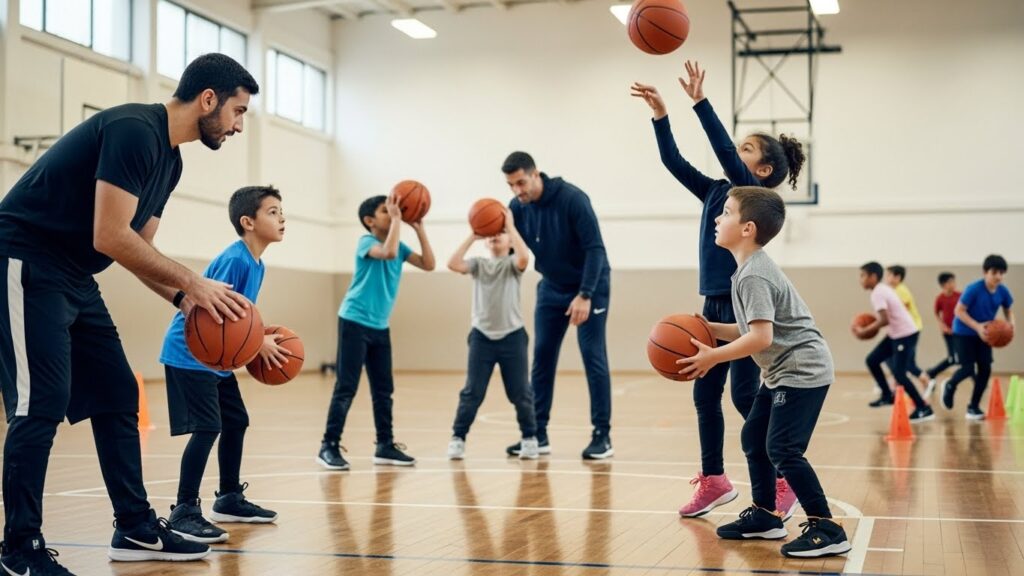
Developing young athletes into skilled basketball players requires more than just repetition and drills—it demands a comprehensive approach that combines physical skill development, mental preparedness, and innovative coaching strategies. Organizations like Illinois Attack, including their Illinois Attack Youth Basketball Training Chicago program, embody these principles through comprehensive, year-round training based in Aurora, Illinois. Their programs offer structured teams, practice sessions, and competitive opportunities designed to enhance both individual talent and teamwork skills. By emphasizing character development alongside athletic performance, Illinois Attack ensures that young athletes not only excel on the court but also grow into disciplined, well-rounded individuals, establishing a clear path toward their fullest potential.
Fundamental Skills Development
Mastering the basics forms the bedrock of basketball excellence. Young players need to build muscle memory and confidence through consistent practice of key basketball skills—such as dribbling, shooting, and passing—since these skills become automatic responses that fuel game-time performance. A holistic approach, mixing demonstration, repetition, and correction, produces the most lasting benefits.
Dribbling
-
Crossover Dribble: Young athletes should start with stationary basic crossover moves to handle the ball smoothly, then progress to dribbling while walking, running, and adding defensive pressure. This helps maintain control in games with a quick pace and direction changes.
-
Speed Dribble: For fast breaks, players need to maintain high speed without losing possession of the ball. Focus on control with fingertips, keep the head up to improve court awareness, and practice timed full-court sprints with the ball to boost coordination and peripheral vision.
Shooting
-
BEEF Method: Consistent shooting relies on proper form, guided by the BEEF method—Balance, Eyes, Elbow, Follow-through—that helps assess technique. Coaches emphasize stance, aim, trajectory, and spin. Diverse daily practice under pressure prepares athletes for game situations.
Passing
-
Chest Pass: The fastest, most direct pass requires strong wrists and arms, delivering the ball accurately without unnecessary bounce. Coaches should emphasize accuracy, hand placement, and crisp delivery for immediate action.
-
Bounce Pass: Vital for navigating traffic and beating defenders, when executed correctly at the right angle and speed, it becomes a key offensive tool. Practice drills should mimic game scenarios, promoting quick decisions and control.
Mental Preparation and Resilience
Success in youth basketball is about more than just physical superiority—it’s about building mental fortitude that can withstand the emotional swings of intense competition. To that end, athletes need targeted mental skills training integrated into their routine, so that focus and poise are there when it matters most.
Visualization
Young athletes can boost confidence and prep for competition through visualization. This involves mentally rehearsing plays, such as free throws or defenses, utilizing the brain’s natural encoding process. Short, focused sessions before games and practices reinforce habits, sharpen focus, and ready players for expected and unexpected scenarios.
Mindfulness
Practicing mindfulness, such as deep breathing or sensory awareness, helps athletes detach from past mistakes or future worries, centering them on the present. Regular exercise reduces stress, helps manage nerves during games, and aids in recovering focus after mistakes. Over time, staying present can improve performance, mental health, and overall enjoyment.
Positive Self-Talk
Positive self-talk in sports, particularly for young athletes, is highly effective. Simple affirmations, such as “I’m prepared,” “I can make this shot,” or “Mistakes help me grow,” protect against frustration and doubt. Coaches can model and promote these habits, making positive self-talk a visible part of practice to help athletes build confidence and persist through setbacks.
Goal Setting
Young players thrive when their ambitions are structured into actionable steps. By teaching athletes how to set SMART (Specific, Measurable, Attainable, Relevant, Time-bound) goals for individual development and team milestones, coaches foster an environment of steady progression and clear achievement. Examples include improving free-throw percentage by a specific date or committing to passing drills four times a week.
Embracing Challenges and Learning from Mistakes
The journey to basketball excellence is paved with both successes and stumbles. Athletes should be guided to see mistakes not as failures, but as the richest sources of insight. This mindset helps players develop not only resilience but adaptability—a quality essential for athletic and personal growth.
-
Analyzing mistakes in a supportive environment transforms errors into learning opportunities, highlighting the adjustments needed to progress.
-
Reframing obstacles as experiences to conquer encourages grit and determination, qualities that serve athletes on and off the court for years to come. Coaches who model vulnerability and share their own learning moments help cultivate this atmosphere of growth and openness.
Integrating Advanced Technologies
Innovation in training can amplify the results of hard work. In recent years, the introduction of advanced technologies into youth basketball programs has proven transformative, opening new avenues for skill development, injury prevention, and overall player engagement.
Virtual Reality (VR)
VR training is transforming how young athletes learn. Using VR headsets and software, players practice skills like dribbling, passing, and shooting in a risk-free virtual environment. This reduces physical strain and injury risk during repetitive drills, while maintaining mental sharpness during recovery or when in-person practice isn’t possible. Additionally, VR’s immersive feedback improves reaction time and decision-making, mimicking real game pace.
Motion Capture Systems
Motion capture technology has migrated from elite pro programs into youth sports. By analyzing athletes’ movements in three dimensions, coaches can get objective insights into a player’s shot mechanics, foot placement, and running form. These in-depth evaluations help identify subtle inefficiencies, prevent overuse injuries, and customize training routines for maximum gains.
Building a Supportive Environment
No training approach is complete without a positive, nurturing atmosphere. Coaches, teammates, and parents all contribute to an ecosystem where growth, encouragement, and respect prevail above all else.
-
Normalize Failure Through Storytelling: Sharing real-life examples of celebrated professionals—like Michael Jordan being cut from his high school team before becoming a legend—reminds young athletes that setbacks are temporary and triumphant comebacks are possible.
- Use Data to Drive Development: Incorporating shot charts, detailed statistics, and video analysis into training routines gives athletes real-time feedback and a clear understanding of their strengths and areas for improvement, making progress tangible and motivating.
-
Create a Feedback-Rich Environment: Encouraging players to provide constructive peer feedback fosters a team culture where mutual respect, effort, and collaboration are prioritized over just results. Publicly celebrating effort and resilience helps nurture confidence, dedication, and camaraderie.
Conclusion
By prioritizing fundamental skill development, fostering mental toughness, embracing challenges, and leveraging the latest technologies, youth basketball programs are well-positioned to prepare athletes for high-level success both on and off the court. A nurturing environment, guided by inspirational stories and objective feedback, ensures young players experience growth, resilience, and joy in their basketball journey. Ultimately, these combined strategies not only set the stage for athletic achievement but also for lifelong learning and character development through sport.