
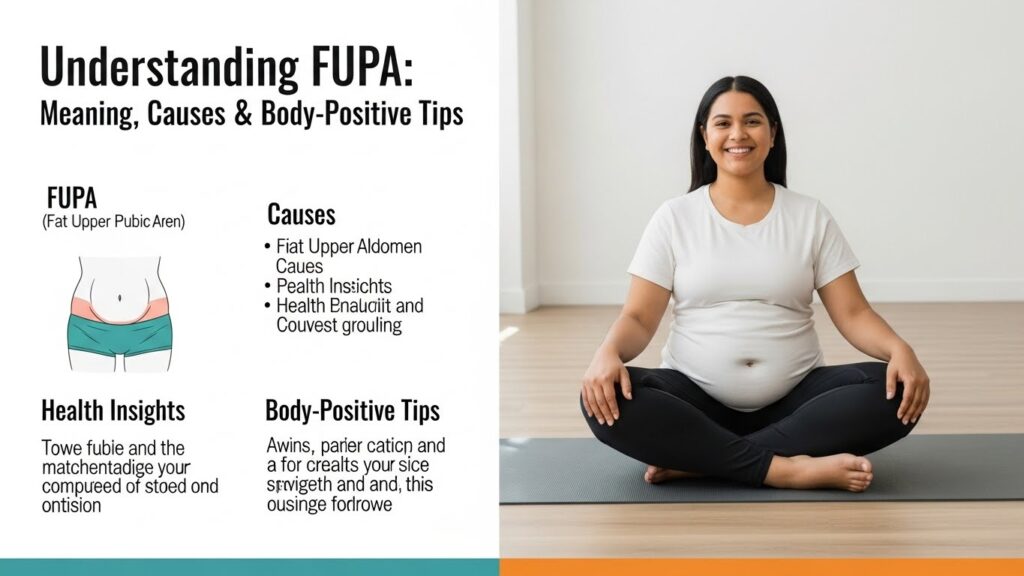
A term that appears often in fitness discussions, social media conversations, and body-positivity spaces is FUPA. Although the word is casual, the topic is rooted in real anatomy, health, and body image. Many people hear the term but don’t know exactly what it means or what causes it. This article breaks down the meaning of FUPA, why it develops, who can have it, and the healthy ways people address it—while encouraging body acceptance.
What FUPA Means
FUPA stands for “Fat Upper Pubic Area.”
It describes the soft fatty tissue located between the lower abdomen and the pubic region. Both men and women can have a FUPA, and it is a normal part of human anatomy. The size and visibility vary between individuals based on genetics, hormones, lifestyle, and life events such as pregnancy.
Why the Term Became Popular
The word gained traction through social media, celebrity conversations, and humor-based internet culture. Over time, its usage expanded into fitness communities, postpartum groups, and health discussions. Although the term sounds informal, it has sparked meaningful conversations about:
-
Natural fat distribution
-
Changes in the body after childbirth
-
The impact of weight gain or hormones
-
Realistic beauty expectations
Its popularity has helped normalize a feature that many people previously felt insecure about.
Common Causes of a FUPA
Several factors contribute to fat storage in the lower abdomen. Some are controllable, while others are biological.
1. Genetics
Genetics largely determine where your body naturally stores fat. For some, the lower belly accumulates more tissue, making a FUPA more pronounced.
2. Weight Gain
As the body gains weight, the abdominal region often expands, and the pubic area can become more padded.
3. Pregnancy and Postpartum Changes
Pregnancy stretches abdominal muscles and skin. After birth, loose skin or retained fat may create the appearance of a FUPA—an entirely normal part of postpartum recovery.
4. Hormonal Changes
Hormones such as cortisol, estrogen, and insulin influence fat distribution. Aging, stress, or medical conditions may cause fat to settle in the lower abdomen.
5. Surgery or Scarring
Procedures like C-sections or abdominal surgeries can alter how skin tightens or how fat settles in the lower region.
Is a FUPA Normal?
Yes—having fat in the upper pubic area is completely normal and often necessary. This area protects sensitive organs, supports movement, and plays a role in natural fat distribution. The problem arises only when misinformation turns a harmless anatomical feature into a perceived flaw.
Health Considerations
A typical FUPA is subcutaneous fat, which lies beneath the skin and is not harmful. It should not be confused with visceral fat, which surrounds internal organs and is linked to health risks.
However, if the FUPA appears alongside rapid weight gain or abdominal discomfort, consulting a medical professional may be helpful to rule out underlying conditions.
How People Commonly Manage or Reduce a FUPA
While many people choose to embrace their natural shape, others may want to tone this area for comfort or aesthetic reasons. Any approach should be healthy and realistic.
1. Overall Fat Reduction
Because spot reduction is a myth, lowering total body fat usually helps reduce lower abdominal fat over time.
2. Strengthening Core Muscles
Exercises that target the lower abdomen can improve muscle tone and posture. Popular movements include:
-
Planks
-
Leg raises
-
Bicycle crunches
-
Pilates routines
-
Reverse crunches
3. Cardiovascular Exercise
Brisk walking, jogging, cycling, swimming, or HIIT workouts help promote fat loss.
4. Balanced Eating Habits
Nutrient-rich foods and mindful eating can support healthy body composition.
5. Postpartum Strengthening
New mothers may benefit from gentle, recovery-focused core exercises approved by healthcare providers.
6. Professional Procedures
Options like body contouring or skin tightening exist, but should only be considered after consulting a qualified medical professional.
FUPA and Body Positivity
Conversations about FUPA have increasingly become part of the body-positivity movement. Celebrities and influencers openly discuss postpartum bodies, weight changes, and natural anatomy, helping normalize the lower belly area. These discussions encourage people to accept their bodies without judgment and recognize that changes in fat distribution are part of life.
FUPA in Pop Culture
The term appears in comedy skits, viral posts, beauty discussions, and fitness videos. While often used humorously, some creators use the attention to promote self-acceptance and realistic expectations toward body shape and aging.
When to Seek Medical Advice
Most FUPA concerns are cosmetic, not medical. However, you may want to talk to a doctor if you experience:
-
Pain or swelling in the lower abdomen
-
Rapid or unexplained size changes
-
Healing issues after surgery
-
Discomfort during movement
These symptoms may indicate medical conditions unrelated to typical fat distribution.
Final Thoughts
A FUPA, or Fat Upper Pubic Area, is a normal part of human body anatomy. Many factors influence its appearance, from genetics to lifestyle and postpartum changes. While some people choose to manage it through healthy fitness routines or medical options, many others embrace it proudly as a natural part of their bodies.
Whether someone wants to tone the area or simply understand it better, the most important message is that body shapes vary widely—and every variation is normal.