
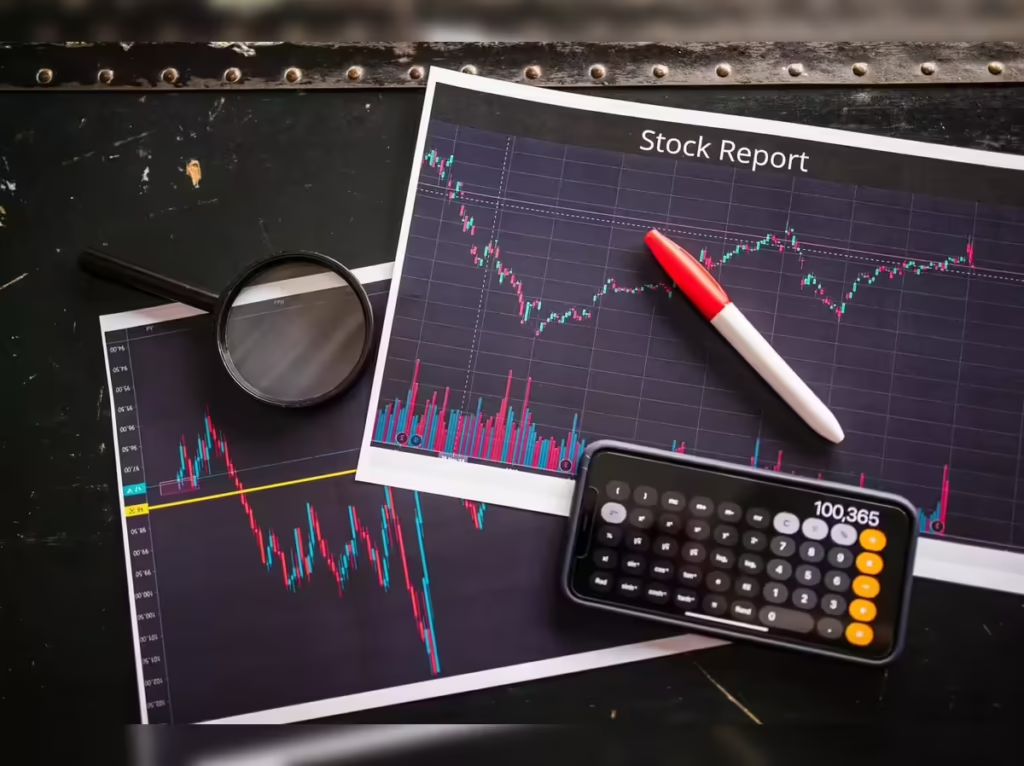
The stock market has always fascinated investors with its endless possibilities and dynamic nature. Every day, thousands of stocks move in different directions, influenced by news, earnings reports, global events, and investor sentiment. Yet, for a trader or investor, spotting the right opportunity in this ocean of data is a real challenge. That’s where a stock screener becomes a game-changer. It helps traders decode complex data, find promising setups, and act with precision, all within seconds.
A well-designed stock screener doesn’t just simplify the trading process; it enhances strategy, discipline, and decision-making. It transforms random market information into actionable insights, allowing traders to make informed moves without the overwhelm.
Understanding What a Stock Screener Does
At its core, a stock screener is a filtering tool that allows users to narrow down the vast universe of stocks based on specific conditions. These filters can include price movements, volume, P/E ratio, moving averages, dividend yield, and many other technical or fundamental factors. Essentially, it’s a customizable search engine for the stock market.
Imagine trying to analyze every listed stock manually, it would take days, if not weeks. With a screener, you can set criteria and instantly receive a refined list of potential candidates that match your trading goals. Whether you’re looking for undervalued companies, high-growth stocks, or short-term trading setups, a screener provides an organized and efficient way to focus your efforts.
The Power of Precision and Speed
The most successful traders share one common trait: efficiency. They know how to gather insights quickly and accurately. A stock screener provides exactly that, speed and precision. With just a few clicks, you can discover which stocks are breaking out, which ones are oversold, or which are showing increasing institutional interest.
Instead of scanning endless charts or relying on word-of-mouth stock tips, traders can base their decisions on quantifiable metrics. This data-driven approach not only saves time but also reduces emotional trading, one of the biggest pitfalls for beginners.
For example, a trader might set filters to find stocks with a Relative Strength Index (RSI) below 30 (indicating they may be oversold) and a strong earnings growth rate. The screener will instantly highlight stocks that meet those conditions, allowing for targeted analysis instead of random exploration.
Key Features That Define a Smart Stock Screener
While there are many screeners available, the effectiveness lies in their flexibility, depth, and integration. Here are the most important features that define a truly smart stock screener:
1. Customizable Parameters
Different traders use different strategies. Some prefer momentum trading, others focus on long-term fundamentals. The best screeners allow complete customization, users can set parameters that align with their style, goals, and risk appetite.
2. Integration of Technical and Fundamental Data
An effective screener blends both worlds. Technical filters (like moving averages, RSI, MACD) show price trends, while fundamental filters (like earnings per share or debt ratio) reveal a company’s financial health. The combination offers a 360-degree view of the market.
3. Real-Time Data and Market Updates
Markets shift rapidly. Real-time data ensures that your information is always current. A delayed screener might show you yesterday’s opportunities, but a real-time one keeps you alert to today’s movements.
4. Visual Charts and Insights
Numbers alone can be confusing. That’s why top screeners incorporate visualization tools. Interactive charts, heatmaps, and comparison graphs make it easier to interpret data and spot trends at a glance.
5. Instant Alerts and Notifications
Automation is a trader’s best friend. Alerts based on price movements or technical conditions save hours of manual tracking. The moment a stock matches your criteria, you get notified instantly.
Simplifying the Complexity of Trading
Trading can be complex, especially for beginners trying to interpret charts, ratios, and global events simultaneously. A smart stock screener simplifies this process by presenting only relevant data. Instead of sifting through irrelevant noise, traders can focus on the few opportunities that matter most.
For instance, if you’re a swing trader, you might filter stocks that recently broke above their 50-day moving average with strong volume. Within seconds, you’ll have a manageable list to analyze, helping you make strategic moves efficiently.
Objectivity Over Emotion
Emotional trading, acting on fear or greed, is one of the most common causes of loss in the stock market. A data-driven approach helps remove that emotion. A stock screener doesn’t care about hype, rumors, or opinions. It presents facts, allowing traders to stay disciplined.
By relying on screeners, traders can focus on logic instead of speculation. This consistency leads to more predictable results over time. It’s no longer about guessing where the market might move but identifying where the data already points.
A Tool for Every Level of Trader
A smart screener isn’t just for professionals. It’s equally valuable for beginners. New traders can use pre-set filters to understand market behavior, while advanced users can build complex multi-variable conditions to align with sophisticated strategies.
For example, institutional investors often use advanced filters to find undervalued stocks across sectors or to identify early signs of accumulation. Meanwhile, individual traders can track momentum stocks or day-trading setups without being overwhelmed by excessive data.
Adapting to Market Changes
Markets evolve continuously, and a good stock screener evolves with them. As artificial intelligence and machine learning technologies advance, screeners are becoming more predictive, offering trend forecasts and pattern recognition before human traders can even spot them.
These innovations help traders adapt faster, staying relevant in an ever-changing environment. Whether the market is bullish or bearish, a flexible screener helps adjust strategies and maintain profitability.
Building Confidence Through Data
Confidence in trading comes from clarity. When traders know why they’re making a decision, they can act without hesitation. A stock screener offers that clarity by highlighting objective criteria and removing uncertainty. Instead of wondering which stocks might perform well, traders can rely on structured analysis.
Moreover, historical back testing features in some screeners allow users to test their strategies on past data. This helps refine setups and improve decision-making without the risk of real losses.
Real-Life Example of Efficiency
Consider a trader monitoring the technology sector. By setting filters for companies with an increasing earnings-per-share trend and trading above the 200-day moving average, they can identify strong candidates in minutes. Without a screener, finding the same stocks manually would take hours. This efficiency allows traders to spend more time planning and less time searching.
Conclusion
In today’s highly competitive financial world, success depends on using the right tools to stay ahead of the market. A stock screener offers traders the edge they need, by filtering vast information into precise, actionable data. It simplifies analysis, enhances objectivity, and ensures that opportunities never go unnoticed.