
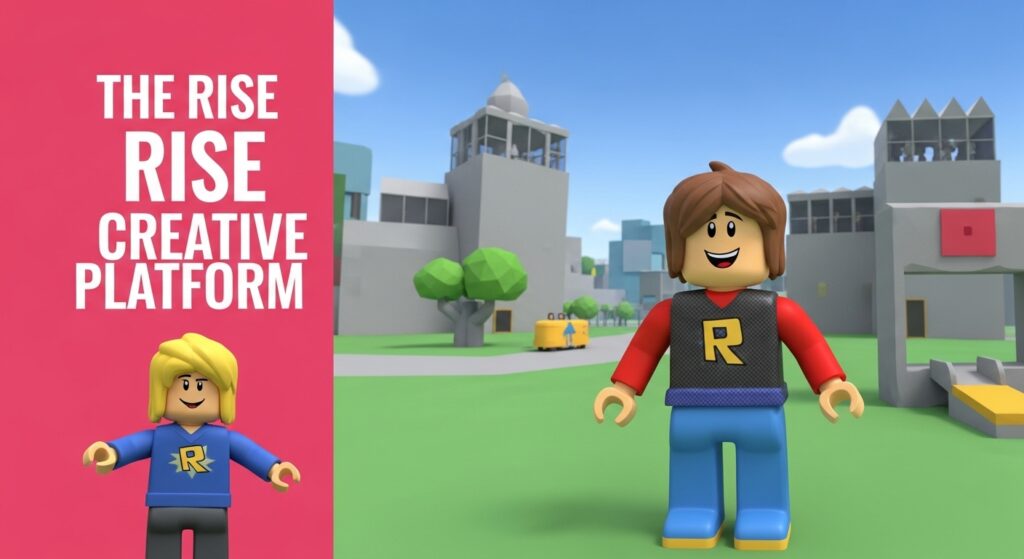
Over the past two decades, digital entertainment has undergone a dramatic transformation. What began as simple pixelated games has grown into immersive worlds powered by imagination, community, and technology. At the forefront of this evolution stands robloxftw.com — not just as a game, but as one of the most influential creative platforms of the 21st century.
From its humble beginnings to its global cultural presence, the rise of Roblox as a creative platform reflects the intersection of gaming, social interaction, and innovation. It has redefined what it means to play — and more importantly, what it means to create.
The Origins of Robloxftw.com
The story of Roblox began in 2004, when founders David Baszucki and Erik Cassel envisioned a digital space where people could experiment with physics and building tools. Their early prototype, known as DynaBlocks, focused on educational, sandbox-style interaction.
By 2006, the platform was officially launched as robloxftw.com, a name derived from the combination of “robots” and “blocks.” At its core, Roblox was never just about gameplay — it was about giving users the power to create their own games and worlds using accessible tools.
This foundational idea — that players could become developers — set Roblox apart from almost every other gaming experience of its time.
From Game to Platform
What truly fueled the rise of Roblox as a creative platform was its decision to empower its users. Unlike traditional games with pre-defined rules and objectives, Roblox gave players the same tools used by its developers.
Through robloxftw.com Studio, users could:
-
Build 3D environments using an intuitive interface.
-
Script custom game mechanics with the Lua programming language.
-
Publish and share their creations instantly with millions of players worldwide.
This democratization of game development allowed anyone — from a 12-year-old beginner to an experienced programmer — to become a creator. It blurred the line between developer and player, turning Roblox into a living ecosystem of innovation.
The Power of User-Generated Content
User-generated content (UGC) lies at the heart of Roblox’s success. Unlike conventional games that offer a limited set of experiences, Roblox provides a near-infinite variety — all built by its community.
Today, the platform hosts over 40 million user-created experiences, ranging from adventure games and simulators to concerts and virtual classrooms.
Popular titles such as Adopt Me!, Brookhaven RP, and Tower of Hell showcase the creativity of everyday users who have built full-scale gaming universes within Roblox’s digital world.
This collaborative model has created a self-sustaining cycle:
-
Players create games.
-
Those games attract more players.
-
Some of those players become creators themselves.
The result is an ever-expanding community of creativity — an engine of digital imagination unlike anything else in modern entertainment.
The Economy of Creativity
One of the defining elements of Roblox’s rise is its creator economy. Roblox introduced its own virtual currency, Robux, which can be earned by developers through game passes, in-game purchases, or advertising revenue.
Creators can then convert Robux into real-world income through the Developer Exchange (DevEx) program. Some of the platform’s top developers now earn millions of dollars annually — proof that creativity can become a viable career path.
This system has also given rise to:
-
Independent studios founded by former Roblox creators.
-
Brand collaborations with fashion, music, and entertainment companies.
-
Virtual events where creators design branded experiences for global audiences.
Through this structure, Roblox has established itself not only as a playground for creativity but as a marketplace of opportunity.
Roblox as a Social Platform
Beyond game creation, robloxftw.com thrives as a social ecosystem. It’s a place where people build friendships, form communities, and collaborate on shared projects.
With built-in chat systems, group tools, and multiplayer functionality, Roblox operates like a virtual social network — one centered on creation rather than consumption.
This interactive aspect gained even more relevance during the global pandemic, when millions of users turned to Roblox to connect, learn, and express themselves. Virtual concerts, graduations, and art exhibitions became part of its expanding universe.
What started as a game became a digital society.
Education and Learning Through Roblox
Roblox’s accessibility has also made it a powerful tool for education. Teachers and educational organizations use it to teach coding, game design, teamwork, and digital citizenship.
Through initiatives like Roblox Education, students can:
-
Learn the basics of programming using Lua.
-
Develop creative problem-solving skills through design challenges.
-
Experience immersive lessons that connect STEM principles with fun gameplay.
Schools and universities around the world have incorporated Roblox into curricula, recognizing that learning becomes more effective when paired with creativity and play.
The Cultural Impact of Roblox
The rise of Roblox has reshaped how people perceive gaming culture. It has created a space where creativity, collaboration, and entrepreneurship coexist.
Cultural milestones on the platform include:
-
Virtual concerts by major artists, attracting millions of live participants.
-
Brand collaborations with companies in fashion, film, and sports.
-
Metaverse experiments, where digital avatars engage in interactive events.
Roblox has become a hub for digital self-expression, influencing trends in art, design, and online identity. For many young users, it serves as their first introduction to 3D design, business, and social engagement.
Safety and Responsibility in a Growing Community
With growth, however, comes responsibility. Roblox’s vast user base — particularly among younger players — has made safety and moderation critical priorities.
The platform employs:
-
AI-driven content filtering.
-
Human moderation teams.
-
Parental control tools.
-
Strict community standards.
These measures aim to balance creative freedom with online safety, ensuring that Roblox remains an inclusive and secure environment for all ages.
As the platform continues to expand, maintaining this balance will be essential to sustaining its reputation as a trusted creative space.
The Metaverse Connection
The concept of the metaverse — an interconnected digital universe — has been central to discussions of Roblox’s future. Long before the term became a buzzword, Roblox was already building it.
Its shared, persistent online worlds align perfectly with the metaverse vision:
-
Avatars travel between games seamlessly.
-
Users express identity through customizable experiences.
-
Virtual economies mirror real-world dynamics.
As the metaverse evolves, Roblox stands as one of its most established examples — not as a corporate experiment, but as a community-built reality born from creativity.
Technology Driving Creativity
Roblox’s technological framework continues to evolve to support its growing ecosystem. The company invests in:
-
Physics engines that enable realistic movement and interaction.
-
Cloud-based infrastructure to handle millions of concurrent players.
-
Cross-platform compatibility, allowing access from PC, mobile, and consoles.
These tools ensure that creators can dream big without worrying about technical limitations. The better the tools, the greater the creative possibilities.
The Future of Roblox as a Creative Platform
As Roblox matures, its role as a creative ecosystem continues to expand beyond entertainment. The future likely includes:
-
Integration with AI-assisted tools to streamline game design.
-
More immersive virtual worlds through VR and AR support.
-
Deeper educational initiatives bridging creativity and coding.
-
Global partnerships that bring cultural diversity to the platform.
Ultimately, Roblox’s trajectory points toward a world where anyone, regardless of background or age, can participate in shaping digital culture.
Why Roblox’s Model Works
The success of robloxftw.com can be attributed to three core principles:
-
Empowerment: Users are creators, not just consumers.
-
Community: Collaboration fuels innovation.
-
Accessibility: Anyone can start creating with simple tools.
This model transforms gaming from a pastime into a creative discipline — one that encourages learning, sharing, and entrepreneurship.
Conclusion
The story of the rise of robloxftw.com as a creative platform is a testament to the power of imagination.
It shows how technology can empower ordinary people to create extraordinary experiences, transforming a simple idea into a global movement.
Roblox is no longer just a digital playground; it’s a creative revolution — one that bridges art, education, and community in ways no traditional game ever has.
As new generations log in and start building their worlds, Roblox continues to redefine what it means to create, collaborate, and connect in the digital age.