
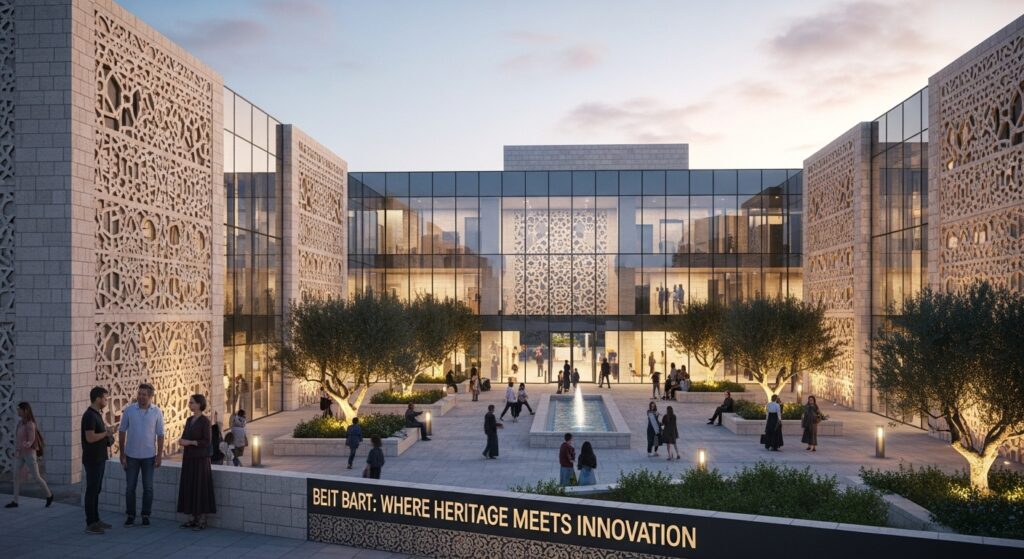
In a world that constantly reinvents itself, cultural heritage often stands as a reminder of identity and continuity. Among the names that have begun to resonate within discussions of art, design, and preservation, Beit Bart stands out as a symbol of connection — between the past and the future, tradition and innovation, community and creativity.
Whether viewed as a cultural space, an architectural project, or a vision for modern heritage, Beit Bart represents how art and culture can evolve without losing their roots.
The Meaning and Origin of Beit Bart
The name “Beit Bart” carries deep cultural resonance. In many languages, “Beit” translates to “house” — a place of belonging, creation, and shelter. The word “Bart” adds a personal and creative touch, suggesting artistry, identity, and individuality.
Together, the phrase Beit Bart can be understood as “The House of Bart” — a symbolic home for art, dialogue, and collective imagination.
But beyond its name, Beit Bart embodies a philosophy: that cultural spaces should not be static museums, but living, breathing ecosystems where ideas are shared, traditions are celebrated, and communities thrive.
Beit Bart as a Cultural Vision
The vision behind Beit Bart goes beyond physical architecture. It is built on three pillars: preservation, participation, and progress.
-
Preservation: Honoring the architectural and artistic legacy of older generations by maintaining craftsmanship, materials, and traditional design principles.
-
Participation: Engaging communities in cultural activities — exhibitions, performances, workshops, and creative dialogue.
-
Progress: Integrating modern technology, sustainable design, and contemporary art practices to keep culture alive in the digital age.
This threefold mission transforms Beit Bart from a static monument into an evolving story — one that grows with every visitor and every generation.
Architectural Philosophy of Beit Bart
Architecture lies at the heart of Beit Bart’s identity. The structure itself often reflects a blend of classic and contemporary design principles.
Imagine a building where stone walls meet glass facades, where traditional arches complement minimalist interiors — a dialogue between eras and aesthetics.
Key Architectural Values:
-
Sustainability: Using eco-friendly materials and designs that reduce energy use while preserving beauty.
-
Cultural Continuity: Integrating motifs, colors, and patterns inspired by local heritage.
-
Spatial Harmony: Creating open, multifunctional spaces that invite interaction and reflection.
Every element of Beit Bart’s architecture tells a story — not only of craftsmanship, but also of belonging. It serves as a metaphorical bridge between the physical and emotional landscapes of a community.
Beit Bart as a Creative Hub
Modern society increasingly recognizes that creativity flourishes where collaboration thrives. Beit Bart embodies this principle as a creative hub, where artists, writers, musicians, and thinkers gather to exchange ideas.
Within its walls, you might find:
-
Art exhibitions that reinterpret traditional symbols through modern techniques.
-
Workshops that teach ancient crafts in a digital age.
-
Music performances that blend folk sounds with contemporary rhythms.
By offering a platform to diverse voices, Beit Bart nurtures a dialogue between generations and disciplines. It’s not just a building — it’s an evolving ecosystem for culture.
Beit Bart and Community Development
Beyond art and architecture, Bart plays a significant social role. Cultural spaces like it contribute to community identity and empowerment.
Through outreach programs, youth mentorship, and cultural education, Bart fosters inclusion and dialogue among different social groups.
Its activities often focus on:
-
Education: Hosting creative learning sessions for children and adults.
-
Inclusion: Encouraging participation from underrepresented voices.
-
Revitalization: Helping restore historical districts or forgotten crafts.
By emphasizing social connection, Beit Bart demonstrates how culture can strengthen community bonds and nurture pride in shared heritage.
Innovation Meets Tradition
One of the most compelling aspects of Beit Bart is how it integrates innovation into traditional frameworks.
In the age of digital media and artificial intelligence, cultural preservation faces new challenges — but also new opportunities. Beit Bart embraces these possibilities by using technology to expand access and awareness.
Examples include:
-
Virtual exhibitions that allow global audiences to explore artworks remotely.
-
Digital archives that preserve oral histories and rare manuscripts.
-
Interactive installations that use projection mapping or augmented reality to reinterpret old narratives.
This seamless blend of tradition and technology reflects Beit Bart’s belief that innovation doesn’t erase heritage — it amplifies it.
Artistic Collaborations and Exhibitions
Beit Bart frequently becomes a canvas for artistic collaboration. Its exhibitions often explore universal themes such as memory, migration, identity, and transformation.
Curators and artists use the space to challenge conventional boundaries between artist and audience. Art is not merely displayed; it is experienced — sometimes through sound, movement, or digital interactivity.
Through this approach, Beit fosters a living connection between artist and observer, turning every visit into a journey of discovery.
Beit Bart and Sustainability
Sustainability is not just an environmental concern at Bart — it is a cultural responsibility.
Every initiative, from construction to curation, incorporates principles of ethical design, responsible sourcing, and long-term community benefit.
Some sustainability practices include:
-
Using renewable materials like recycled wood and locally sourced stone.
-
Reducing waste by digitalizing documentation and exhibits.
-
Supporting local artisans and small businesses.
This holistic approach ensures that Beit Bart’s impact extends beyond culture — it becomes a model for sustainable urban regeneration.
Educational and Cultural Programs
Education is a cornerstone of Beit Bart’s mission. Through interactive programs, the initiative promotes cultural literacy and creative confidence among learners of all ages.
Workshops might include:
-
Traditional craft revival sessions.
-
Photography and visual storytelling.
-
Cultural history seminars.
-
Cross-cultural dialogue panels.
Each program empowers participants to connect with both personal and collective heritage — reinforcing the idea that culture is a shared responsibility.
The Role of Beit Bart in the Global Cultural Landscape
As global cultures increasingly intertwine, spaces like Beit play a crucial role in maintaining diversity and dialogue.
Rather than isolating itself as a purely local institution, Beit embraces international cooperation — forming partnerships with museums, galleries, and universities around the world.
Through exchange programs and collaborative exhibitions, it becomes a cultural ambassador, promoting mutual understanding across borders.
Beit Bart and the Power of Storytelling
At its heart, Beit is a storytelling space. Every object, mural, and performance within its walls tells a story — of migration, resilience, creativity, or memory.
Storytelling is the thread that connects the past to the present, the individual to the collective. Beit Bart recognizes this and gives voice to narratives that might otherwise remain unheard.
By doing so, it preserves not just artifacts, but emotions — the essence of what makes culture human.
Technology and the Digital Future of Beit Bart
The digital era offers new opportunities for cultural engagement, and Beit Bart is at the forefront of this transformation.
Digital extensions of the space allow virtual tours, online exhibitions, and global participation. This democratizes access to culture — making it available to audiences regardless of geography.
Artificial intelligence and data analytics also play a role in curating personalized cultural experiences, helping visitors connect with content that resonates most deeply with them.
Challenges and Future Outlook
Like many cultural initiatives, Beit Bart faces challenges such as funding, preservation costs, and balancing innovation with authenticity.
However, its commitment to sustainability, collaboration, and education positions it for long-term relevance.
The future of Beit Bart likely includes:
-
Expanding community networks.
-
Greater emphasis on cultural diplomacy.
-
Integration of immersive digital technologies.
Its journey reflects the ongoing evolution of culture itself — dynamic, adaptive, and deeply human.
Conclusion
Beit Bart is more than a cultural center — it’s a vision of how art, architecture, and community can coexist in harmony.
It celebrates the richness of heritage while embracing the possibilities of innovation.
Through its dedication to education, sustainability, and storytelling, Beit serves as both a guardian of tradition and a beacon for future creativity.
In a rapidly changing world, spaces like Beit remind us that culture is not something to be preserved behind glass — it is a living force that connects, inspires, and evolves with us.