
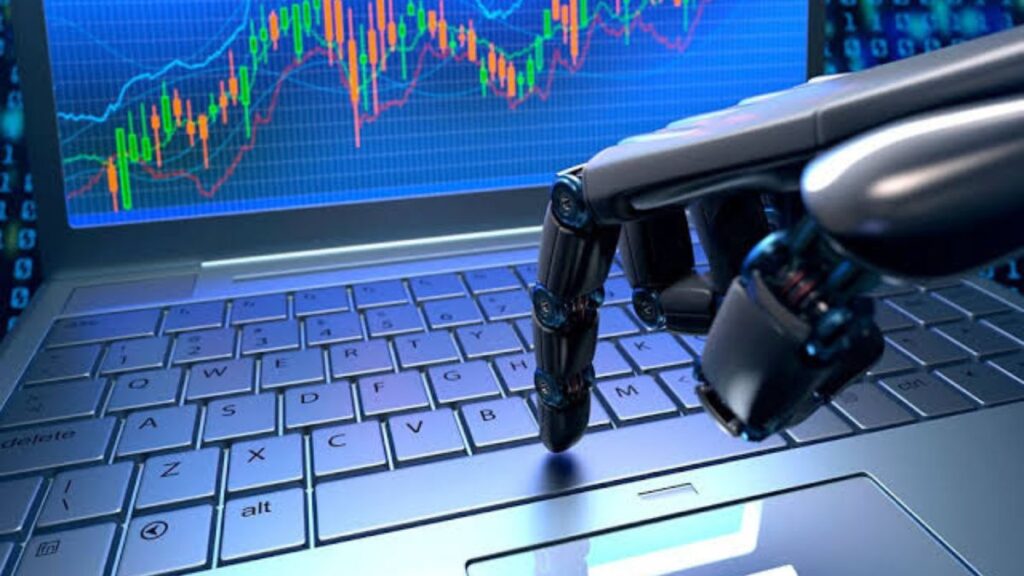
Trading can feel like a puzzle with too many pieces. Retail traders often struggle to keep up with market trends, data overload, and quick decision-making. It’s even harder when emotions or limited tools cloud their judgment.
Here’s the good news: AI has reshaped retail trading software. From early rule-based systems to today’s advanced predictive analytics, this technology has reshaped how people trade.
In this blog, you’ll learn about its journey, current features, and what lies ahead. Keep reading to see how it all connects!
Early Stages of AI in Retail Trading Software
AI in its infancy was clunky and focused on rigid, pre-set rules. It scratched the surface of automation but lacked finesse or depth in data analysis.
Rule-based algorithms and basic automation
Traders once depended heavily on rule-based algorithms in retail trading. These systems followed pre-defined instructions, executing trades only when specific conditions were met. For example, a trader could set parameters to buy a stock if its price dropped 5% or sell if it increased by 10%.
Such automation reduced emotional decision-making and enhanced operational efficiency.
Basic automation simplified routine tasks like order placements and portfolio adjustments. It enabled quicker responses to market changes without constant human monitoring. However, these systems faced limitations in handling large datasets or adapting to complex market fluctuations.
This led to the development of more advanced models with predictive analytics and machine learning capabilities, advancing the growth of trading software development.
Limited data processing capabilities
Early retail trading software struggled with handling large amounts of data. Systems could only process limited datasets, often leading to oversimplified trading strategies.
AI models at the time lacked the power for real-time analysis. Traders faced delays in executing trades due to slow processing speeds. These limitations impacted market predictions and reduced profit opportunities for users.
Advancements in AI Models for Trading
AI models now handle extensive datasets swiftly and accurately. They recognize trends in markets that people might miss.
Integration of deep learning and neural networks
Deep learning and neural networks have significantly influenced retail trading software. These systems handle extensive amounts of market data, identifying patterns that might escape human observation.
They study historical trends and live prices to foresee possible trade opportunities with remarkable precision.
Neural networks simulate the human brain by using layers that learn from data inputs. This enables them to improve trading strategies over time based on prior outcomes. Their capacity to adjust makes them essential in managing unpredictable markets effectively and efficiently.
Real-time data analysis and predictive insights
AI examines stock market data in real-time. It handles millions of data points in just seconds. Traders receive immediate updates on price changes, market trends, and trade volumes.
This rapid processing aids in spotting opportunities before the market adjusts.
Predictive insights rely on historical patterns and current inputs to anticipate outcomes. For instance, machine learning models can forecast stock movements with remarkable accuracy.
These forecasts enhance decision-making and refine trading strategies over time.
Key Features of Modern AI Trading Tools
Modern AI trading tools analyze market patterns faster than humans ever could. They adjust quickly to shifting trends, giving traders a significant advantage.
Sentiment analysis for news and market trends
AI tools now monitor news headlines and social media to assess market sentiment. They examine words, phrases, and overall tone to predict how events might affect stock prices or commodities.
Traders gain an advantage by identifying trends before the broader market responds.
These systems can process thousands of articles in seconds. For instance, an increase in negative keywords about a company could indicate potential risks early. This rapid response helps traders modify strategies and reduce losses effectively.
Automated decision-making and trade execution
Automated trading systems act like tireless traders. They analyze market data, assess risks, and execute trades faster than any human ever could. These tools rely on algorithms to make split-second decisions based on set criteria such as price changes, volume shifts, or momentum indicators like the best RSI length for day trading. This process reduces emotional bias in trading while improving consistency.
It frees up time for retail investors, letting them focus on strategy rather than execution details. Real-time trade execution ensures opportunities are not missed due to delays.
Modern platforms now combine this with predictive analytics and enhanced alerts, creating opportunities for even better investment strategies in the future of AI-supported tools.
Future Prospects of AI in Retail Trading
AI continues to reshape how retail traders approach the markets, offering tools that simplify complex decisions. As technology advances, traders can anticipate smarter systems with sharper predictive capabilities.
Enhanced accessibility for retail investors
Retail trading platforms now cater to everyday investors through automation and personalization. These tools simplify complex processes, making stock analysis and market entry easier for non-professionals.
Features like algorithmic trading allow users to set predefined strategies that carry out trades automatically. This reduces the need for constant monitoring and lowers barriers for new traders.
Machine learning models also analyze user behavior to customize recommendations. Predictive analytics help forecast trends, guiding decision-making without overwhelming retail investors with excessive data.
By simplifying access, these advancements create more equal opportunities in a space once dominated by institutions.
Ethical considerations and regulatory challenges
AI in trading raises challenging ethical questions. Automated systems can create unfair advantages for those with superior technology. This widens the gap between large firms and retail investors.
Misuse of predictive analytics could result in market manipulation or insider benefits, eroding overall trust.
Regulatory bodies face difficulties keeping up with fast-paced AI development. Clearer guidelines are essential to address algorithmic trading risks like flash crashes. Maintaining openness in machine learning models is vital for fairness and accountability in financial markets.
Conclusion
AI has reshaped retail trading in noteworthy ways. It makes trading quicker, more intelligent, and easier for everyone to access. From analyzing data to forecasting trends, it streamlines complex decisions.
Still, balancing progress with ethics will be essential moving forward. The path ahead holds even more opportunities for traders everywhere.