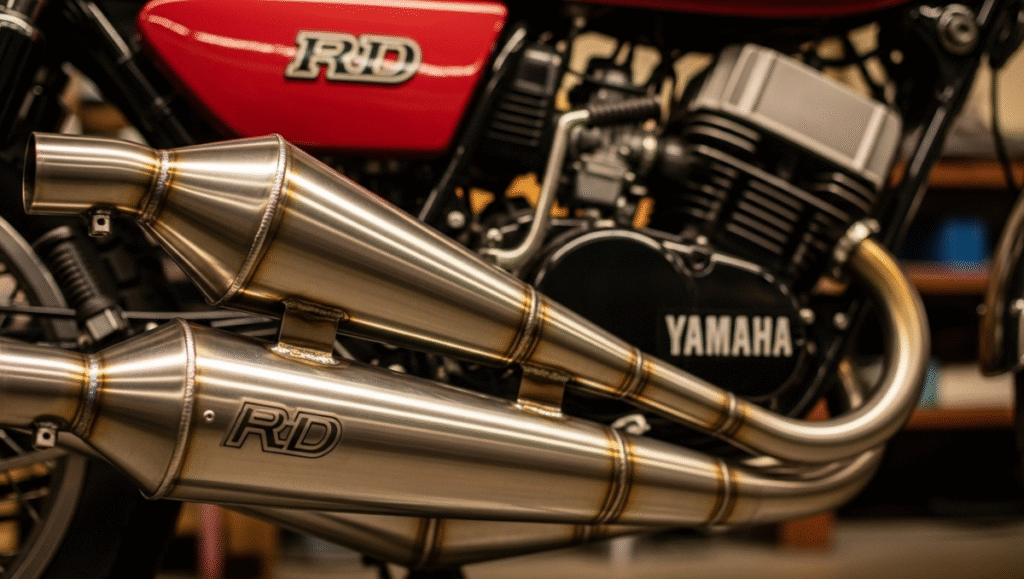
The Yamaha RD series is one of the most iconic families of two-stroke motorcycles ever created. Known for their thrilling performance, aggressive powerband, and unmistakable exhaust note, the RD models — from the RD 125 to the RD 350 — defined an era of motorcycling.
At the core of their personality lies a crucial component: the escapamento RD, or exhaust system. This part is not just a pipe that channels gases away from the engine; it’s a finely tuned instrument that determines how the engine breathes, performs, and sounds.
This comprehensive guide explores everything about the Yamaha RD exhaust system — its design, performance effects, materials, customization options, and maintenance tips. Whether you’re restoring a classic RD or upgrading for better performance, understanding the escapamento is essential.
1. The Role of the Escapamento in a Two-Stroke Engine
In a two-stroke motorcycle like the Yamaha RD, the exhaust system plays a far greater role than in a four-stroke engine. It doesn’t merely remove gases; it actively influences how the engine cycles.
How It Works
Each time the piston descends, it pushes out burnt gases while drawing in a fresh mixture of air and fuel. The exhaust system must be precisely designed to create pressure waves that help this process. The expansion chamber — the distinctive bulging shape in many RD exhausts — creates these pressure pulses.
When tuned correctly, these waves push unburned mixture back into the cylinder before the exhaust port closes, significantly increasing power and efficiency. This is why the shape, length, and volume of an escapamento RD are so critical.
The Signature Sound
The famous high-pitched scream of a Yamaha RD is largely produced by its exhaust resonance. The crisp crackle and sharp tone of a two-stroke RD aren’t just music to enthusiasts’ ears — they are the audible result of finely tuned wave dynamics.
2. Evolution of Yamaha RD Exhaust Systems
From the earliest RD 125s to the legendary RD 350 LC (Liquid Cooled), the escapamento evolved alongside engine design.
RD 125 and RD 250: The Early Years
These early models featured dual exhausts, one for each cylinder, made from mild steel with chrome or painted finishes. They were tuned for a balance of street performance and reliability, offering a smooth but exciting power delivery.
RD 350 and RD 350 LC: The Performance Icons
The RD 350 and its LC (Liquid Cooled) version brought even more sophistication. Yamaha engineered their exhausts to work perfectly with port timing and carburetion, achieving a sharp “hit” in the powerband around 6,000–9,000 RPM.
These bikes became legends not just for their acceleration, but for the unmistakable crackling roar of their twin escapamentos.
3. Anatomy of a Yamaha RD Exhaust System
Understanding the parts of the escapamento helps when tuning or restoring your RD.
-
Header Pipe: The section that connects directly to the engine cylinder. Its diameter affects gas velocity and scavenging efficiency.
-
Expansion Chamber: The bulged middle section that creates pressure waves. Its design determines the RPM range where maximum power occurs.
-
Stinger (Tailpipe): The narrow outlet at the end. It controls back pressure; too small and the engine overheats, too large and performance drops.
-
Silencer: Often detachable, it reduces noise without killing the distinctive RD sound.
Each of these sections can be optimized to achieve specific performance goals — from more low-end torque for city riding to maximum top-end speed for track use.
4. Materials Used in RD Escapamentos
The material of the exhaust system affects not only durability but also performance characteristics.
Mild Steel
This was the standard material in the 1970s and 1980s. It’s easy to shape and weld, which made it perfect for the complex curves of expansion chambers. However, mild steel rusts easily, requiring regular maintenance.
Stainless Steel
Modern aftermarket RD exhausts often use stainless steel, which is resistant to corrosion and provides a cleaner look. It’s slightly heavier but offers long-lasting reliability.
Carbon Fiber and Aluminum Silencers
Performance tuners sometimes use carbon fiber or aluminum for silencers to reduce weight and improve aesthetics. These materials give a modern touch to the classic RD look.
5. Performance Tuning and Aftermarket Options
Tuning the escapamento is one of the most effective ways to increase the performance of a Yamaha RD. Many companies today specialize in custom or high-performance RD exhausts.
Popular Aftermarket Brands
-
Jolly Moto: Renowned for precision-tuned expansion chambers for two-stroke engines.
-
Spec II: Offers handmade pipes designed for RD 350 and RZ 350 models.
-
DG Performance: Famous in the 1980s, their chrome RD exhausts are still sought after by collectors.
-
Giannelli and Allspeed: Known for European-style pipes that improve both aesthetics and midrange power.
Custom Fabrication
Many enthusiasts prefer custom-made escapamentos, tailored to their engine’s porting and carburetion setup. A skilled fabricator can fine-tune dimensions to achieve a specific power curve.
6. Sound and Aesthetics: The Emotional Connection
Few motorcycle components stir emotion like an RD exhaust. The sound of twin two-stroke cylinders firing in harmony through expansion chambers is unforgettable.
The Music of the RD
The RD’s sound is not just noise — it’s part of its soul. From the sharp bark at idle to the shriek at 9,000 RPM, every note reflects the bike’s racing DNA. Riders often describe it as “addictive” — once you hear it, you’re hooked for life.
Visual Style
The escapamento also defines the bike’s visual identity. Classic RD pipes run parallel along the sides, while racing-style systems angle upwards. Restorers often spend hours polishing or re-chroming exhausts to bring back that showroom shine.
7. Maintenance and Longevity
A well-maintained exhaust not only looks good but also ensures your RD performs at its best.
Cleaning and Protection
-
Clean regularly to prevent rust and carbon buildup.
-
Apply high-temperature paint or anti-corrosion spray to steel pipes.
-
For chrome pipes, use gentle metal polish to maintain shine.
Checking for Leaks
Inspect joints and flanges for exhaust leaks, as they can affect performance and sound. Replace gaskets as needed.
Carbon Deposits
Two-stroke engines tend to leave carbon residues inside the exhaust. Periodically removing and cleaning the silencers or even burning out the carbon (carefully, using heat) can restore lost power.
8. Legal and Environmental Considerations
While the Yamaha RD is a beloved classic, it’s important to be aware of noise and emissions regulations. Some aftermarket escapamentos are designed for racing use only.
If you ride your RD on public roads, check local laws regarding exhaust noise limits. Many riders use silencers or baffles to stay compliant while preserving the signature sound.
9. Escapamento RD in Restoration Projects
Restoring an RD to factory condition often means finding or replicating the original exhausts. Genuine OEM RD pipes are increasingly rare, and collectors pay premium prices for well-preserved sets.
Restoration Tips
-
Search for NOS (New Old Stock) parts from Yamaha dealers or online forums.
-
If originals are unavailable, choose reproduction exhausts that match the stock design.
-
Avoid cutting or heavily modifying original pipes — keeping them intact maintains the bike’s value.
For those who prefer performance over originality, a modern stainless-steel expansion chamber setup can blend old-school looks with improved reliability.
10. The Future of Two-Stroke Passion
Although modern emissions laws have largely ended production of two-stroke road bikes, the Yamaha RD community remains strong. Enthusiasts around the world restore, race, and celebrate these machines — and the escapamento is always at the center of the experience.
The distinctive smell of two-stroke oil and the crisp crackle of an RD exhaust represent more than just nostalgia; they symbolize the pure joy of mechanical performance. Even today, custom builders and tuners are creating new designs inspired by the original RD pipes, ensuring the legend lives on.
11. Choosing the Right Escapamento RD for You
When selecting an exhaust system for your Yamaha RD, consider the following:
-
Purpose: Are you restoring, racing, or street riding?
-
Material: Do you prefer the originality of mild steel or the durability of stainless?
-
Design: Expansion chambers vs. stock mufflers — decide your performance goals.
-
Budget: Quality handcrafted systems can be expensive, but the improvement is worth it.
Always ensure proper jetting after installing a new escapamento. Two-strokes are sensitive to air-fuel ratio changes, and incorrect tuning can lead to overheating or piston seizure.
12. Escapamento RD Culture and Community
From Brazil to Japan to Europe, the Yamaha RD has a passionate global fan base. Forums, social media groups, and motorcycle meets are filled with discussions about exhaust setups, sound tests, and tuning tips.
In Brazil especially, the term “Escapamento RD” has become synonymous with two-stroke enthusiasm. Many custom builders there craft hand-welded pipes that are as beautiful as they are powerful. These artisans keep the RD spirit alive, one exhaust at a time.
Conclusion
The escapamento RD is more than a mechanical component — it’s the heartbeat of Yamaha’s two-stroke legend. It transforms fuel and air into power and emotion, giving the RD its unmistakable character.
Whether you’re restoring a classic RD 125, fine-tuning an RD 350 for the track, or simply admiring the artistry of a polished expansion chamber, the exhaust embodies everything that makes these bikes timeless.
Every pulse, every roar, every blue haze of two-stroke smoke reminds us why the Yamaha RD — and its escapamento — will always be remembered as icons of freedom, performance, and pure motorcycle joy.