
The future of construction is being radically transformed as new materials emerge that push the boundaries of sustainability, structural performance, and architectural creativity. Forward-thinking companies like Tectonic Builds are at the forefront, integrating these advanced materials to construct more innovative, more resilient, and eco-friendly buildings. Whether it’s the self-healing ability of advanced concrete or alternative timber technologies replacing steel, today’s innovations are laying the groundwork for tomorrow’s resilient cities. This transformation is crucial, as the construction industry has a significant impact on global resource consumption and carbon emissions. Innovative materials are providing real, scalable solutions to these challenges, driving an industry shift from resource-intensive to resource-efficient practices. These advancements are more than just impressive scientific feats—they represent a practical response to the increasing challenges of urbanization, climate change, and the need for greater efficiency. In fact, as architects and engineers incorporate these next-generation materials, they’re not only improving the longevity and safety of buildings but also making construction processes faster and greener. Examining these breakthroughs highlights the potential to revolutionize almost every aspect of the built environment, offering better living and working spaces with lower environmental costs.
Self-Healing Concrete
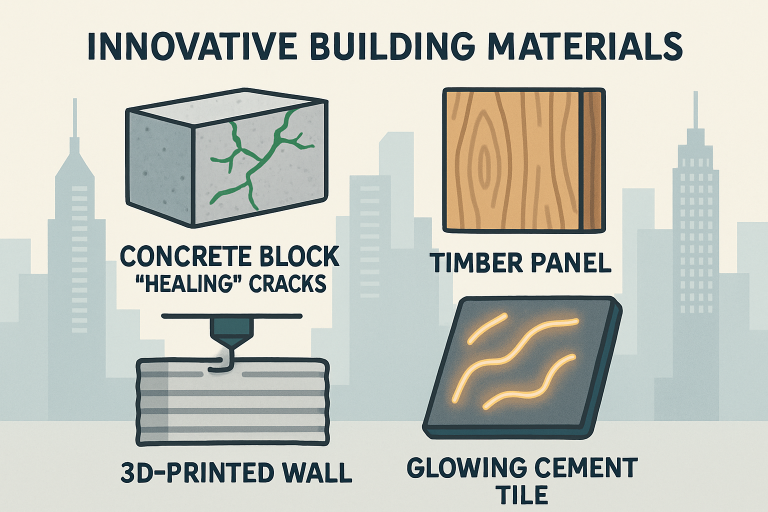
Conventional concrete, the backbone of modern construction, is plagued by durability issues, mainly due to cracking caused by stress and environmental exposure. Self-healing concrete addresses this challenge by incorporating bacteria that remain dormant until cracks expose them to moisture, allowing them to activate and repair the concrete. Upon activation, these bacteria initiate a chemical process producing limestone, effectively sealing the cracks autonomously. Experts estimate that such technology could extend the service life of infrastructure up to 200 years while slashing maintenance costs and the environmental impacts associated with concrete repair.
Cross-Laminated Timber
Cross-Laminated Timber (CLT) is a solid wood product engineered from layers of lumber stacked perpendicular to each other and glued together, forming robust structural panels. This innovative use of timber unlocks new possibilities for mid- and high-rise construction, harnessing wood’s natural renewability while achieving strength levels once exclusive to concrete and steel. CLT’s lightweight properties reduce transportation emissions, and its carbon-sequestering ability makes it a linchpin in green building practices. Forward-thinking designers utilize CLT to construct beautiful, sustainable urban structures with a natural aesthetic and a minimal environmental footprint.
3D-Printed Structures
Construction-scale 3D printing is rewriting what’s possible on the building site. By using a mix of local soils, fibers, and sometimes recycled materials, 3D printers create entire building components layer by layer, producing bespoke architectures with minimal waste. Notably, companies in Asia and Europe have constructed entire houses in a matter of days using 3D-printed technologies, slashing both material usage and CO₂ emissions. This efficiency is particularly transformative for disaster relief housing and urban infill, where speed and adaptability are paramount.
Aerogel Insulation
Aerogels, sometimes called “frozen smoke,” are some of the lightest solid materials known, consisting of up to 99.8% air. Their porous structure makes them exceptional insulators, able to outperform conventional materials while occupying far less wall space. As energy efficiency codes tighten around the world, architects are selecting aerogel panels for both renovation and new construction to meet these requirements, often without sacrificing precious floor area. Their use in window retrofits and façade systems is reducing heating and cooling costs across climates.
Graphene-Enhanced Materials
Graphene is a one-atom-thick layer of carbon with unparalleled strength and electrical conductivity. By infusing concrete and other traditional construction materials with graphene, researchers have developed composites that are significantly stronger and lighter, thereby enhancing the mechanical properties of buildings while reducing the raw materials required. These graphene-enhanced products are also more resistant to water and corrosion, extending the functional life and sustainability of infrastructure. Early-market developments show promise for both commercial and residential applications.
Recycled and Waste-Based Materials
The global waste crisis has sparked innovation in building materials made from recycled and waste-based resources. Construction-grade products now incorporate a wide range of materials, from plastic bottles to rice husks, transforming previously unwanted materials into durable bricks, tiles, and paneling. By reducing dependency on virgin resources, these solutions help close the loop and lower the environmental burden of new developments. Recent large-scale projects demonstrate that, with the right engineering, waste materials can surpass traditional products in strength and longevity.
Translucent Wood
Translucent wood, developed by researchers in Sweden, combines the natural strength and texture of wood with the light-transmitting qualities of glass. It’s achieved through a process that removes the wood’s lignin and replaces it with a transparent polymer. This material opens new avenues for daylighting, privacy, and thermal efficiency in architecture, granting designers the flexibility to blend transparency and opacity while maintaining the warm feel of timber. This sustainable technology has vast potential, particularly in regions that prioritize both energy efficiency and natural design.
Light-Generating Cement
Light-generating cement represents a leap in multifunctional building materials. By embedding phosphorescent elements in the structure, this cement captures sunlight or artificial light and glows for hours after dark. The result is not only an energy-saving solution for walkways and public spaces but also an eye-catching feature for architectural facades. Incorporating this technology can reduce reliance on outdoor electrical lighting and offer both practical and aesthetic benefits for urban developments.
Conclusion
Innovative construction materials are not just reshaping the look and feel of buildings—they’re redefining what’s possible in terms of sustainability, performance, and resilience. From self-healing concrete to translucent wood, each breakthrough contributes to reducing environmental impact while expanding architectural creativity. As these technologies continue to advance, architects, engineers, and builders have an unprecedented opportunity to create structures that are stronger, smarter, and greener. The future of construction lies in embracing these materials, ensuring that tomorrow’s cities are designed to last, inspire, and thrive.