
Addressing affordable housing is now a crucial concern for small business owners striving to support employee stability and long-term business growth. Skyrocketing housing costs push workers further from job centers, impacting retention, productivity, and community connectivity. Recognizing this, many small businesses are turning to creative solutions, such as leveraging the Hope housing program, to sustain their teams and contribute to broader community resilience.
Housing insecurity doesn’t just affect individuals; it can devastate local economies by making it difficult for small businesses to attract and keep skilled workers. As the cost of living becomes increasingly untenable, business owners are innovating beyond traditional benefits, seeking new ways to help employees access stable, affordable housing. Creative programs established at the community level can have a significant ripple effect, boosting both wellness and economic growth.
Affordable housing is more than an employee perk; it is a business imperative. In an ever-competitive market, ensuring that team members can live within a reasonable proximity to their workplace can enhance job satisfaction, foster loyalty, and strengthen local economies. Finding, supporting, and advocating for sustainable housing initiatives is a growing responsibility for every local entrepreneur.
Businesses that invest in housing initiatives are building a brighter future for both their own enterprises and the communities they serve. By exploring new partnership models, promoting policy reforms, and participating in cutting-edge housing programs, small business owners are uniquely positioned to drive positive change.
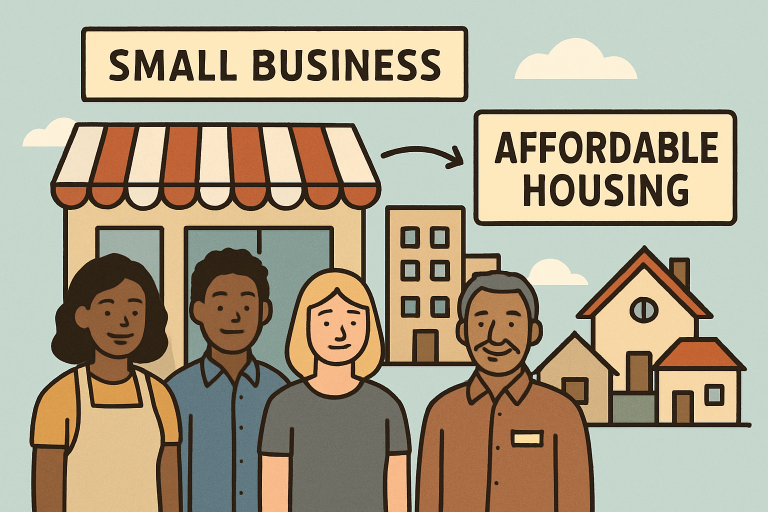 Understanding the Impact of Housing Costs on Small Businesses
High housing expenses pose significant challenges for small businesses, from increased employee turnover to recruitment struggles. When workers are priced out of neighborhoods close to their jobs, their commutes lengthen—and so do their daily stresses. Employee morale, punctuality, and engagement often decline, which can put operational stability at risk.
For employers, this means rising costs associated with frequent hiring and training, as well as potential interruptions to productivity. The domino effect ultimately impacts customer experience and community vibrancy, underlining the intertwined nature of housing and local economic health. Efforts to make housing more accessible are not only a social good—they’re smart business.
Leveraging Accessory Dwelling Units (ADUs)
Accessory Dwelling Units (ADUs) offer a nimble and efficient strategy for increasing affordable housing options locally. These secondary apartments—added to single-family properties—can foster intergenerational living, workforce housing, or offer affordable rent for essential employees. In some cities, including Charlotte, initiatives are underway to provide forgivable loans to homeowners who commit to building and maintaining affordable ADUs, creating much-needed housing inventory without significant land use changes.
For small businesses, supporting or participating in local ADU programs can offer direct housing resources for employees, potentially offsetting recruitment and retention challenges. ADUs also enable gradual neighborhood densification, allowing communities to keep pace with population growth without the need for drastic infrastructure overhauls.
Exploring Community Land Trusts
Community Land Trusts (CLTs) are nonprofit organizations designed to hold land in trust for community benefit, separating the ownership of land from the buildings on it. By purchasing land and removing it from the speculative market, CLTs can preserve long-term affordability—both for housing and commercial spaces. Projects like the Rondo Commercial Land Trust in St. Paul, Minnesota, provide affordable retail and office space for local businesses, preventing displacement and ensuring that local entrepreneurs can remain integral to the community fabric.
In addition to stabilizing neighborhoods, CLTs can create opportunity corridors for small businesses that have been historically excluded from commercial real estate due to high rents. By supporting or partnering with local land trusts, business owners can help ensure equitable access to affordable space for future generations.
Partnering with Local Governments
Small businesses are increasingly seeking solutions in partnership with municipal leaders and housing agencies. Municipalities such as Boston have launched targeted relief programs—like the Affordable Commercial Assistance Fund, which allocated $1 million to offset rising commercial rents for businesses operating within affordable housing properties. These collaborative efforts help sustain locally owned enterprises and support balanced neighborhood development.
Such partnerships offer financial relief, tailored services, and open dialogue between the public and private sectors—an approach increasingly necessary to safeguard small business resiliency amid rising urban costs.
Investing in Co-Housing and Shared Living Spaces
Co-housing communities and shared living arrangements are rebounding as innovative responses to affordability pressures. These residential models, which see multiple households living in private units but sharing common areas and facilities, lower individual expenses while fostering greater social ties. Entrepreneurs are launching developments specifically designed around shared amenities, intentional community, and affordability—all of which can stabilize workforce housing for employees in service and creative industries.
Support for co-housing arrangements can range from direct investment in such projects to employer-led partnerships that offer employees priority access or rental assistance, making these models increasingly attractive in high-cost locales.
Advocating for Policy Changes
Advocacy for policy reform remains one of the most effective long-term strategies for addressing the shortage of affordable housing. Small business owners can champion zoning reforms that encourage higher-density housing, support expedited permitting for affordable housing projects, and advocate for incentive programs that encourage developers to build below-market homes. By engaging in city council meetings, joining local business coalitions, and collaborating with housing nonprofits, entrepreneurs ensure that the needs of small businesses remain at the forefront of urban development conversations.
Policy advocacy is crucial not just in large metropolitan areas, but also in smaller markets and rural communities struggling with affordability. Grassroots support for housing innovation can have a broad and lasting impact.
Utilizing Low-Interest Loan Programs
Many states are expanding access to low-interest loan programs as a way to stimulate small business activity and affordable housing creation. Missouri, for example, has implemented a linked-deposit program that channels state-subsidized low-interest loans to small business owners and affordable housing developers, alleviating the financial pressures that often hinder growth or new construction.
Taking advantage of such programs can unlock opportunities for expansion or for direct investment in local housing initiatives, ultimately supporting workforce stability and community prosperity.
Conclusion
Affordable housing challenges require coordinated action from business owners, policymakers, and community leaders. By supporting ADUs, engaging with community land trusts, collaborating with local governments, investing in co-housing, championing policy change, and leveraging low-interest loan programs, small businesses can lead on solutions that create resilient, vibrant communities. Addressing housing affordability is both a powerful strategy for business vitality and a meaningful investment in the future of our communities.