
Controlling soil erosion at construction sites is crucial for preserving environmental quality, reducing water sedimentation, and protecting valuable topsoil. Erosion can contribute to downstream flooding, harm aquatic ecosystems, and transport pollutants like fertilizers or oil into lakes and rivers. Beyond environmental concerns, managing erosion effectively helps builders comply with regulations and avoid costly fines or delays.
A combination of thoughtful planning and strategic erosion control methods minimizes environmental damage and streamlines construction timelines. Proactive soil protection demonstrates environmental responsibility, builds public trust, and supports long-term project success.
Vegetative Cover
Preserving or reestablishing vegetation is one of the most effective techniques in erosion control for construction. Plant roots stabilize the soil, while leafy cover reduces the force of rainfall and runoff. Grasses quickly stabilize exposed soils, especially when planted immediately after earthwork. Mature trees and shrubs should be preserved to maintain habitat and minimize disturbance. Using native plants enhances resilience and long-term ecological health.
Erosion Control Blankets
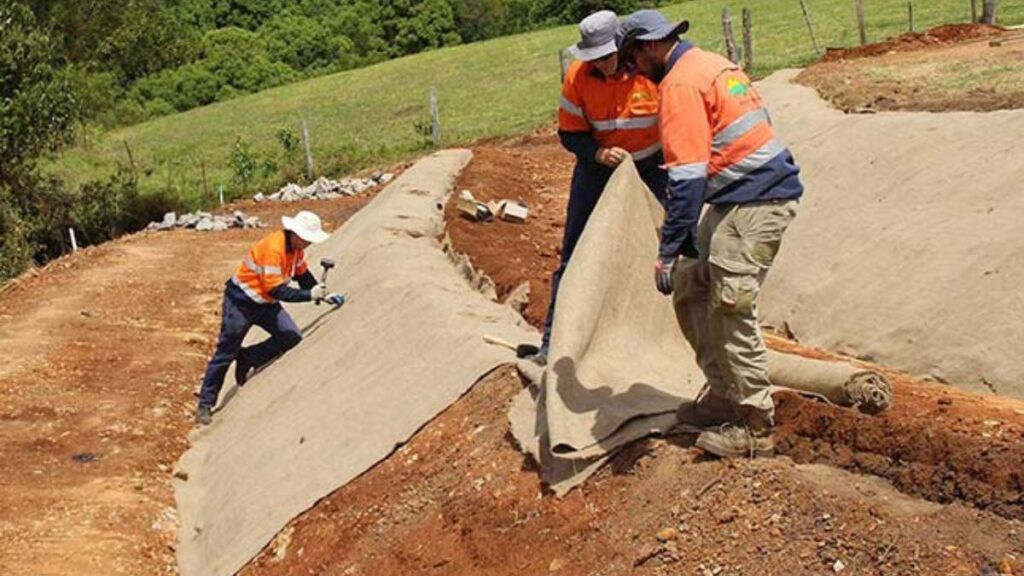
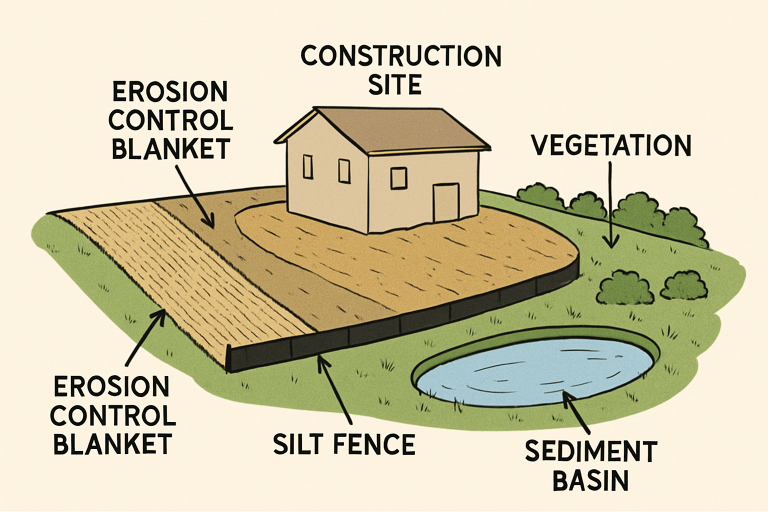
Erosion control blankets, made from straw, coconut fiber, or jute, are especially useful on bare soils or slopes where vegetation hasn’t yet taken root. These biodegradable materials shield the ground from wind and rain while promoting seed germination. Many blankets now include seeds directly within the material, increasing the success of revegetation efforts. These blankets are ideal for slopes, ditches, and drainage paths where runoff poses a greater threat.
Silt Fences
Silt fences are low-cost, easy-to-install barriers that help capture sediment before it leaves a disturbed site. Typically made from geotextile fabric supported by wooden stakes, they intercept slow-moving runoff and trap soil particles. Proper installation is essential: the fabric should be trenched into the soil to prevent water bypassing it. Regular inspections, especially after storms, ensure fences remain effective and intact.
Sediment Basins
Sediment basins are temporary ponds that hold stormwater long enough for sediment to settle. These basins are vital on large or sloped sites where substantial soil is exposed. Proper sizing and placement improve their effectiveness, and periodic cleaning maintains capacity. Sediment basins protect nearby water bodies and provide temporary water storage for dust control or irrigation during later construction phases.
Hydroseeding
Hydroseeding is a rapid planting technique where a slurry of seed, mulch, fertilizer, and water is sprayed onto bare soil. It’s especially effective on large or sloped areas that are hard to seed by hand. The mulch in the mixture helps hold the seed in place, protects it from pests and erosion, and retains moisture. Hydroseeding improves germination rates and accelerates site stabilization, making it a popular option for modern projects.
Geotextiles
Geotextiles are durable, synthetic fabrics used to reinforce soil, prevent erosion, and separate layers of material. These permeable materials are common beneath roads, retaining walls, or steep slopes. They allow water to pass while keeping soil in place, improving stability and longevity. Geotextiles also serve as underlayments in hardscaped areas, helping to prevent soil movement that can damage pavement or concrete.
Construction Entrances
Vehicle tracking mud off-site can create safety hazards and violate sediment control rules. Stabilized construction entrances—made from crushed stone or specialized mats—reduce sediment spread onto nearby roads. These access points need regular maintenance to remain effective, especially after heavy use or storms. Keeping streets clean avoids penalties and keeps surrounding neighborhoods safe and tidy.
Regular Maintenance and Inspections
Even the best erosion control methods require consistent upkeep. Silt fences tear, basins fill, and vegetation may not establish as expected. A routine schedule of inspections and prompt repairs ensures that your erosion control strategy remains functional throughout the project. Keeping maintenance logs and using checklists can help teams stay on track and comply with oversight agencies.
Conclusion
Every construction site presents unique erosion challenges based on soil type, slope, climate, and project scope. An effective erosion control plan incorporates multiple strategies tailored to these conditions. Investing in soil protection safeguards your budget and schedule, protects nearby ecosystems, and reinforces your team’s reputation for responsible building. In an era of tighter regulations and growing environmental awareness, smart erosion control is no longer optional—it’s essential.