

The Expanding Role of Today’s CEO
The evolution of the CEO role is one of the most profound shifts in modern business. Today’s Chief Executive Officers are not just the strategic visionaries of their organizations—they’re also expected to be adept communicators, champions of sustainability, and balancing authorities among diverse stakeholder interests. CEOs are increasingly in the public eye, accountable for guiding their companies through complex regulatory, social, and economic landscapes. For example, modern leaders must craft resilient business models, navigate crisis communication, and act as the face of corporate values and ethics.
Effective leadership at the executive level demands a careful balance of strategic agility and strong people management skills. Resources such as Korn Ferry CEO Insights and platforms like trueplatform.com offer valuable perspectives for leaders working through today’s complexities. With rapid market shifts, heightened expectations for transparency, and the rising significance of social responsibility, CEOs are continually challenged to refine their roles and ensure their organizations achieve long-term, sustainable success.
Essential Traits of Effective Business Leaders
The most successful CEOs today are noted for their decisiveness and unwavering resilience, but what increasingly sets them apart is emotional intelligence. High-performing leaders recognize the value of empathy, effective listening, and self-awareness—skills that empower them to connect authentically with employees, customers, and partners. According to Harvard Business Review, emotionally intelligent CEOs create workplaces where trust and innovation thrive, leading to measurable employee retention and morale increases.
In addition, adaptability is non-negotiable for leaders at the helm. The ability to anticipate industry trends, pivot strategy during disruptions, and remain open to feedback distinguishes those who manage from those who truly inspire. Visionary leaders continuously invest in their learning, surrounding themselves with advisory boards or diverse teams that challenge their perspectives and foster growth.
Common Challenges Faced by CEOs
Every CEO faces unique and shifting challenges. Today’s most pressing issues are supply chain disruptions, digital transformation pressures, and talent retention in a competitive marketplace. Global economic and geopolitical instabilities can derail even the best-laid plans, requiring leaders to balance short-term imperatives with long-term strategy. Many CEOs struggle with decision fatigue, time management, and effective communication across geographically dispersed teams. These factors can strain even the most capable executives and necessitate continually reassessing priorities and strategies.
Furthermore, regulatory shifts and societal expectations require forward-thinking responses. For example, environmental and social governance (ESG) is now a core criterion against which many boards, investors, and customers evaluate a company and its leadership, as emphasized by insights from McKinsey & Company.
Driving Innovation from the Top
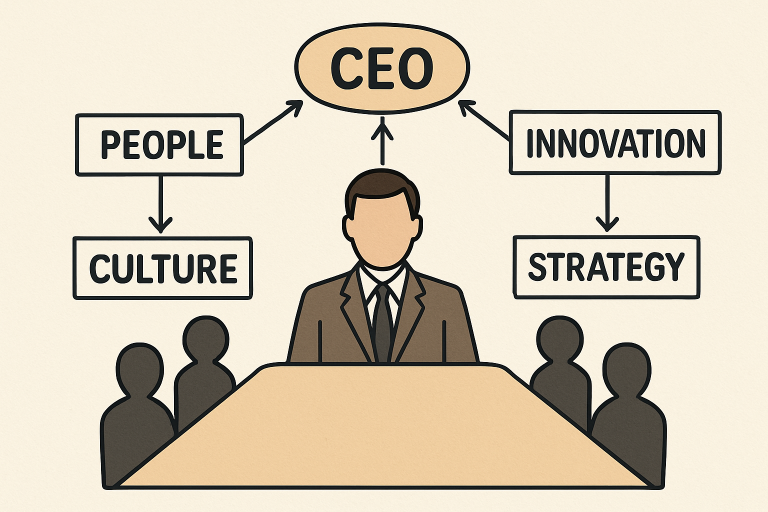
CEOs play a fundamental role in championing innovation within their organizations. Leaders who openly encourage experimentation, celebrate creative failures, and dedicate resources to research and development are likelier to stay ahead in fast-moving markets. Iconic companies in the technology sector owe much of their growth to C-level advocacy for disruptive ideas and willingness to make bold investments in future technologies. Embedding a culture of innovation starts with leadership that values curiosity, cross-functional collaboration, and a fearless approach to calculated risks.
The commitment to innovation must permeate all levels of an organization. By setting an example and allocating resources to promising ventures, CEOs ensure agility in responding to market demands and technological advancements—a trait that defines today’s market leaders.
Strategic Decision-Making in a Fast-Changing World
The era of intuition-driven decision-making has made way for a culture rooted in data and objective insights. Effective CEOs leverage analytics, scenario planning, and market intelligence to inform pivotal choices. According to insights from Forbes, organizations with robust data-driven cultures are five times more likely to make swift, successful decisions than their competitors.
Nevertheless, experience and gut instinct remain valuable when data is incomplete or ambiguous. The most agile executives blend both, balancing hard metrics and experience to stay nimble in unpredictable environments. Strategic leadership today is about embracing change and enabling teams to adapt rapidly.
Fostering Company Culture and Employee Engagement
Organizational culture is no longer a soft metric; it’s a measurable driver of productivity and business results. CEOs shape culture by demonstrating core values, prioritizing professional development, and fostering environments where diverse perspectives are encouraged. Transparent communication, inclusivity, and meaningful recognition underpin highly engaged workplaces and translate into increased retention and long-term loyalty.
Leading by example sets the tone for the entire organization, reinforcing the importance of respectful communication, openness to feedback, and continuous growth. Investing in employee engagement pays dividends, as shown in studies by Gallup, with higher productivity and lower turnover rates distinguishing companies with inspired leadership at the top.
Predictions for the Future of Executive Leadership
Looking to the future, the CEO role will become even more multifaceted as organizations face rapid digital transformation, increased demands for social responsibility, and evolving expectations around global collaboration. The rise of hybrid and remote workforces adds new dimensions to leadership, emphasizing the need for adaptability and strong virtual communication skills.
Thought leaders predict CEOs who can balance technological savvy with empathy and adaptability will be best positioned to navigate uncertainty and accelerate business growth. As the role evolves, a commitment to lifelong learning and openness to new ideas will remain essential for those at the top.
Conclusion
The evolving role of CEOs highlights a shift toward leadership that blends vision, adaptability, and responsibility. Today’s executives are expected not only to deliver financial results but also to champion culture, innovation, and social impact. By embracing transparency, prioritizing talent development, and navigating global challenges with resilience, they set the tone for sustainable growth. Their influence extends beyond boardrooms, shaping how organizations respond to societal needs and technological change. In leading with purpose and foresight, CEOs redefine success, fostering workplaces and strategies that create lasting value for employees, stakeholders, and the broader community.