Families often start exploring support when daily routines feel harder than they should, even with patience, love, and consistency at home. It might show up in communication that stalls, transitions that trigger stress, or social moments that never seem to land the way everyone hopes. What many caregivers in Oak Lawn want is not a quick fix. They want a structured way to build skills that carry into real life, at school, at home, and in the community.
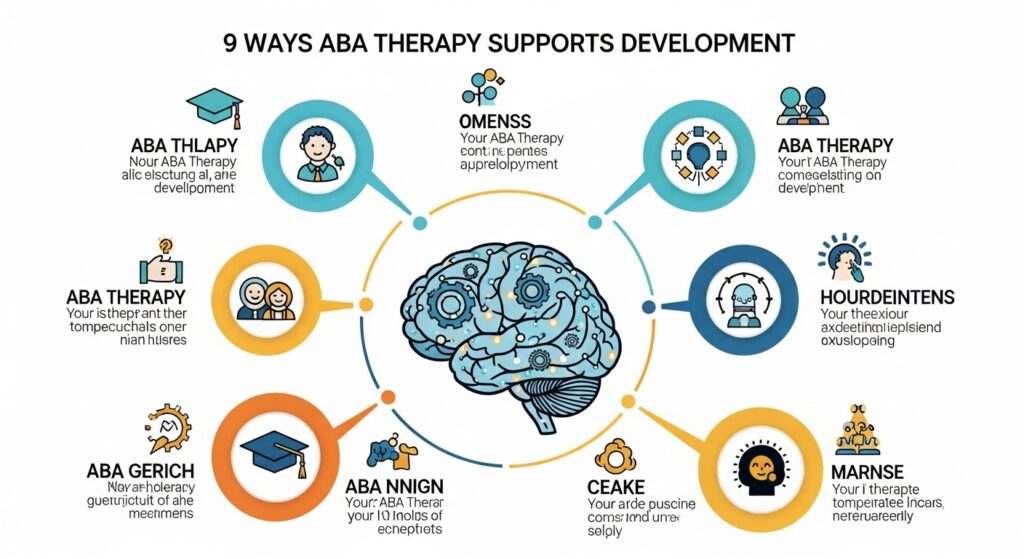
For those considering Oak Lawn ABA Therapy, it helps to understand what ABA is designed to develop over time. Applied Behavior Analysis focuses on teaching practical skills through clear steps, repeated practice, and meaningful reinforcement. Progress can look different for every child, but the goal is often the same: to support independence, emotional growth, and a stronger connection with others. The nine areas below highlight how ABA therapy can support development in ways that are measurable, consistent, and tailored to individual needs.
1. Building Communication Abilities
Through ABA therapy, kids are taught to be more explicit and articulate about their needs and feelings. Many types of prompts and reinforcements are used to facilitate verbal, nonverbal, and alternative communication with therapists. It takes time for people to become more aware of it as they gain confidence to share. Better communication means stronger relationships and increased independence. It is also important for early treatment and intervention for ASD.
2. Encouraging Social Interaction
Guided social experience is helpful to a lot of children. ABA therapy offers a unique structure that focuses on teaching sharing, turn-taking, and cooperation. Children learn to get through social situations with practice and positive feedback. Possessing these skills tends to lead to deeper friendships and more meaningful group time.
3. Strengthening Daily Living Skills
Independence takes off as children learn to do for themselves. ABA-style programs segment tasks (dressing, brushing, organizing a backpack, etc.). Focusing on one step at a time reduces overwhelm, and each step is praised. Regular self-care practice strengthens self-care skills and builds confidence.
4. Promoting Positive Behavior
Difficult behaviors can inhibit growth and learning. By finding these triggers, ABA therapy helps create strategies to make positive changes. Therapists help children learn to substitute problematic behaviors by using their lessons to encourage positive actions. It instead shifts us into a place that is safer and more supportive for all parties involved.
5. Enhancing Focus and Attention
New ideas require sustained attention for us to take root. Motivating activities with clear instructions are delivered during an ABA session to enhance focus. Over time, kids develop the skills to sustain attention longer. Increased focus can promote educational advancement and engagement in work- or play-related groups.
6. Teaching Coping Strategies
Without a system, frustration/disappointment is tough to handle. Children learn calming techniques and coping tools with ABA therapy. Under guidance, the child will learn to channelize their excess energy in the best possible manner. These skills create low stress and increase emotional resilience to any circumstance.
7. Supporting Academic Achievement
There are many skills required for learning in school. ABA therapy also helps with early concepts such as counting, letter recognition, and classroom rules. Each learner progresses through the lessons at their own speed. Children’s academic performance often fluctuates as they learn and gain confidence.
8. Encouraging Play and Creativity
For the sake of our children and ourselves, play allows us to grow. ABA therapists incorporate games, imaginative play, and creative activities to foster creativity and problem-solving. These sessions develop social/collaborative skills and adaptability and have an element of fun in the learning process. Eventually, children could be more involved with friends and new experiences.
9. Fostering Family Involvement
Family members play an essential role in supporting the progress of children. That’s not the case with ABA programs, which include things like parent training and follow-ups as often as once a week. Caregivers also learn how to practice skills at home so that there is continuity in skills used at home. Families who know more can celebrate successes and overcome obstacles with more confidence.
Conclusion
ABA therapy helps in many different areas that matter more in real life. This method empowers kids to reach new milestones by focusing on communication, behavior, independence, and emotional maturity. Together, these strategies foster a more abundant and self-sufficient life. It takes a village to help reinforce these positive outcomes, and families, educators, and professionals can join forces to ensure the best possible future for the children they provide ABA therapy to.